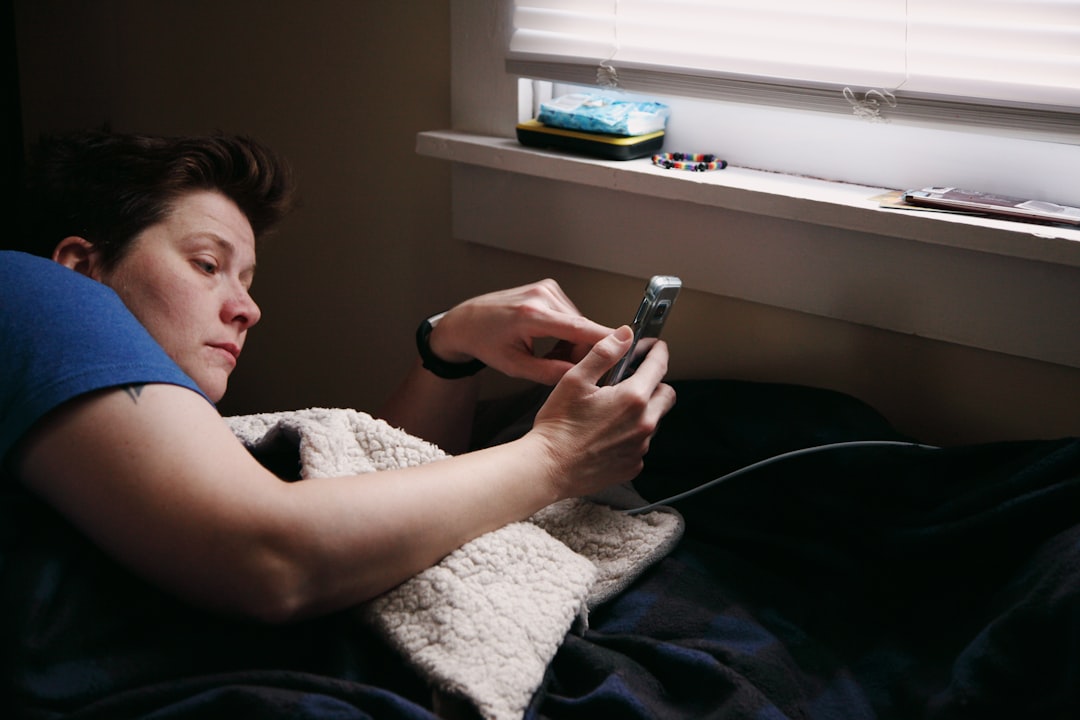
When Your Health Tracker Makes You Anxious: The Rise of Health Tracking Anxiety


TL;DR
Health tracking anxiety is the psychological cost of constant self-quantification. A growing body of research and clinical reporting shows that wearables and wellness apps can increase stress, trigger obsessive behaviors, and create a condition some therapists call "digital orthorexia." It is an unhealthy fixation on optimizing every biometric. The industry has no incentive to talk about it. Pulsyn was designed with this problem in mind, and the solutions are simpler than you think.
I spent three years building a device that tracks your heart rate, sleep, HRV, temperature, and SpO2. I also spent those three years watching my own numbers obsessively. There was a stretch in early 2025 where I checked my readiness score before I checked my email. I rearranged my schedule around my HRV. I felt genuine relief when my sleep score hit 85, and genuine disappointment when it hit 72. I was the target user for my own product, and I was also the cautionary tale.
I am not alone in this. A Business Insider piece from early June 2026 called "Americans are using wellness apps to turn their bodies into dashboards. And it is stressing people out" captured a phenomenon that therapists have been reporting for years. The article quotes people who check their Oura scores before getting out of bed, who feel anxious when their ring runs out of battery, who cancel social plans because their recovery score says they should rest. The dashboard body is real, and it is making a lot of people worse.
What health tracking anxiety actually looks like
The clinical term that keeps coming up is "orthorexia." An unhealthy obsession with healthy eating. The digital version works the same way. You start with a genuine desire to understand your body better. You buy a ring or a watch. You get your first sleep score. You learn what HRV means. You start adjusting your habits based on the data. So far, this is the pitch.
Then something shifts. The data stops being information and starts being a performance review. You feel bad about a low readiness score. You feel guilty about a night of poor sleep even if you felt fine. You check your resting heart rate trend more than once a day. You start to believe the numbers more than how you actually feel.
A 2025 article from GoodTherapy.org called "Health Tracking Anxiety: When Wearables Harm Mental Health" describes patients who develop checking rituals around their devices. One patient described waking up in the middle of the night to check their sleep stage. Another stopped drinking coffee entirely because their tracker flagged it as a stressor, even though they enjoyed coffee and had no health reason to quit. The device was not helping them make better decisions. It was narrowing their life.
The Newsweek piece from March 2026 titled "Top 3 'Healthy' Habits That Can Worsen Anxiety" listed fitness tracking as one of them. A psychiatrist quoted in the article said that for patients with existing anxiety, the constant stream of biometric feedback creates a feedback loop: you check your heart rate, it is slightly elevated, you worry about why it is elevated, your heart rate goes up more, you check again. The device becomes the source of the thing it claims to measure.
The numbers that matter and the numbers that do not
Here is the uncomfortable truth that nobody in the wearable industry wants to say out loud: most of the numbers your device gives you are not actionable. They are interesting. They are directionally useful. But they are not instructions.
Resting heart rate is a good example. Your RHR changes based on hydration, caffeine, stress, sleep quality, time of day, and whether you had a beer last night. A single elevated reading means almost nothing. A trend over weeks means something. But the device presents both with the same urgency. The daily readiness score, the stress score, the recovery score. These are composite metrics built from noisy sensor data, filtered through proprietary algorithms, and presented as objective truth. They are not objective truth. They are estimates of estimates.
The problem is that the interface does not communicate this uncertainty. Oura shows you a sleep score of 78 and the number looks definitive. There is no error bar. There is no "this is probably within 10 points of accurate." There is just a number, and your brain treats it as truth because it looks like a test result.
I have written before about how sleep stages are mostly guessing, how SpO2 readings are estimates, and how stress scores are the most fabricated metric in wearables. The technical limitations are real. But the psychological impact of presenting uncertain data as certain is a design problem, not a sensor problem. And it is one the industry has been slow to address because uncertainty does not sell devices.
Digital orthorexia and the optimization trap
The term "digital orthorexia" is not an official diagnosis, but it describes something real. It is the belief that every biometric can and should be optimized. That a resting heart rate of 62 is good but 58 is better. That a sleep score of 80 is acceptable but 90 is the goal. That you should be able to control your HRV through breathing exercises, your temperature through sleep hygiene, your recovery through perfect nutrition.
The trap is that optimization is infinite. There is always a higher score. There is always a better metric. The person who chases a perfect readiness score will never arrive because the score is relative to their own baseline, and the baseline shifts as they improve. You are running on a treadmill that the device controls.
A HuffPost article from February 2026 noted that orthorexia is becoming more common, and that the wellness industry is a contributing factor. When every product is marketed as a tool for "becoming your best self," the implicit message is that your current self is not good enough. The wearable is the enforcer of that message, delivering daily report cards on how well you are performing at being alive.
I think about this a lot when I look at Pulsyn's readiness algorithm. We spent months tuning the weights for HRV, sleep duration, temperature deviation, and activity load. The result is a number that we think is useful. But I also know that for some people, that number will become a source of stress. I do not know how to solve this completely. I am not sure there is a complete solution that does not involve the user making a conscious choice about their relationship with the data.

What Pulsyn does differently
This is where I have to be honest about what we have built and what we have not solved.
Pulsyn does not have a subscription. That removes one layer of anxiety: you are not paying monthly for the privilege of being told you slept badly. The device costs $160 and the core tracking is free forever. There is no financial incentive for us to keep you checking the app. That changes the product incentives in a real way.
Pulsyn processes all health data on-device by default. Your sleep scores, HRV calculations, and readiness estimates are computed on your phone, not on a cloud server. This means there is no data-harvesting business model underneath the app. We are not selling your biometrics to insurance companies or using them to train models that get sold to employers. The privacy argument is also a psychological argument: when your data stays on your phone, the device feels like a tool rather than a surveillance system.
Pulsyn's optional premium tier, Pulsyn Pro at $6/month, adds cloud AI with deeper analysis. But the core tracking works without it. The decision to pay is yours, and the data stays local either way.
But here is the part I am less certain about. We still show you a readiness score. We still show you a sleep score. We still present numbers that look definitive. We have tried to communicate uncertainty in the interface. We show trends more prominently than single values, and we do not use red/yellow/green color coding that triggers alarm, but I am not sure it is enough. The fundamental tension is that people want a simple answer, and a simple answer is almost always a misleading one.
What the industry should do
I have opinions about this that go beyond Pulsyn.
First, every wearable company should publish their algorithm validation data. Oura publishes some. Whoop publishes some. Most do not. If you are going to give someone a stress score, you should be able to show them how often that score matches a validated reference standard. If the correlation is 0.6, say it is 0.6. Do not hide behind marketing language about "proprietary algorithms."
Second, the interface should communicate uncertainty. A sleep score of 78 should not look the same as a heart rate of 78 BPM. One is a direct measurement with high accuracy. The other is a composite estimate with significant error. They should look different on the screen.
Third, devices should have a "less is more" mode. A mode that shows you only the metrics that are actionable and hides the ones that are interesting but not useful. A mode that does not show you a daily readiness score if you do not want one. A mode that treats the device as a passive data collector rather than an active coach.
Fourth, the industry should stop marketing wellness devices as medical devices. The FDA has been clear about this distinction. Wearables are for wellness and general information. They are not diagnostic tools. But the marketing language blurs the line constantly, and that blurring creates the expectation that the numbers are clinically accurate.
What you can do if you feel this
If you are reading this and recognizing yourself in the description above, here is what I have learned from my own experience and from talking to people who study this.
Put the device in a drawer for a week. Not forever. Just one week. See if you feel better or worse. I did this in early 2025 and the first two days were uncomfortable. By day five, I realized I had been making decisions based on data that was not actually improving my life. The week off did not make me less healthy. It made me less anxious.
Turn off notifications. The device does not need to tell you when your heart rate changes. It does not need to tell you when you have reached your step goal. Those notifications are designed to keep you engaged with the app, not to improve your health. Turn them off and check the data when you want to, not when the device wants you to.
Ignore the daily score. Look at the weekly trend instead. A single day of bad sleep is noise. A week of declining HRV is a signal. The daily score is the most anxiety-producing element of the entire wearable experience, and it is also the least useful.
Remember that the device is guessing. Every number on your wearable is an estimate filtered through an algorithm trained on a population that may not look like you. The PPG sensor on your ring was validated on a specific demographic. The sleep staging algorithm was trained on a specific dataset. The stress score is a proprietary blend of metrics that the company defines. None of it is your medical record.
The honest conclusion
I built Pulsyn because I believe that understanding your body is a good thing. I still believe that. But I have also learned that the relationship between a person and their health data is more complicated than I thought when I started. The device is a tool. Tools can be used well or poorly. The industry has a responsibility to design tools that are harder to use poorly.
I do not know if we have gotten this right at Pulsyn. We have made design choices that I think reduce the risk of health tracking anxiety. No subscription, on-device processing, trend-focused interface, no gamification of scores. But I also know that some people will still feel anxious about their numbers. That is not entirely a design problem. It is a human one.
The best I can say is that we are thinking about it. We are building with the awareness that the thing we are making can cause harm, and we are trying to minimize that harm without losing the value. If you have thoughts about how to do this better, I would like to hear them. That is not a rhetorical line. I mean it.
About the author
James Hoffmann is the founder of Pulsyn. He has been building health tracking hardware for two years and has spent most of that time questioning whether the thing he is building is actually good for people.
References
- Stewart, E. "Americans are using wellness apps to turn their bodies into dashboards. And it is stressing people out." Business Insider, June 2026.
- GoodTherapy.org. "Health Tracking Anxiety: When Wearables Harm Mental Health." July 2025.
- Notarantonio, L. "Top 3 'Healthy' Habits That Can Worsen Anxiety. Psychiatrist Warns." Newsweek, March 2026.
- Wilson, J. "'Orthorexia' Is More and More Common. Here's What You Should Know About It." HuffPost, February 2026.
- Retter, E. "The troubling rise of longevity fixation syndrome." The Guardian, February 2026.