Your Smart Ring Lies to You at 35,000 Feet: How Cabin Pressure Breaks SpO2, HRV, and Your Recovery Score


TL;DR
When you board a flight, your biometrics change in ways your smart ring was never trained to interpret. Cabin pressurization at 8,000 feet equivalent drops your SpO2 to around 90 percent. The dry air and immobility raise your heart rate and suppress HRV. Your ring sees this and flags it as poor recovery, elevated stress, or even early illness. It is none of those things. It is normal altitude physiology, and the wearable industry does not account for it because validation happens at sea level on healthy volunteers sitting in a clinic. This post walks through what actually happens to your ring's data on a flight, with real numbers from the literature and the calibration problems that cause them.
The cabin altitude you did not know you were breathing
Airplane cabins are pressurized to the equivalent of 6,000 to 8,000 feet above sea level. The FAA requires that cabin altitude never exceeds 8,000 feet, but most commercial flights cruise at a cabin pressure around 7,500 to 8,000 feet. That is not a design flaw. It is a structural tradeoff. Pressurizing to sea level would require thicker fuselage walls, more fuel, and less cargo capacity. The compromise has been standard since the 1950s, and it is safe for healthy passengers.
But safe for healthy passengers is not the same as invisible to your wearable.
At 8,000 feet cabin altitude, the partial pressure of oxygen in the air drops from about 160 mmHg at sea level to about 118 mmHg. Your lungs still extract oxygen from that thinner air, but your arterial oxygen saturation drops. A 2005 study in the journal Anaesthesia measured SpO2 in passengers during commercial flights and found that 54 percent had values of 94 percent or lower at cruising altitude. A significant fraction dropped below 90 percent.
To put that in context, a hospital might administer supplemental oxygen to a patient with SpO2 below 92 percent. But at 8,000 feet cabin altitude, 90 to 94 percent is normal. Your body compensates. It breathes faster, your heart rate increases slightly to maintain oxygen delivery, and over longer flights your kidneys adjust your acid-base balance.
Your smart ring does not know any of this. It sees a heart rate that is 8 to 12 bpm above your resting baseline and SpO2 that dropped from 98 to 92 percent. It has one model of the world, and that model says low SpO2 plus elevated heart rate equals something is wrong. So it flags the flight as a period of poor recovery. It adjusts your readiness score downward. It might even suggest you are coming down with something.
You are not. You are on an airplane.
How the calibration curve fails at altitude
The core mechanism matters here, because the error is not random. It is systematic and predictable.
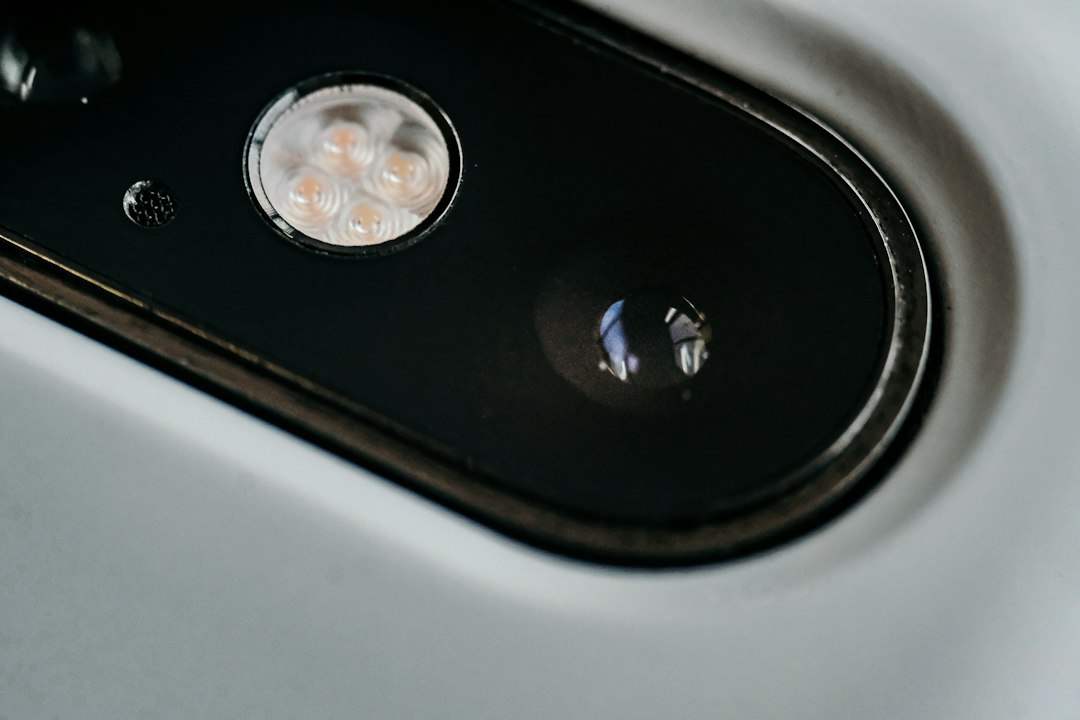
Smart rings use photoplethysmography (PPG) to measure SpO2. Two LEDs, one red and one infrared, shine light into the finger. A photodetector measures how much light is absorbed at each wavelength with each pulse. Oxygenated hemoglobin absorbs more infrared light. Deoxygenated hemoglobin absorbs more red light. The ratio of red to IR absorption at the pulse peak maps to an SpO2 value through a calibration curve.
That curve is the source of the altitude error.
Consumer pulse oximeters are calibrated using empirical data collected at sea level. Healthy volunteers breathe gas mixtures that gradually reduce the oxygen fraction, and their SpO2 is measured against a reference arterial blood gas analyzer. The sensor's red/IR ratio is recorded at each SpO2 level, and a lookup table is built.
The problem is that the relationship between the red/IR ratio and actual SpO2 is not purely a function of oxygen saturation. It is also affected by the optical properties of the blood and tissue, which change with altitude. At 8,000 feet, peripheral vasoconstriction reduces blood flow to the finger. The pulsatile signal (the AC component) shrinks relative to the static tissue signal (the DC component). The signal-to-noise ratio drops. The sensor has to work harder to extract a reading, and the calibration curve that was built at sea level starts to drift.
A 2025 study in the Journal of Digital Life tested a consumer smart ring's SpO2 accuracy in a controlled hypoxia chamber. The ring achieved a root mean square error of 3.55 percent across the 70 to 100 percent range. That is within the ISO 80601-2-61 standard of 4 percent but slightly above the FDA's 3.5 percent threshold for medical devices. More importantly, the error was not uniform. It increased at lower saturation levels where altitude readings live.
A separate 2026 study published in Frontiers in Physiology tested a commercial smartwatch across a continuous altitudinal gradient, comparing acutely exposed lowlanders with chronically adapted highlanders. SpO2 accuracy remained within ISO thresholds overall, with an RMSE between 0.19 and 0.81 percent. But the study found that error variability increased with ascent, consistent with greater signal instability in acute hypoxia. And blood pressure measurements showed wider limits of agreement with a persistent negative bias that the authors called concerning for clinical use.
These are the best-case numbers from controlled studies. Real-world performance on a vibrating aircraft with dry air, motion artifacts, and a ring that might fit differently after cabin pressure changes the finger's volume is likely worse.
What happens to HRV on a flight
SpO2 is only part of the story. Heart rate variability is arguably more affected by flying, and the effect is more confusing for users.
HRV measures the variation in time between consecutive heartbeats. High HRV (more variation) is generally associated with good recovery. Low HRV (more uniform intervals) is associated with stress, fatigue, or illness. Smart rings like Oura, Whoop, and the Samsung Galaxy Ring all track HRV overnight and use it to compute readiness or recovery scores.
On a flight, several things suppress HRV simultaneously.
The reduced oxygen availability triggers a sympathetic nervous system response. Your heart rate increases to maintain cardiac output. The autonomic balance shifts toward sympathetic dominance. HRV drops.
Cabin humidity on most aircraft is below 20 percent. Dehydration alone can reduce blood volume and increase heart rate, further suppressing HRV. A four-hour flight with minimal water intake can produce the same HRV pattern as a night of poor sleep.
Immobility matters too. Sitting in a cramped seat for hours reduces venous return, which the cardiovascular system compensates for by increasing heart rate. Your ring does not know you are sitting. It just sees the elevated number.
The combination of these factors can suppress overnight HRV by 15 to 30 percent compared to a non-travel night. When you layer in the first-night effect at a hotel, which the blog covered previously, a single travel day can produce two consecutive nights of artificially low HRV. Your ring's readiness algorithm sees a trend and declares a recovery problem. You feel fine, or maybe a bit jet-lagged. The data says you are breaking down.
This is the pattern that causes people to post screenshots in r/ouraring asking why their readiness score dropped after a flight. The answer is not that their body is failing. The answer is that the algorithm does not have an "airplane mode" for interpreting biometrics.
Why the ring does not know you flew
The deeper issue is that wearable algorithms are trained on patterns, not on context. They learn that low SpO2 plus elevated HR plus low HRV correlates with illness, overtraining, or poor sleep. That correlation holds reasonably well when the user is in their normal environment. It breaks when the environment changes.
Oura, Whoop, and the others do not know your location. They do not know you are at 35,000 feet. Some newer devices have altimeters, but they are used for step counting and elevation gain, not for recalibrating SpO2 or HRV algorithms. The sensor data flows through the same pipeline whether you are in your bed or on a plane.
There is also a calibration stability problem. Pulse oximeters, even medical-grade ones, drift over time and with environmental conditions. The LED output changes with temperature. The photodetector sensitivity shifts. The optical coupling between the sensor and the skin changes with perfusion. A ring that was calibrated at the factory in a controlled environment may produce different readings after six months of use across multiple climates.
I spent some time looking into whether any consumer wearable company has published altitude-specific accuracy data. The answer is basically no. Oura has a blog post about SpO2 that mentions altitude as a factor, but they do not publish mean error or limits of agreement at different elevations. Whoop's documentation says HRV can be affected by travel but does not give numbers. Ultrahuman does not address it at all.
This is not a conspiracy. It is hard to validate at altitude. It requires altitude chambers or field studies at mountain research stations, both of which are expensive. And the current regulatory framework for wellness devices does not require it. So companies do not do it.
But the data quality suffers, and users draw incorrect conclusions about their health.
What actually happens on a typical travel day
A concrete timeline helps illustrate the problem.
You wake up at 7 AM at sea level. Your overnight HRV is your normal baseline, say 65 ms. Your resting heart rate is 58 bpm. Oura gives you a readiness score of 82. You feel fine.
You drive to the airport and board a 3-hour flight at 10 AM. By the time you reach cruising altitude 20 minutes later, your SpO2 has dropped from 98 to 91 percent. Your heart rate is 72 bpm, up 14 from resting. Your ring logs this as a period of elevated stress.
You land at 1 PM local time. There is a 2-hour time zone change, so your body thinks it is 11 AM. You check into a hotel. You eat dinner at 7 PM local time, which is 5 PM body time. You go to bed at 10 PM local, 8 PM body time. You sleep fitfully.
The next morning, your HRV is 44 ms. A 32 percent drop. Your ring calculates a readiness score of 58. It tells you to take it easy. You feel tired from travel but otherwise healthy.
You check your SpO2 history. The ring shows four hours of data at 91 to 93 percent during the flight, plus intermittent drops during the hotel night. The algorithm, which was tuned on sea-level SpO2 patterns, may flag this as a potential respiratory issue.
None of this is your body malfunctioning. It is your wearable displaying the output of a model that was given inputs it was not designed to handle.
How Pulsyn handles this
I am going to be honest about where we are and where we are not.
Pulsyn is pre-launch. We have not done altitude chamber testing yet. Our hardware prototype was tested in Austin at roughly 500 feet elevation. I do not know exactly how well our SpO2 and HRV algorithms will perform at 8,000 feet, and I am not going to claim otherwise.
But we built the architecture to handle this in ways that most rings do not.
First, Pulsyn does not process biometric data in the cloud. All signal processing and algorithm inference happens on the phone. That means we can update the calibration, the signal quality logic, or the context detection without a firmware update. If we develop an altitude-aware calibration curve, it can be pushed as a software update. No new hardware required.
Second, the Pulsyn app exposes signal quality metadata. We show a confidence indicator for SpO2 and HRV readings based on perfusion index and signal-to-noise ratio. If the sensor is struggling, you see that. The raw number does not appear to be equally reliable under all conditions.
Third, we are planning to add context-aware algorithms. If the phone's sensors detect a significant pressure change (the phone has a barometer), the app can annotate that period of data as potentially altitude-affected. The algorithm can either flag the data, exclude it from readiness calculations, or apply a different calibration curve. We have not built this yet. It is on the roadmap. But it is technically feasible and does not require changes to the ring itself.
I am not sure how much of this will ship in the first version. The core tracking features need to work first, and altitude compensation is a second-order problem. But I think it matters enough to design for from the start, rather than retrofitting after users post confused screenshots on Reddit.
What you can do about it
If you wear a smart ring and travel by air, here is what I would suggest.
Do not trust any SpO2 reading taken at altitude. The number is almost certainly wrong, and the direction of error is unpredictable. Use it for trend monitoring only and only for the duration of the trip. Compare readings within the same trip, not against your sea level baseline.
Be skeptical of readiness or recovery scores the morning after a travel day. The algorithm does not know you flew. A score of 58 after a flight is likely noise, not signal.
Drink water during the flight. Dehydration amplifies every one of these effects. A well-hydrated traveler will see a smaller HRV drop than a dehydrated one.
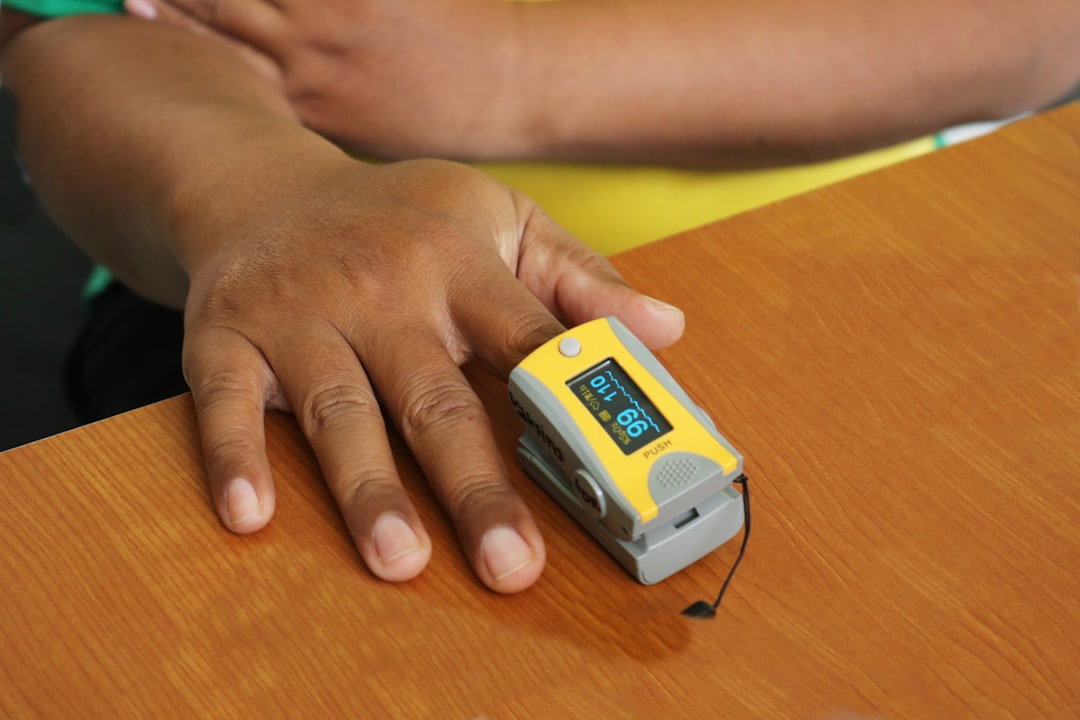
If you need accurate SpO2 data at altitude for medical reasons, use a medical-grade fingertip pulse oximeter. The Masimo MightySat and the Nonin 9590 are the standard. They cost more than a smart ring but they are validated for altitude use.
And if your ring shows scary numbers and you feel fine, trust how you feel first. The wearable industry sells confidence. But confidence without context is just a number with a green checkmark next to it.
What the industry should do
The path forward is straightforward. It just requires admitting that the current validation standard is insufficient.
Wearable companies should publish SpO2 accuracy data at a minimum of three altitudes: sea level, 5,000 feet, and 10,000 feet. They should publish the mean error, the limits of agreement, and the signal quality metrics that determine when a reading should be discarded. They should do this for every hardware revision.
They should add context-aware algorithm adjustments. A barometric pressure reading from the phone is trivially available and could be used to flag altitude-affected data. Oura already has a barometer in the ring itself. It uses it for sleep tracking, not for SpO2 calibration. That is a missed opportunity.
And they should stop presenting single-number readiness scores as if they are physiologically meaningful without acknowledging the environmental factors that affect them. A readiness score of 58 after a flight is not useful. It is misleading.
We are planning to do all of this for Pulsyn before we ship. The altitude chamber tests are on the roadmap. The signal quality indicators are in the app. The context-aware calibration is in design. I am not promising we will have it all done for the first pre-order batch. But I am promising we will publish what we find, including the parts that do not look good.
The wearable industry sells data. But data without context is not information. It is just numbers that look like they mean something until you ask the right question.
About the author
James Hoffmann is the founder of Pulsyn. He is building a privacy-first smart ring and spending too much time reading pulse oximetry studies at 3 AM.
References
- Humphreys S, Deyermond R, Bali I, Stevenson M, Fee JPH. The effect of high altitude commercial air travel on oxygen saturation. Anaesthesia. 2005;60(5):458-460. doi:10.1111/j.1365-2044.2005.04124.x
- Lipnick MS, Feiner JR, Au P, Bernstein M, Bickler PE. The accuracy of 6 inexpensive pulse oximeters not cleared by the FDA. Anesth Analg. 2016;123(2):338-345.
- Accuracy of peripheral oxygen saturation (SpO2) at rest determined by a smart ring: A Study in Controlled Hypoxic Environments. Digital Life. 2025. RMSE = 3.55%.
- Frontiers in Physiology. Accuracy of wearable smartwatch for measuring blood pressure and oxygen saturation across a wide altitudinal gradient. 2026. doi:10.3389/fphys.2026.1746894
- Luks AM, Swenson ER. Pulse oximetry at high altitude. High Alt Med Biol. 2011;12(2):109-119.
- CAA UK. Physiology of flight: Cabin altitude and hypoxia. UK Civil Aviation Authority, 2025.