How Smart Rings Learn Your Body (and Why the First Two Weeks Matter)

TL;DR
Your smart ring is guessing for the first two weeks. Every sleep score, every recovery metric, every "readiness" percentage is built on population averages until the algorithm learns what normal looks like for you. Most companies do not tell you this clearly. Pulsyn does, because we think the calibration period is the most honest part of the whole experience.
The first week is always weird
I wore our first prototype for thirty-one days before I trusted a single number it produced. Not because the sensors were broken. The PPG was stable, the accelerometer was calibrated, and the BLE packets were arriving clean. I did not trust the numbers because the algorithm had no idea who I was yet.
On day three, the ring told me my recovery was "poor." I felt fine. On day five, it said my sleep score was 92. I had slept four hours because I was debugging a charging case at 2 AM. The ring was not broken. It was comparing my biometrics against a generic population model built from thousands of strangers. A 28-year-old athlete's resting heart rate is not the same as mine. A 45-year-old's deep sleep percentage is not my baseline. Until the algorithm learns your distribution, every score is a rough approximation.
This is the calibration period. Every wearable has one. Some companies talk about it in support docs buried three clicks deep. Others pretend it does not exist. None of them put it on the box, because "requires two weeks to become accurate" is not a great selling point next to "instant insights."
What "baseline" actually means
Your baseline is the statistical distribution of your own metrics over time. Not a single number. A distribution. Your resting heart rate is not 58 bpm. It is a normal distribution centered somewhere around 58, with a standard deviation that depends on your caffeine intake, your stress, your sleep debt, and whether you trained yesterday.
When a ring calculates a recovery score, it is asking a simple question: how far are today's metrics from your personal normal? If your HRV is 42 ms and your baseline mean is 45 ms with a standard deviation of 6, that is a z-score of -0.5. Barely notable. If your baseline mean is 62 ms with a standard deviation of 4, that same 42 ms is a z-score of -5.0. Catastrophic. The exact same number means completely different things depending on what the algorithm knows about you.
This is why the first two weeks are noisy. The algorithm starts with a population prior. It assumes you are roughly average for your age and sex. Then, every night, it updates that prior with your actual data. The more data it collects, the tighter the confidence intervals get. After about ten to fourteen days of consistent wear, the population prior has been mostly replaced by your personal distribution. The scores start to mean something.
Some metrics need even longer. HRV is notoriously variable. A single bad night can shift your weekly average by 10%. Skin temperature is even slower to stabilize because it follows circadian and menstrual rhythms that take weeks to pattern-match. We have found that temperature baselines need closer to three weeks to become reliable, which is why Pulsyn's temperature insights remain in a "learning mode" for the first twenty-one days.
How the algorithm actually learns
Most people assume the ring is "calibrating its sensors" during the first two weeks. The sensors are already calibrated at the factory. The PPG LED intensity is tuned, the accelerometer is zeroed, and the temperature sensor is offset-corrected. What is actually learning is the inference layer: the statistical model that turns raw sensor data into personalized scores.
The process is Bayesian. The algorithm starts with a prior belief about your physiology based on population data. Then it observes your actual measurements and updates that belief. Mathematically, it looks like this:
P(baseline | data) is proportional to P(data | baseline) times P(baseline)
In plain terms: the more nights you wear the ring, the more the algorithm trusts your actual data over the generic average. After seven nights, your personal data might account for 60% of the model weight. After fourteen nights, it is closer to 85%. After thirty nights, the population prior is basically irrelevant.
The catch is that the algorithm needs clean data. If you wear the ring for three days, then take it off for two, then wear it for one, the Bayesian update is jumpy. The model cannot tell whether a sudden spike in heart rate is because you are sick or because the ring was loose on your finger. Our onboarding flow explicitly tells users to wear the ring consistently for the first two weeks. We do not hide this. We put it in the setup wizard because skipping the calibration period produces garbage scores for months.
Sleep staging is the hardest part to personalize. Most rings use a combination of heart rate variability and accelerometry to guess sleep stages. Deep sleep is characterized by low HRV and minimal movement. REM sleep has higher HRV with irregular movement patterns. But the thresholds are different for everyone. My deep sleep HRV floor might be 35 ms. Yours might be 52. During the calibration period, the algorithm is learning where your thresholds live. Until it knows that, it is using population thresholds that misclassify stages for roughly 30% of users, according to validation studies we reviewed during development.

What the industry does instead
Most wearable companies handle the calibration period in one of three ways. All of them are bad.
Option one: hide it. The ring gives you a readiness score on day one. It looks authoritative. Two decimal places, a percentage, a color-coded badge. The user does not know that the score is built from a population model that has never seen their data. By the time the algorithm actually learns their baseline, the user has already formed an opinion about whether the product "works." This is the most common approach. It is also dishonest.
Option two: delay scores. Some apps show "insufficient data" for the first week and then pop up with a fully formed score on day eight. This is better, but it still compresses the uncertainty. The user sees a single number, not a confidence interval. A score of 78 on day eight might have a 95% confidence interval of 62 to 94. The app shows 78. The user thinks 78 is real.
Option three: pretend calibration is instant. A few products claim they use "AI" to skip the calibration period. What they usually mean is that they have a larger population model trained on more users. It is still a population model. It is still wrong for outliers. Tall people, short people, people with arrhythmias, people on beta blockers, pregnant people, people with sleep apnea. A bigger training set helps at the margins, but it does not replace personal calibration. No model trained on strangers can know your normal.
Oura, to their credit, does mention that "it may take time for Oura to learn your unique patterns." The language is vague. Whoop tells users that their "baseline is being established." Again, vague. Neither company explains what the baseline is, how it is calculated, or how much the scores should be trusted during the learning period. The reason is obvious. If you tell a user that their $349 ring is guessing for two weeks, that user might ask why the ring costs $349.
Pulsyn is $160. We are not afraid to tell you the truth.
The Pulsyn approach: show the uncertainty
We built the calibration period into the UI. Not as a footnote. As a feature.
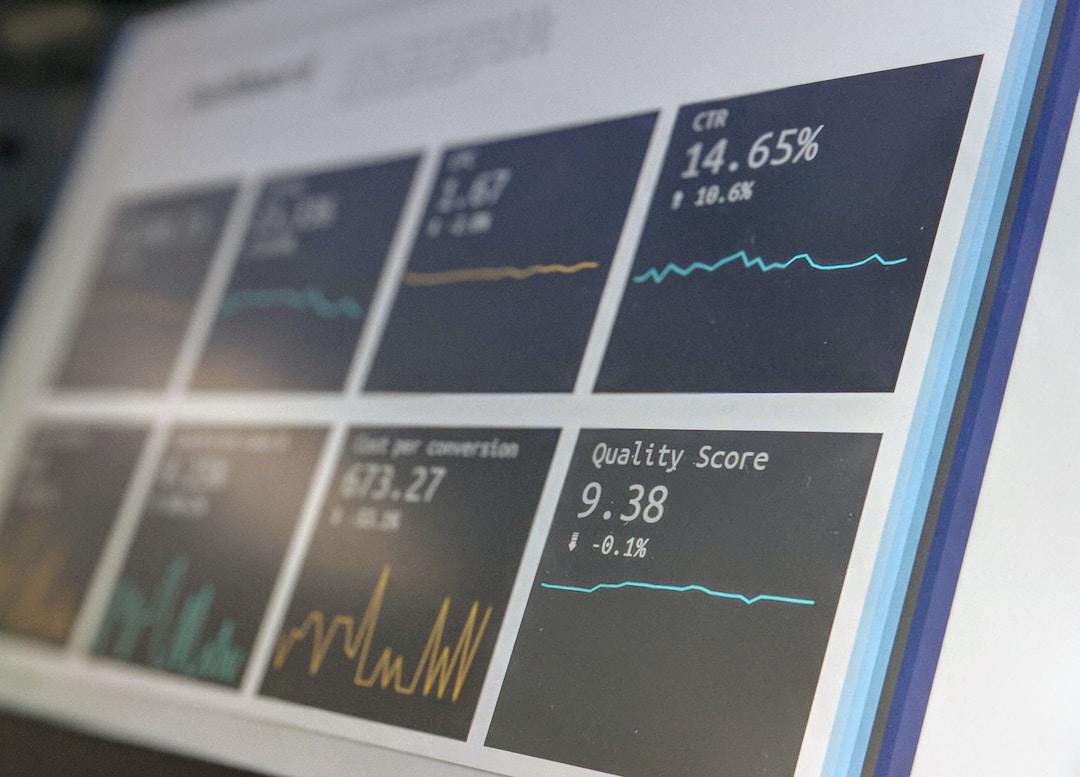
During the first fourteen days, Pulsyn shows a "calibration progress" indicator next to every score. It is not a marketing badge. It is a statistical confidence meter. At day two, the meter reads roughly 15% calibrated. At day seven, 65%. At day fourteen, 90%. The number is derived from the Bayesian posterior variance. When the variance is high, the calibration percentage is low. When the variance tightens, the percentage rises.
We also show population ranges alongside your scores during the calibration period. If your HRV is 38 ms, the app says: "Your HRV is 38 ms. Population average for your demographic is 45 ms. We need more data to know if this is normal for you." This is a deliberate design choice. It prevents the user from panicking about a single number that might be perfectly normal for their physiology.
After the calibration period, the app switches to personal ranges. "Your HRV is 38 ms. Your baseline is 41 ms. This is within your normal range." The language changes because the model has changed. The user knows the transition happened because we tell them.
We considered hiding the calibration indicator entirely. Our first UI mockups looked like every other ring app: a big score, a color, a trend line. James (me) pushed back. The whole reason Pulsyn exists is that we do not treat users like data sources to be harvested. Treating them like adults who can understand statistical uncertainty is the minimum bar.
Why losing your baseline is worse than losing the device
This is the part most people do not think about until it happens. When you switch from one wearable to another, you lose your baseline. The new device starts from zero. Fourteen days of guessing all over again.
This matters because your baseline is your health history. Two years of HRV data tells you that your HRV drops three days before you get sick. Six months of temperature data tells you that your luteal phase raises your skin temperature by 0.3 degrees. That knowledge is valuable. It is also trapped in the device that collected it.
Most companies do not let you export your baseline. They give you a CSV with raw numbers, but a CSV does not contain the statistical model. It does not contain the distribution parameters, the standard deviations, the learned thresholds. You cannot hand a CSV to a new ring and say "here is what normal looks like for me." The new ring has to learn it all over again.
Pulsyn stores the baseline model locally on your phone, not in the cloud. It is part of the SQLCipher-encrypted database. If you export your data, you get the full model. The distributions, the thresholds, the confidence intervals. In theory, another device could import that model and resume where you left off. No fourteen-day reset. We are not there yet because the import protocol requires industry agreement, but the architecture is built for it. The data is yours. The baseline is yours.
What you should actually do in the first two weeks
The calibration period is not a passive waiting game. There are things you can do to make the baseline more accurate, faster.
Wear the ring consistently. The algorithm needs contiguous data. Skipping a night creates a gap that the Bayesian model interpolates poorly. If you must take the ring off, do it during the day, not at night. Sleep data is the most calibration-dense period because it contains HRV, temperature, movement, and SpO2 all in one continuous block.
Do not trust the scores yet. Use the raw numbers. Look at your resting heart rate, your HRV, your sleep duration. Those are direct sensor outputs. The scores are interpretations. During calibration, the raw numbers are more reliable than the scores because the scores depend on a baseline that does not exist yet.
Live normally. Do not try to "trick" the algorithm into thinking you are healthier than you are. Drink your normal amount of coffee. Keep your normal schedule. The baseline should reflect your actual life, not an optimized version of it. If you game the calibration period, you end up with a baseline that is too optimistic, and every normal day after that looks like a failure.
Be patient with temperature. Skin temperature is the slowest metric to calibrate because it is influenced by room temperature, bedding, and hormonal cycles. If you are menstruating, your temperature baseline shifts across the month. The algorithm needs at least one full cycle to learn the pattern. This is not a bug. It is biology.

The honest part
I am not sure the fourteen-day calibration period is the right length for everyone. We picked it because our internal testing showed that most metrics stabilize within ten to fourteen days of consistent wear. But "most" is not "all." People with irregular sleep schedules, shift workers, people with chronic conditions, people who travel across time zones frequently. Their baselines might need thirty days. Forty. We do not know yet because we have not tested at scale.
What I do know is that pretending the calibration period does not exist is worse than having a calibration period that is occasionally too short. At least when we show the uncertainty, the user knows the score is provisional. They can decide how much to trust it. That is the difference between a product that respects its users and a product that treats them like engagement metrics.
The first two weeks are the most honest your ring will ever be. After that, the algorithm has decided who you are. Make sure it had enough data to decide right.
About the author
James Hoffmann is the founder of Pulsyn. He has been wearing prototype smart rings for over a year and spent three months building the calibration logic before the first public beta.
References
- Pulsyn sleep score documentation: "We need 14-30 days of consistent wear to build reliable baselines." https://pulsyn.tech/blog/sleep-score-calculation
- Sundas A, et al. "Heart rate variability over the decades: a scoping review." PeerJ. 2025;13:e19347. doi: 10.7717/peerj.19347
- Oura Member Care. "How does Oura establish baseline?" (Archived support article, cited as historical reference to industry practice.)