Your Smart Ring Might Be Causing Your Insomnia


TL;DR
Your sleep tracker is making your sleep worse. There is a name for this: orthosomnia. It was coined in 2017 by sleep researchers at Rush University Medical Center who noticed a growing number of patients arriving with sleep data from wearables and a new kind of anxiety to match it. The American Academy of Sleep Medicine ran a survey in early 2025 that found Americans are now losing sleep specifically over worrying about sleep. The device that was supposed to fix the problem is becoming the problem. This post is about what orthosomnia is, why the wearable industry built the conditions for it, and what I think the honest alternative looks like.
How the term was coined in a 2017 study
The term orthosomnia comes from a 2017 paper in the Journal of Clinical Sleep Medicine by Dr. Kelly Baron and colleagues at Rush. They described patients who were "unhealthy preoccupied with getting the right amount of sleep as well as the right stages of sleep." These were not people who happened to buy a sleep tracker. These were people whose relationship with sleep had been restructured by the data that tracker produced.
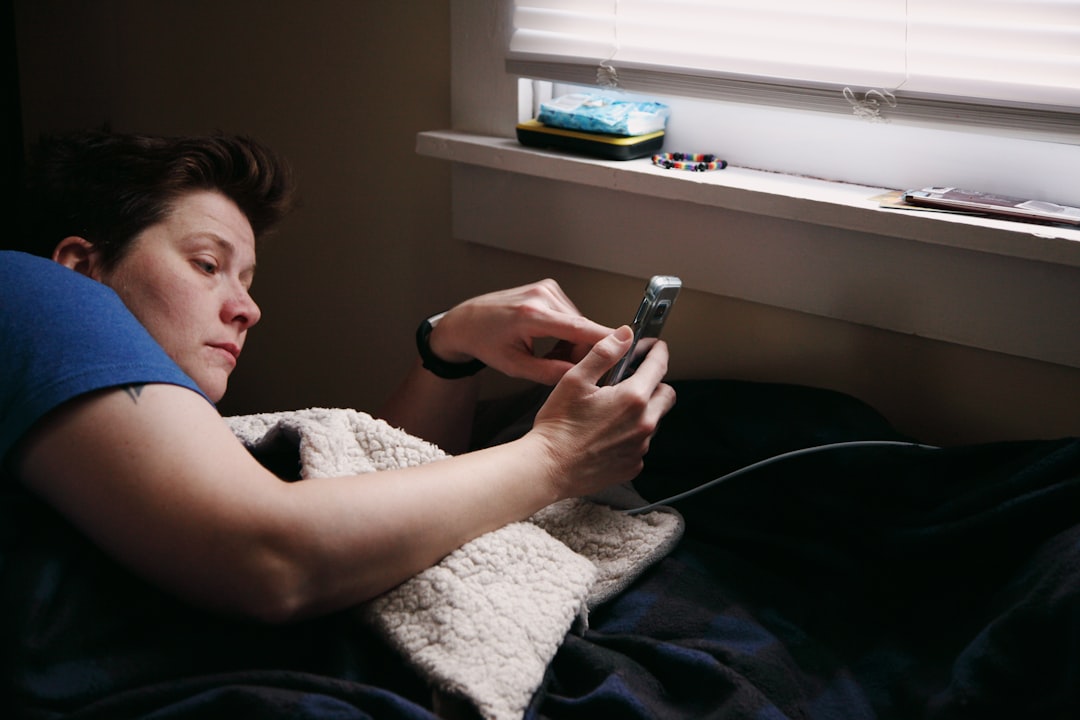
Before wearables, if you slept badly, you felt tired and moved on. You had a bad night. Maybe two. The feeling was the signal. After wearables, the signal became a number. And numbers are harder to ignore than feelings, especially when the number is bad and the app sends you a push notification about it the moment you wake up.
The 2017 paper was small, but the phenomenon has only grown since. A 2025 survey by the American Academy of Sleep Medicine found that a significant portion of Americans who track their sleep report that the tracking itself creates anxiety. The AASM press release in January 2025 was titled "Perfect sleep is a target that is keeping Americans awake." That is not a metaphor. It is a literal description of the behavior: people staying awake because they are worried about the data their sleep tracker will produce about their sleep.
Why the scores feel real even when they are wrong
There is a reason orthosomnia exists and it goes deeper than people being neurotic about numbers. Wearable companies designed their sleep scores to feel authoritative.
Open your Oura app or your Whoop or your Fitbit. You see a number. 72. 84. 61. The number has a color. It has a label: Good. Fair. Optimal. Below it there is a chart and a recommendation. The interface communicates certainty. It communicates that the number is real and that it means something.
But the number is an estimate. Sleep staging from a ring or a wrist device uses accelerometer data and heart rate variability to guess which sleep stage you are in. It is not measuring brain waves. The gold standard for sleep staging is polysomnography, which requires EEG electrodes on your scalp. A ring on your finger detects movement and pulse. It is guessing, and the guess is wrong more often than companies admit.
The TIME article on this topic quoted a clinical psychologist named Baron Zeleis who described the dynamic this way: for some patients, the tracker data becomes "a point of discussion, what used to be called nighttime anxiety." The device gives the anxiety a target. It turns an amorphous feeling into a specific problem you can fix, which is appealing. But fixing a number that does not accurately measure what it claims to measure does not fix your sleep. It just makes you try harder to move a score that was never real.
The 2020 follow-up study on orthosomnia found that the condition is most common among people who are "wealthy and educated." That makes sense. These are the people who can afford $349 rings and $239 annual subscriptions. They are also the people most likely to trust quantified data over subjective experience. That is a useful trait in many domains. In sleep, it backfires.
How the industry profits from the anxiety
This is the part that matters. The wearable industry does not have a financial incentive to fix orthosomnia. The subscription model is built on daily engagement. If you check your sleep score once and stop caring, you are not a good customer. If you check it every morning, obsess over the number, adjust your behavior, and stay subscribed because you want to see the trend improve, you are an excellent customer.
Oura charges $70 per year for a subscription. The company filed for IPO in early 2026. Its S-1 filing will not say this, but a significant portion of its engagement metrics come from people who check their sleep data every day. Some of those people are genuinely curious about their health. Some of them are anxious about the number. Both groups produce the same daily active user stat.
The data output is designed to create a feeling of incomplete information. The app tells you your sleep score but not exactly how it is calculated. It tells you your readiness but not the weightings. It leaves room for you to wonder what you are missing, which keeps you checking. This is not a conspiracy. It is a standard SaaS engagement pattern applied to health data.
I think there is a more honest way to do this. It involves making the algorithms transparent, letting the data live on the device instead of a cloud server, and designing the interface to trend toward indifference rather than urgency. If the goal is better sleep, the product should not be designed to keep you in the app. It should be designed to make the app irrelevant as your sleep improves.
Why Pulsyn does not push notifications when you wake up
One concrete design choice: Pulsyn does not send you a push notification with your sleep score when you wake up. It is in the app, generated locally, stored on your phone. You can look at it if you want. The app does not demand your attention first thing in the morning.
This was not an obvious decision. Every other wearable sends a morning summary notification. It is standard practice. The notification drives app opens, which drives engagement, which drives subscription retention. Cutting it means accepting lower engagement metrics. But the tradeoff is clear: we are not building a product that needs you to be anxious about your data. We are building a product that gives you the data when you ask for it and leaves you alone otherwise.
The same logic applies to the readiness score, the stress score, and the recovery score. They all exist. They are all calculated on the device. None of them are pushed to you unless you set up a specific alert. The default is that your health data is available but not demanding.
This is not a marketing claim about wellness. It is a design constraint. We removed the notification pathway because it is the single most effective driver of orthosomnia behavior. If the first thing you see every morning is a number telling you how badly you slept, you are going to internalize that number. Over weeks and months, that internalization changes how you feel about sleep. It turns sleep from a biological process into a performance metric.
What the evidence actually says about breaking the cycle
The clinical research on orthosomnia treatment is still thin, but the consensus advice from sleep psychologists converges on a few points.
One: focus on trends over individual nights. A single bad sleep score is noise. A trend over weeks is signal. But most apps present the daily score with equal visual weight, which trains you to care about each one.
Two: take breaks from tracking. The TIME article recommended "tracker breaks" of a few days to reset your relationship with sleep data. This is hard advice for a company to give when their business model depends on daily engagement, which is exactly why it matters.
Three: prioritize how you feel over what the device says. If you wake up feeling rested and your sleep score says 62, the score is wrong. Not your feeling. The device measures proxy signals. Your feeling measures actual sleep quality. The device is useful when the two align and instructive when they diverge. The divergence tells you something about the device's limitations, not about your health.
Four: understand what the device can and cannot measure. No consumer wearable measures sleep stages the way a sleep lab does. They measure movement and heart rate and apply a proprietary model. The model is better than nothing for population-level trends. For individual-night diagnosis, it is guessing. Treating the guess as truth is how orthosomnia starts.
What I would do if I had orthosomnia
I am not a doctor. I am a 22-year-old building a hardware company. But I have spent two years reading the sleep science literature and talking to researchers. Here is my honest take.
If I caught myself checking my sleep score every morning with a knot in my stomach, I would stop wearing the ring for a week. The data does not disappear. It collects on the device. You can look at it later. The point is to break the Pavlovian response. A week without feedback resets your relationship with the number.
When you start wearing it again, I would only look at the seven-day average, not the daily score. The daily score is noise. The seven-day trend is signal. Most apps can show you this view. The problem is that the first screen you see is always the daily score, so you have to train yourself to skip past it.
I would also set a hard rule: no checking sleep data in the middle of the night. If you wake up at 3 AM and check your ring to see how your sleep so far looks, you are feeding the cycle. The data will be there in the morning. There is nothing useful you can do with it at 3 AM except generate anxiety that keeps you awake.
The honest truth is that I do not know if these strategies work long term. The research on orthosomnia interventions is preliminary. What I do know is that the problem is real and growing, and the wearable industry has not acknowledged it because acknowledging it would require changing the engagement model that drives subscriptions.
What a sleep tracker should actually do
The question that keeps coming back to me is: what would a sleep tracker look like if it were designed to minimize orthosomnia risk?
It would not send notifications. It would not show you a color-coded score the moment you open the app. It would default to trend views, not daily breakdowns. It would let you set your own norms instead of applying a population average. It would be transparent about how the scores are calculated. And it would make sure your data stays on your phone so there is no economic incentive for the company to maximize your time in the app.
This is the direction we are building. The privacy-first architecture serves two purposes: keeping your data away from advertisers and removing the economic incentive for Pulsyn to design addictive feedback loops. If we cannot see your data, we cannot optimize the app to keep you engaged with it. The only thing we can optimize is whether the hardware works reliably and whether the on-device calculations are correct.
Pulsyn still has a sleep score, a readiness score, and a stress score. They are useful tools. But they are designed to be consulted, not consumed. They do not demand your attention. They do not push. They do not judge you with a red number at 6 AM. You open the app when you want to know something, and you close it when you have the answer.
That is the difference between a health tool and a health subscription business. One wants you to get better and leave. The other wants you to stay. I think the honest choice is visible in the design.
About the author
James Hoffmann is the founder of Pulsyn. He has been researching wearable sleep tracking accuracy and orthosomnia for two years and has spoken with sleep researchers at Rush University Medical Center.
References
- Baron, K. G., et al. "Orthosomnia: Are Some Patients Taking the Quantified Self Too Far?" Journal of Clinical Sleep Medicine, 2017. https://jcsm.aasm.org/doi/10.5664/jcsm.6472
- American Academy of Sleep Medicine. "Sleep tracking and 'sleepmaxxing' change bedtime behaviors and keep some Americans awake at night." AASM Press Release, January 2025. https://aasm.org/sleep-tracking-and-sleepmaxxing-change-bedtime-behaviors-and-keep-some-americans-awake-at-night/
- Colino, Stacey. "Your Quest for Perfect Sleep Is Keeping You Awake." TIME, August 2025.
- LaMotte, Sandee. "The potential dangers of sleep trackers, according to experts." CNN, March 2025.