A $500K Kickstarter Is the Most Honest Milestone in Hardware

TL;DR
Most hardware startups take VC money before they know if anyone wants their product. We are doing the opposite. Pulsyn's Kickstarter is a $500K demand test with no safety net. If 3,000 people do not back a $160 smart ring with no subscription, we will learn that faster than any focus group could tell us. And that is the point.
The demand problem in hardware
Hardware startups have a unique disadvantage. Software founders can ship an MVP in a weekend, measure sign-ups by Tuesday, and pivot by Friday. Hardware founders spend six months on a prototype, six months on tooling, and six months on certifications before a single customer touches the product. By then, you have burned through a seed round and you still do not know if anyone will buy it.
I have watched this happen twice in the wearable space. A team raises $2M, builds a beautiful device, discovers that their target market is 4,000 people, and shuts down. The investors lose money. The founders lose two years. The customers lose nothing because the product never existed. Everyone would have been better off if the founders had asked for money upfront.
That is what Kickstarter is. It is not a marketing channel. It is not a pre-order system with good PR. It is a demand validation tool that happens to look like a store. And for a smart ring, it is close to perfect.
What $500K means for a smart ring
Our target is $500,000 in 30 days. That breaks down to roughly 3,125 backers at an average of $160 per ring. Our COGS is $30. Our gross margin is 81 percent. If we hit the target, we fund a 500-unit production run, FCC and CE certification, and two full-time hires. If we miss it, we know the market is not there and we do not waste anyone's time.
Those numbers are not arbitrary. I chose them by working backwards from what we actually need.
A 500-unit production run costs approximately $15,000 in materials and assembly. FCC and CE certification for a Bluetooth Low Energy device with a lithium battery runs $8,000 to $12,000. Tooling for the charging case mold is another $10,000. Two hires at Arizona salary levels for six months is roughly $40,000. Add packaging, shipping, Kickstarter fees, and contingency, and you are at $100,000 to $120,000 just to get to the first retail unit.
The $500,000 target is not the minimum we need to survive. It is the minimum we need to prove that the demand is real.
That 500-unit run also forces specific constraints. We are offering two colors at launch: silver and black. Gold is deferred because adding a third color doubles the SKU complexity and the minimum order quantity per finish. The split is 300 silver and 200 black, based on early interest polls. If the Kickstarter campaign skews heavily toward one color, we will adjust the production order and explain the change to backers. That kind of transparency is only possible because the batch size is small enough to be flexible. A 500-unit production run is tiny. If we cannot sell 500 rings on Kickstarter, we cannot sell 50,000 at retail. The math is the same. The only difference is how fast you find out.
The all-or-nothing structure matters
Kickstarter's all-or-nothing funding is the feature, not the bug. If a campaign hits 80 percent of its goal, the founder gets nothing. The backers keep their money. The project dies publicly. This sounds harsh. It is also the only honest way to sell hardware.
Compare this to a typical VC pre-seed. A founder raises $500K on a $3M post-money cap, burns through the cash over 18 months, and then discovers there is no product-market fit. The investors write it off. The founder moves on. The failure is private, slow, and expensive. No one learns anything except that the founder was good at pitching.
With Kickstarter, the failure is public, fast, and cheap. If Pulsyn's campaign does not fund, I will know in 30 days that the pitch is wrong. Maybe the price is too high. Maybe the no-subscription message does not land. Maybe the ring category is too niche. Whatever the reason, I will have spent $0 of backer money and I will have a clear signal to either fix the product or shut it down.
That signal is worth more than the money.
The tiers and the psychology
We are offering three tiers. Super Early Bird at $129 for the first 100 backers. Early Bird at $149 for the next 500. Standard at $160 for everyone after that. The $129 tier is below our target retail price because the first 100 backers are taking the most risk. They are backing a prototype, not a product. They deserve a discount.
The tier structure is also a test. If 90 percent of our backers choose the $129 tier and we barely hit the goal, we learn that price sensitivity is higher than we thought. If most backers choose the $160 tier and we blow past the goal, we learn that the no-subscription pitch is strong enough to command full price. Either way, the data is real because the money is real.
I have seen hardware campaigns offer 12 tiers with bundles, accessories, and lifetime subscriptions. That is a mistake. Every tier adds manufacturing complexity. Every bundle adds inventory risk. We are selling one ring in two colors. Silver and black. That is it. The simpler the product, the more honest the test.
What prototype ready actually means
There is a running joke in hardware circles that Kickstarter campaigns fall into two categories. The ones that ship six months late and the ones that lie about being ready. I want Pulsyn to be a third category: the one that was actually ready and still shipped six months late because hardware is hard.
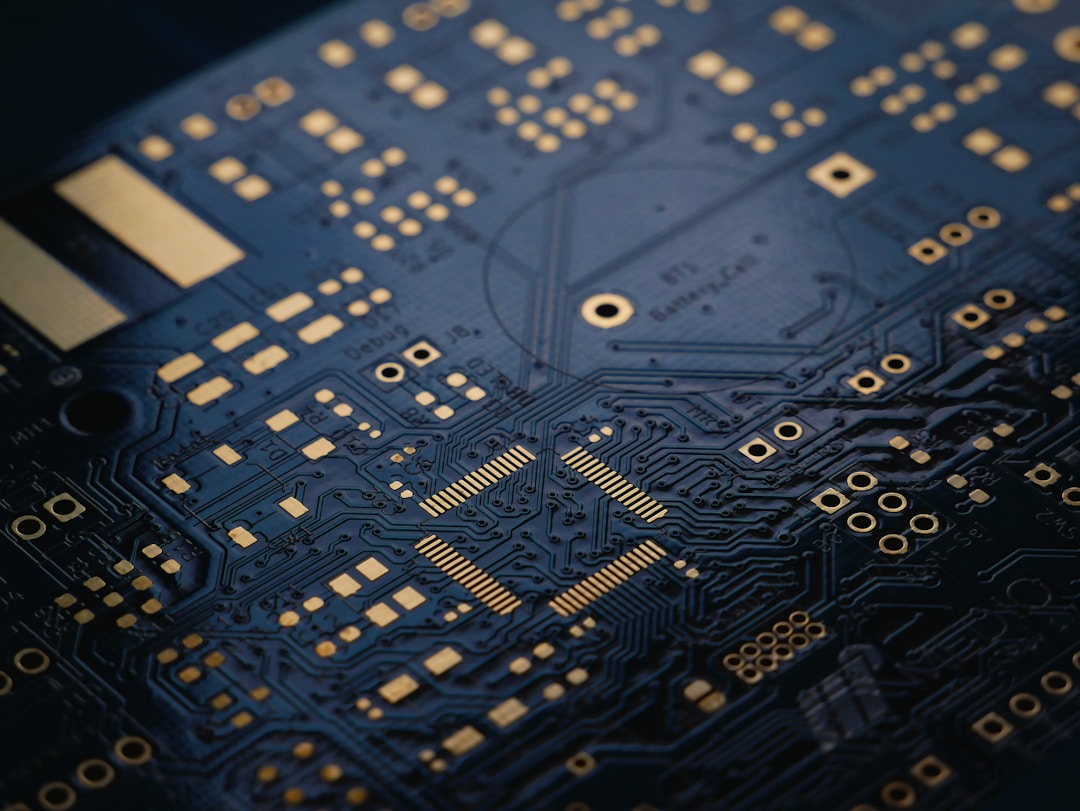
Right now, our circuit boards are fabricated and tested. The firmware connects to the app over BLE, transmits heart rate and SpO2 packets, and stays within our power budget. The charging case is designed and we are printing resin prototypes on an Elegoo Saturn 3 Ultra. The app calculates sleep stages, HRV, and readiness scores on-device without touching a cloud server. The encryption layer uses SQLCipher with 600,000 PBKDF2 iterations. I can put the ring on, sleep, wake up, and see my data in the app. It works.
But working is not the same as shippable. The resin prototypes are not production ABS. The BLE stack has edge cases we have not hit yet. The battery life is 4 days in testing and we need 5. The mold for the charging case lid has a tolerance issue that shows up at scale. These are normal problems. Every hardware product has 200 of them. The difference is that we are solving ours before we take money, not after.
That is why I am not promising delivery in August. I am promising delivery in Q3 2026. If we hit the campaign goal in June, we place the production order in July, run certification in parallel, and ship in September. If something breaks, we tell the backers and we fix it. The timeline is honest because it is padded by the realities of manufacturing, not by marketing optimism.
What I do not know
I would like to say I am confident we will hit $500K. I am not. I think the no-subscription angle is stronger than most founders realize. The Reddit threads I read daily are full of people begging for an Oura alternative without a monthly fee. But thinking the demand exists and watching 3,000 people actually enter their credit card details are different things.
I also do not know if Kickstarter's audience cares about privacy the way our early community does. Kickstarter backers are early adopters. They take risks. They back weird projects. But they are not necessarily the same people who will buy a privacy-first smart ring at Target in 2027. The demographic overlap might be perfect. It might be zero. I have no data yet.
I also do not know if our campaign video will be any good. I am filming it myself on an iPhone and a DJI wireless mic. Professional Kickstarter videos cost $10,000 to $20,000 to produce. We do not have that budget. The video will show a real prototype, a real app, and a real founder talking about a real product. It will not have lens flares or slow-motion shots of someone running on a beach. I hope that is enough.
Another thing I do not know is whether our cost estimates are right. I quoted $8,000 to $12,000 for FCC and CE certification. That is the range I got from two testing labs in Shenzhen. But if the first test fails and we need a redesign, the cost doubles. I quoted $10,000 for mold tooling. That is based on a quote from a factory in Dongguan. But if the mold needs rework after the first shot, the cost doubles. Hardware is a long chain of estimates and every estimate has a 30 percent chance of being wrong. I am budgeting for that. I am not pretending it will not happen.
The honest answer is that this campaign is a $500K experiment with a binary outcome. I am comfortable with that because the alternative is worse. The alternative is raising VC money, building inventory, and then finding out the hard way.

Why this changes the product
Kickstarter backers are not customers. They are investors with a very small check size. They read updates. They ask questions. They notice when you change the charging case design between the campaign page and the final product. That level of scrutiny is exhausting and valuable.
Because our backers are watching, we are building in public. The PCB design is open. The encryption spec is published. The app source code will be public before the first ring ships. If we change the battery supplier, we will explain why. If the mold costs more than we estimated, we will say so. This is not a marketing strategy. It is a structural consequence of taking money from 3,000 people before the product is finished.
That structure makes Pulsyn better. It removes the temptation to hide bad news. It removes the temptation to overpromise. It forces us to treat the backers as partners, which is exactly what they are.
The comparison nobody wants to make
Oura launched in 2015. They raised venture capital before they had a shipping product. They built a beautiful ring, a beautiful app, and a beautiful subscription model. Today they are filing for an IPO and their users are paying $72 per year for data that lives on someone else's server. I do not think Oura is evil. I think they made a rational choice given the incentives of venture capital. Venture capital wants recurring revenue. Subscription models provide recurring revenue. The product becomes a vehicle for the subscription.
Pulsyn is not taking that path because we are not taking that money first. The Kickstarter structure forces us to optimize for the one-time sale. The ring has to be good enough that people want it without a monthly fee. The data has to stay local because there is no cloud infrastructure to monetize. The margin has to come from hardware efficiency, not from recurring billing.
That is a harder business model. It is also a more honest one. And if 3,000 people agree, we will have proof that the harder model is the better one.
About the author
James Hoffmann is the founder of Pulsyn. He is currently prototyping the Rune 1 smart ring in Phoenix, Arizona, and preparing for a Q2 2026 Kickstarter campaign.
References
- Pulsyn Kickstarter campaign details: https://getpulsyn.com (upcoming Q2 2026)
- Oura IPO filing analysis (Pulsyn blog, May 2026): https://getpulsyn.com/blog/oura-just-filed-for-ipo-here-is-why-it-will-flop
- Hardware margin breakdown (Pulsyn blog, May 2026): https://getpulsyn.com/blog/smart-ring-hardware-margins