The 'Continuous' Heart Rate Lie: Why Your Ring Samples Your Pulse in Bursts, Not Streams

TL;DR
"Continuous heart rate monitoring" is a marketing phrase that means "we check your pulse every few minutes and fill in the gaps with interpolation." The physics of photoplethysmography and the size of a smart ring battery make true continuous sampling impossible. Every smart ring company knows this. Most of them say it anyway.
How PPG actually works
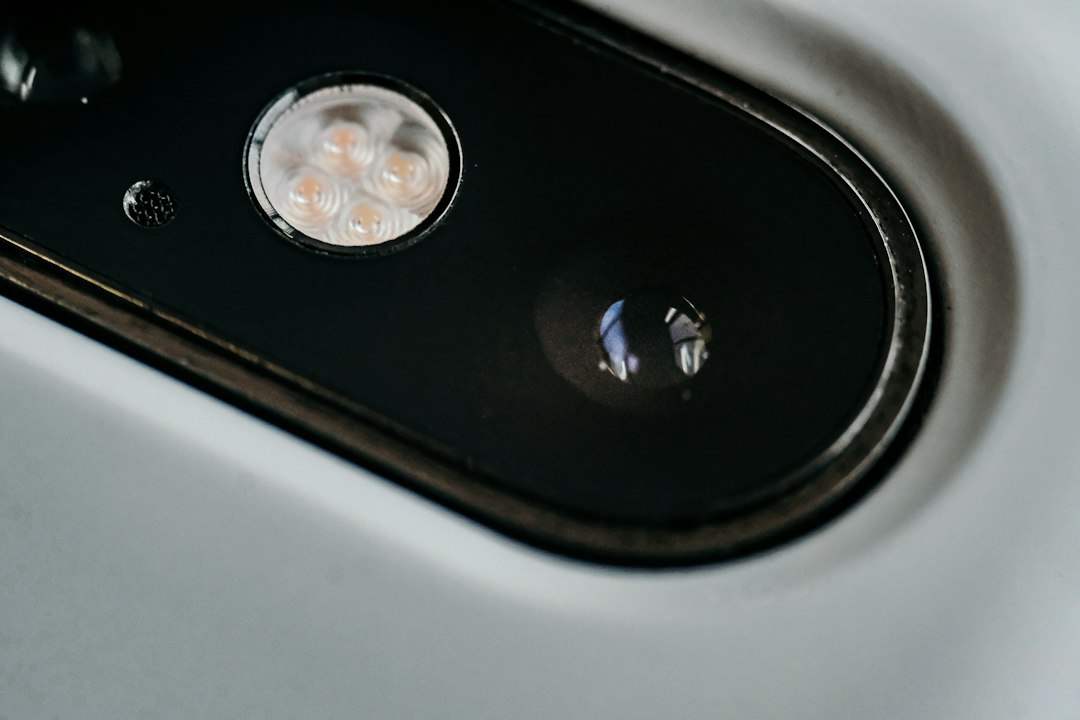
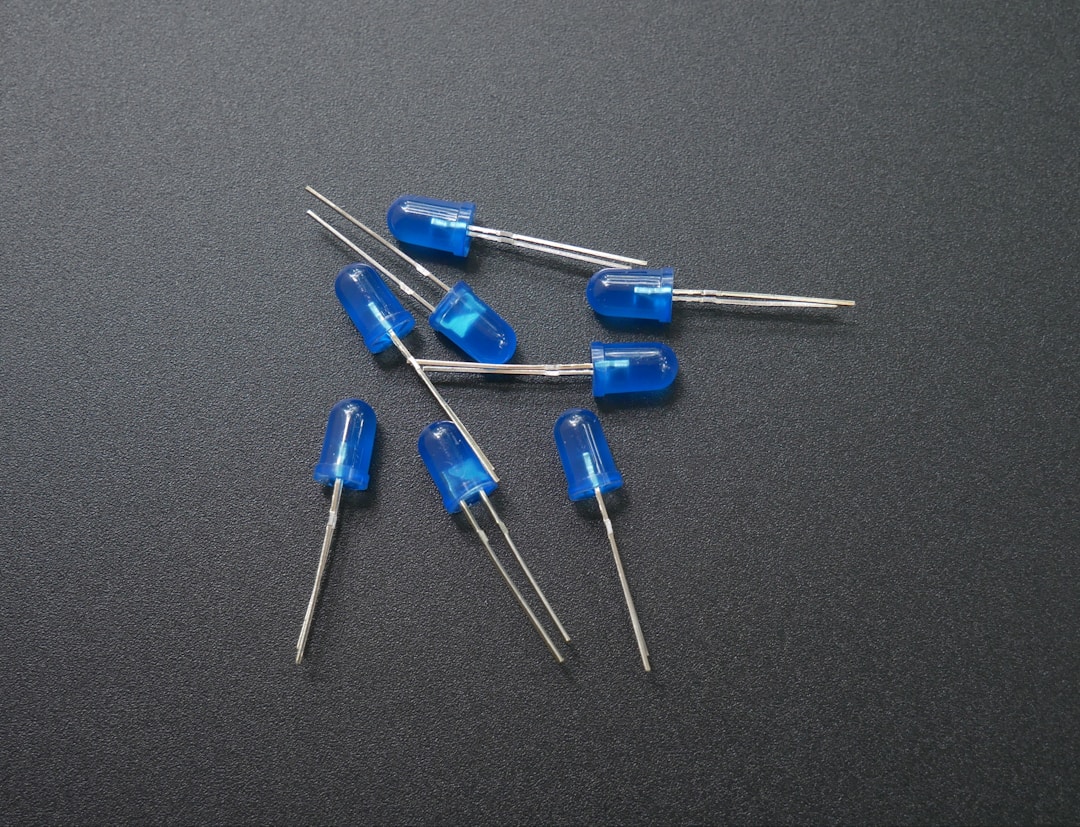
PPG sensors in smart rings use light-emitting diodes and photodiodes to detect blood volume changes in your finger's capillaries. The LED flashes green light into your skin, typically at 510 to 570 nanometers, and a photodiode measures how much of that light gets absorbed by the hemoglobin in your blood. With each heartbeat, the blood volume in your capillaries changes slightly, and the photodiode sees that change as a variation in reflected light intensity.
This is the same technology used in fingertip pulse oximeters at hospitals, but scaled down to fit inside a ring. The difference is power. A clinical pulse oximeter plugs into a wall outlet. Your smart ring runs on a battery the size of a fingernail clipping.
The LED in a typical smart ring PPG module draws between 1 and 10 milliamps when active. The photodiode and the analog front-end add another fraction of a milliamp. A single 10-second PPG measurement might consume 1 to 5 milliamp-seconds of energy. That does not sound like much until you scale it.
A typical smart ring battery holds between 15 and 25 milliamp-hours of charge. The Apple Watch Series 10, by comparison, carries a 296 milliamp-hour battery. That is roughly 12 to 20 times more capacity in a device with 50 times more internal volume. The ring form factor is brutal for energy storage. There is simply nowhere to put a bigger cell.
The green LED wavelength is not an arbitrary choice. Green light sits in a sweet spot where hemoglobin absorbs strongly and skin melanin absorbs relatively weakly, giving the photodiode a clean signal across most skin tones. But that absorption is also why the LED needs significant power. A weaker LED gives a noisier signal, and a noisy signal means the algorithm needs more samples to compute a reliable heart rate. The hardware and the signal processing are locked in a tug-of-war that the battery always loses.
The battery math that makes "continuous" impossible
Let me show you the math, because the numbers are clear.
If you sampled PPG continuously at 100 hertz (100 LED flashes per second, which is a standard rate for clinical pulse oximetry), the LED alone would draw 1 to 10 milliamps continuously. At 5 milliamps average, a 20 milliamp-hour battery would drain in 4 hours. Not days. Hours.
Even if you optimize aggressively. Suppose you use a lower sampling rate of 25 hertz, pulse the LED for only 1 millisecond per sample, and sleep the analog front-end between flashes. You might get the average draw down to 0.5 milliamps. At that rate, a 20 milliamp-hour battery lasts 40 hours. That is less than two days, and that assumes you are doing nothing else with the ring. No Bluetooth. No accelerometer. No temperature sensor. No storage writes. Just the heart rate LED.
For a ring to deliver the 5 to 7 days of battery life that Oura, RingConn, and Ultrahuman advertise, the PPG sensor cannot run continuously. It must run in bursts. The device wakes up the PPG module, takes a measurement lasting 10 to 30 seconds, then shuts the module down and sleeps for minutes.
This is called duty cycling. It is standard practice in embedded electronics. It is also the exact opposite of what the word "continuous" means in plain English.
What "continuous" actually means on the box
I have read the marketing materials for every major smart ring. Oura claims "continuous heart rate monitoring." RingConn says "all-day heart rate tracking." Ultrahuman uses "continuous monitoring." None of them define the sampling interval in the fine print, and none of them publish the duty cycle.
What they actually mean is this: the ring checks your heart rate at regular intervals, and those intervals are close enough together that the marketing team decided to call the result "continuous." The actual interval depends on the mode.
During sleep, a ring might sample every 2 to 5 minutes. During the day, it might sample every 5 to 10 minutes unless you enter a workout mode, in which case it might sample every second or two. But "continuous" is not a technical specification. It is a comfort word. It tells the buyer that the device is always watching, always attentive, always there.
The problem is that real cardiac events do not happen on a schedule. A premature ventricular contraction, a brief arrhythmia, or a sudden spike in heart rate during stress lasts seconds. If your ring samples every 5 minutes, it has a 1 in 60 chance of catching a 5-second event. That is not monitoring. That is roulette.
The Apple Watch handles this differently, but only because it has the battery to do so. With a 296 milliamp-hour cell and a wrist form factor that allows a larger LED array, the Apple Watch can sample PPG every 1 to 5 minutes in background mode and switch to 1-second intervals during workouts. It still duty cycles. It just sleeps for shorter periods because it has more energy to spend. The Apple Watch marketing does not use "continuous" as a primary claim, which is either honesty or the luxury of having enough battery that you do not need to pretend.
The gaps nobody tells you about
When a ring samples every 5 minutes, the software has to fill in the gap between data points. This is called interpolation. The app draws a smooth line from sample A at 10:00 to sample B at 10:05, and the user sees a graph that looks like a continuous heart rate trace. It is not. It is a connect-the-dots puzzle where most of the dots are missing.

The interpolation algorithms vary by manufacturer. Some use linear interpolation. Some use spline curves. Some use machine learning models trained on population data to guess what your heart rate did between samples. The last one is particularly concerning because the model is not measuring your heart rate. It is guessing it, based on averages from thousands of strangers.
This matters for metrics that depend on timing precision. Heart rate variability requires measuring the exact millisecond interval between consecutive heartbeats, called the R-R interval. You cannot compute HRV from a 5-minute sampling gap. You need beat-to-beat timing. Smart rings that report HRV do so by taking a longer PPG burst (typically 30 to 60 seconds) during sleep and computing HRV from that window. It is not continuous HRV. It is a nightly snapshot. Oura and Whoop both handle it this way, but neither of them makes the snapshot nature obvious in the app.
The result is a user experience that feels medically precise but is actually a statistical reconstruction. You see a smooth graph. Your doctor sees a 5-minute resolution. The gap between those two realities is where anxiety lives.
The interpolation gets even more aggressive when the ring cannot get a clean signal. If your finger moves, or the ring shifts, or the ambient temperature changes the blood flow dynamics, the PPG reading becomes noisy. The firmware might discard the sample and try again at the next interval. If the user sees a gap, the app might retroactively fill it with a predicted value. You never know which dots on the graph are real measurements and which are synthetic filler.
What Pulsyn does instead
Pulsyn does not claim "continuous heart rate monitoring." The phrase is not on the website. It is not in the app. It is not in the marketing because it is not true, and we do not say things that are not true.
The Pulsyn Rune 1 uses the same PPG sensor architecture as other smart rings. It has a green LED and a photodiode. It duty cycles. The battery is roughly 20 milliamp-hours. The physics are identical. The difference is what we tell the user.
In the Pulsyn app, the heart rate graph shows the actual sampling intervals. If the ring measured at 10:00, 10:05, and 10:10, the graph shows three discrete points. The user can see the gaps. We do not draw smooth curves between measurements because that would imply knowledge we do not have. The app also explains, in plain text, that heart rate is measured in bursts to preserve battery life, and that workout mode increases the frequency but still does not sample continuously.
This is a worse-looking graph. Smooth curves are prettier. They feel more complete. But they are a lie, and we are not in the business of selling pretty lies.
For HRV, Pulsyn takes a 60-second PPG window during deep sleep and computes HRV from the actual beat-to-beat intervals detected in that window. The app reports the HRV value with a timestamp and a confidence score based on signal quality. If the signal was noisy because the user moved, the confidence score drops and the app says so. We do not hide uncertainty behind a smooth UI.
The decision to show gaps instead of curves was a product argument that took three weeks. One side said users would think the app was broken. The other side said users would think the competitors were more advanced. I sided with the second group because the alternative is training users to trust fiction. If the graph is honest, the user learns what the device actually does. If the graph is smoothed, the user learns to trust a fantasy. We picked honesty.
Why this matters for your health data
The continuous monitoring myth shapes how people think about wearables. Users believe their ring is a medically precise sentinel that catches everything. Manufacturers encourage this belief with smooth graphs and vague language. The result is a dangerous asymmetry: the user thinks they have complete data, and their doctor knows they have sparse snapshots.
This asymmetry has real consequences. A user who sees a flat heart rate graph at 72 beats per minute for 8 hours might assume their heart rate was stable all night. In reality, the ring might have taken 96 samples across 8 hours, caught no events, and interpolated the rest. The stability is an artifact of the sampling rate, not a physiological fact.
I am not saying duty cycling is bad. It is necessary. Every embedded device with a battery does it, from your phone to your car key. I am saying that calling it "continuous" is a deliberate deception, and that deception erodes trust in the entire category.
Pulsyn's position is simple: tell the user exactly what the device does, exactly how often it does it, and exactly what the limits are. The user can then decide if those limits meet their needs. Some users will want an Apple Watch with its larger battery and finer sampling. Some will want a ring with its smaller size and longer life, even at the cost of sparser data. Both choices are valid as long as the user understands the tradeoff.
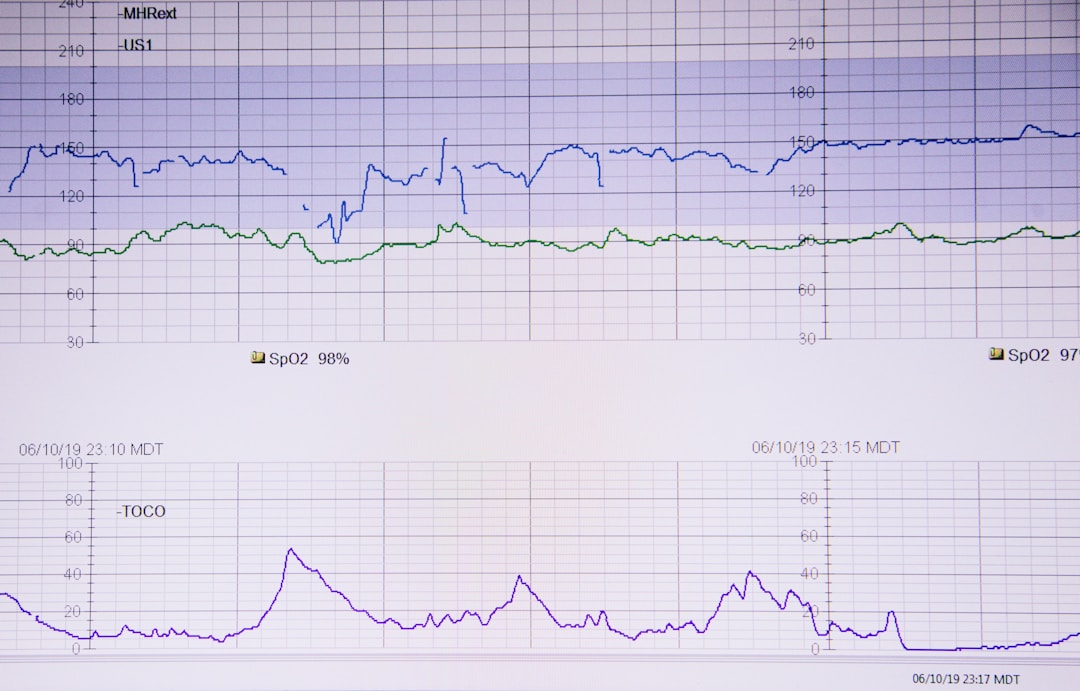
What is not valid is pretending there is no tradeoff. That is what the "continuous" marketing does. It removes the user's ability to make an informed choice, and that is the kind of design decision Pulsyn will not copy.
I am less certain about how the industry will react to this level of transparency. Consumers have been trained to expect smooth graphs and comforting language. A graph that shows gaps might look broken to some users. We might lose sales because our honesty looks like a bug. If that happens, it is still the right choice. A user who understands the limits of their device is a user who trusts it. A user who discovers those limits later, from a doctor or a news article, is a user who feels betrayed. Betrayal scales. Trust scales. We are building for the long term.
About the author
James Hoffmann is the founder of Pulsyn. He has been building embedded sensor systems for wearable health devices since 2023.
References
- Wikipedia, "Photoplethysmogram." https://en.wikipedia.org/wiki/Photoplethysmogram
- Oura Help Center, "Heart Rate Monitoring" (product documentation, as referenced in the footer of oura.com)
- Apple Inc., "Apple Watch Series 10 Technical Specifications" (battery capacity: 296 mAh)