Why Smart Rings Can't Measure Blood Pressure Yet

TL;DR
Blood pressure is a force measurement, not a volume measurement. A PPG sensor in a smart ring tracks how much blood passes through your finger, which is a different physical quantity entirely. Companies that claim cuffless blood pressure from a ring are either calibrating against a cuff you already own or running a regression model that will drift the moment your stress level, caffeine intake, or room temperature changes. The physics does not allow a shortcut. I will explain why.
What blood pressure actually means
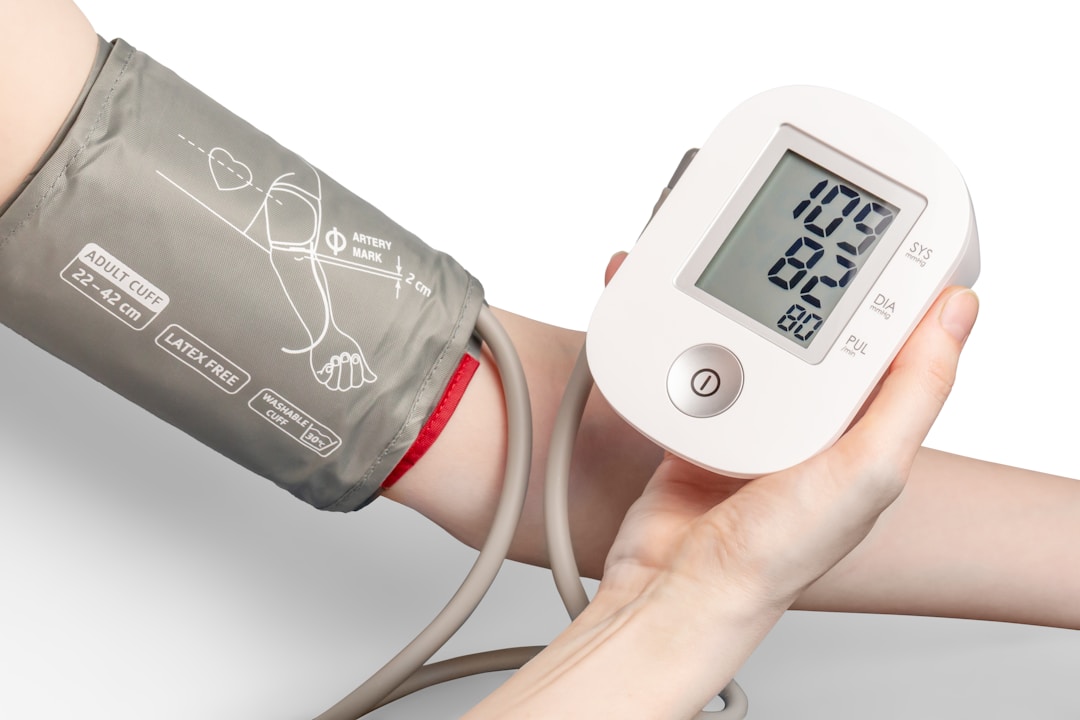
When a doctor wraps a cuff around your arm and inflates it to 180 mmHg, they are not measuring blood flow. They are measuring the force required to collapse an artery. The cuff squeezes the brachial artery until it fully occludes. As the pressure releases, the systolic reading marks the pressure at which blood first forces its way through the collapsed tube. The diastolic reading marks the pressure at which the artery stays open throughout the entire cardiac cycle. Both are pressure values, expressed in millimeters of mercury, and both require physical compression of the vessel wall.
This matters because pressure and flow are not the same thing. You can have high pressure with low flow (a clamped hose with a pump behind it) or low pressure with high flow (a wide open river). The relationship between the two depends on vascular resistance, which changes with temperature, hydration, stress, body position, and whether you just drank coffee. A ring that measures only flow-related signals cannot derive pressure without knowing the resistance, and resistance is not a constant you can burn into firmware.
The gold standard is intra-arterial catheterization, which inserts a pressure transducer directly into the radial artery. This is invasive, expensive, and only used in ICUs. The cuff is the non-invasive standard because it applies a known external pressure and listens for the transition points. No wearable on the market replicates this mechanism. None.
What PPG actually measures
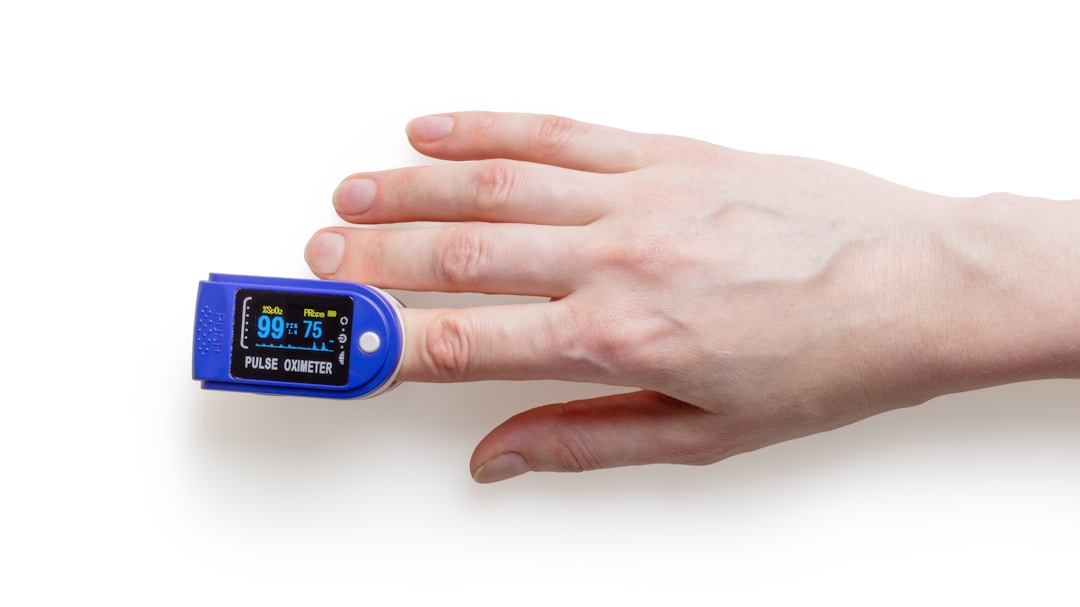
Photoplethysmography, the optical technique every smart ring uses for heart rate and SpO2, measures volumetric changes in blood. An LED shines light into the skin and a photodiode measures how much returns. When arteries fill during systole, more blood sits in the optical path, so absorption rises and the returning signal drops. When they empty during diastole, the signal rises. The result is a waveform that traces blood volume over time, not pressure against the arterial wall.
I wrote about PPG in detail last month, but the short version is this: the amplitude of a PPG waveform tells you about pulse volume and perfusion, not about the pressure driving that volume. A PPG signal can look identical for two people with wildly different blood pressures if their vascular compliance happens to align. A hypertensive patient with stiff arteries and a young athlete with elastic arteries can produce PPG waveforms that are hard to distinguish without additional context. The waveform shape carries information about arterial stiffness, but stiffness is only one input into the pressure equation. It is not the output. You can derive pulse rate reliably from PPG because the heart rate is a frequency measurement, and frequency survives amplitude changes. You can derive SpO2 because the ratio of red to infrared absorption is a spectroscopic property of oxygenated hemoglobin, and that ratio is independent of pressure. But blood pressure is neither a frequency nor a spectroscopic ratio. It is a force, and force is not present in the optical signal.
Some researchers have proposed extracting pulse wave velocity, or PWV, from the PPG signal. The idea is that stiffer arteries transmit the pressure wave faster, and faster transmission correlates with higher pressure. This is true at a population level. It is not true at an individual level. Arterial stiffness changes with age, temperature, blood glucose, and even time of day. A model trained on morning data will misread evening data. A model trained in summer will misread winter data. The correlations are real but they are not tight enough for clinical decision-making.
The pulse transit time illusion
The closest wearable approach to cuffless blood pressure is pulse transit time, or PTT. The theory is elegant. Measure the time between the electrical depolarization of the heart (the R-peak on an ECG) and the arrival of the pulse wave at a peripheral site (the peak of a PPG waveform at the finger). The faster the pulse travels, the stiffer the arteries, and the higher the blood pressure. Samsung implements this in the Galaxy Watch, which pairs with a traditional cuff for calibration. The calibration step is the critical detail that marketing glosses over.
Here is why PTT needs calibration. The transit time depends on the distance between the heart and the sensor, the stiffness of every arterial segment along that path, and the blood pressure itself. If you know the distance and the stiffness, you can derive pressure from transit time. But distance varies by body size, and stiffness varies by everything. A calibration cuff measures the actual pressure at one moment in time, and the watch uses that single data point to back-calculate a stiffness estimate. From then on, it assumes stiffness is constant and uses future transit times to infer pressure changes.
That assumption is wrong. Arterial stiffness is not constant. It changes within minutes. A 2021 study in the IEEE Journal of Biomedical and Health Informatics found that PTT-based blood pressure estimates drifted by 8 to 15 mmHg within two hours of calibration in healthy subjects. For hypertensive patients, the drift was worse. The study concluded that PTT is suitable for trend tracking, not for absolute measurement, and even trend tracking requires frequent recalibration. The Samsung manual acknowledges this by recommending a cuff calibration every four weeks, though in practice the accuracy degrades noticeably within days.
A ring has no ECG. It cannot measure the R-peak. It can only measure PPG at the finger, which means it has no starting point for transit time. Some researchers have proposed using the PPG waveform itself, estimating the time from the foot of the waveform to the peak, but that interval is dominated by the mechanical properties of the finger arteries, not the central pressure wave. The finger is too far downstream. The waveform has been shaped by reflection, damping, and peripheral resistance. The information you need is already lost.
Why the finger is the wrong place
The arteries in your finger are tiny. The digital arteries branch from the radial and ulnar arteries, then subdivide into the proper palmar digital arteries with diameters around 1 to 2 millimeters. The brachial artery, by contrast, is 3 to 5 millimeters in diameter. A blood pressure cuff works on the brachial artery because it is large enough to compress predictably and deep enough to be partially shielded from muscle tension. The finger arteries are superficial, embedded in tissue that changes temperature quickly, and surrounded by small muscles that contract during grip or cold exposure.

The anatomy itself is the problem.
Peripheral vasoconstriction is a real phenomenon. When you are cold, anxious, or caffeinated, the digital arteries narrow to preserve blood flow for the core. This changes the PPG amplitude dramatically without changing central blood pressure much at all. A PPG sensor on your finger will see a collapsing signal and might infer falling blood pressure, when in fact your central pressure has risen due to the sympathetic response. The finger is a terrible proxy for the central circulation. This is the same reason why pulse oximeters on the finger are less accurate during shock or peripheral vasoconstriction, and it is the same reason why blood pressure from a finger is unreliable without continuous calibration.
A ring also cannot apply compression. A cuff works because it is a mechanical actuator. It physically squeezes the arm. A ring is a passive band. It cannot occlude the finger artery to search for a systolic transition point. The closest anyone has come is a finger cuff, like the Omron HeartGuide, which is essentially a small blood pressure monitor worn like a watch. It works because it is a cuff, not because it is a ring. It is bulky, requires calibration, and has accuracy limits of its own. The physics of pressure measurement requires occlusion, and occlusion requires active compression. A titanium band with LEDs cannot do that.
The machine learning escape hatch
This is where the marketing gets fuzzy. I have spoken to engineers at two startups who claimed their rings measured blood pressure through "AI-powered sensor fusion." When I pressed for details, the answer was some variant of "we feed the PPG into a neural network trained on clinical data." This is not a mechanism. It is a hope.
A regression model, neural or otherwise, can learn correlations between PPG features and blood pressure in a controlled dataset. The problem is that the underlying physics is underdetermined. The model is trying to infer one variable (pressure) from signals that are influenced by at least six other variables (arterial stiffness, peripheral resistance, blood viscosity, temperature, body position, and hydration). A model can overfit to the training population and look accurate in a validation set drawn from the same distribution. It will fail when tested on a different age group, a different climate, or a different time of day.
The IEEE Open Journal of Engineering in Medicine and Biology published a 2023 review of machine learning approaches to cuffless blood pressure. The median error across 47 studies was 7.4 mmHg for systolic and 5.1 mmHg for diastolic. That sounds close until you realize that the FDA requires a mean error below 5 mmHg with a standard deviation below 8 mmHg for device clearance. Most of the 47 studies did not meet FDA criteria. None of them were testing smart rings. They were testing chest-mounted sensors, dual-PPG arrays, or cuff-calibrated watches with ECG leads. The ring form factor was not represented because the ring form factor does not provide enough independent signals to solve the underdetermined system.
I am not saying machine learning is useless here. It is useful for filtering noise, detecting artifacts, and maybe tracking rough directional trends in a single individual who wears the same device under similar conditions. It is not useful for producing an absolute blood pressure number that you could show to a cardiologist. The gap between what a model can interpolate and what it can extrapolate is the entire problem.
What Pulsyn will and will not do
Pulsyn does not measure blood pressure. It will not measure blood pressure at launch. It may never measure blood pressure, and I want to be honest about why. The ring measures heart rate, heart rate variability, blood oxygen saturation, skin temperature, and sleep stages. These are all derivable from the PPG signal and the accelerometer with well-understood algorithms and documented error ranges. Blood pressure is not on that list because it is not derivable from the sensors we have, and adding it would require either a finger cuff or a calibration relationship with an external device that undermines the entire point of wearing a ring.
We could add a PTT model and claim a blood pressure estimate. Oura could do it. RingConn could do it. The only thing stopping them is liability, which is a real constraint. But I do not want to ship a feature that is medically suggestive and physically inaccurate. The line between wellness and medical device is already blurry. Blood pressure is on the medical side of that line. It is a diagnostic number used to prescribe medication. A wrong blood pressure reading is not a minor wellness error. It is a false negative for hypertension or a false positive that triggers unnecessary anxiety.
I also want to avoid the calibration trap. If Pulsyn required you to own a blood pressure cuff and recalibrate the ring every week, we would be a dashboard for your cuff, not a replacement for it. The economics and the user experience would both collapse. A $160 ring that requires a $40 cuff and weekly maintenance is a worse product than the cuff alone. The honest position is to say: we do not do this, and here is why.

When, if ever, will this work
I am not sure. There are three plausible paths, and all of them have serious problems.
The first is better PTT. This requires a central ECG signal, which a ring cannot provide, and continuous calibration, which users will not perform. The Apple Watch and Samsung Galaxy Watch have both invested in this path. The Apple Watch uses a finger-on-crown ECG for atrial fibrillation detection, not blood pressure, and the FDA has not cleared it for pressure measurement. Samsung has regional approval for PTT blood pressure in a few markets, but the user manual still requires a cuff calibration and the accuracy degrades rapidly. The watch form factor is barely sufficient. The ring form factor is not.
The second is optical tomography or ultrasound. Some research groups are experimenting with photoacoustic imaging, which sends light pulses into tissue and measures the acoustic waves generated by thermal expansion. This can image vessel diameter and wall thickness, which are closer to pressure-related properties than PPG amplitude. The hardware is currently bench-sized, power-hungry, and requires direct contact gel. Shrinking it to ring dimensions would be a decade-long project, not a firmware update.
The third is completely new physics, such as magnetic resonance or impedance plethysmography at millimeter scales. These exist in laboratory settings. They do not exist in consumer electronics. I am not holding my breath.
The honest answer is that blood pressure measurement from a finger ring is a problem I have looked into, and the physics says no. That might change. I would love to be wrong. I would love to add a blood pressure feature to Pulsyn and sell a million units to hypertensive patients who hate their cuffs. But I am not going to pretend the answer is a neural network and a clever marketing page. The readers of this blog are smart enough to see through that, and I am not willing to insult their intelligence to ship a checklist feature. That might change. I would love to be wrong. But I am not going to pretend the answer is a neural network and a clever marketing page. The readers of this blog are smart enough to see through that, and I am not willing to insult their intelligence to ship a checklist feature.
About the author
James Hoffmann is the founder of Pulsyn. He has been building health sensors and encryption systems for wearable devices since 2024.
References
- Mukkamala R, et al. "Toward Ubiquitous Blood Pressure Monitoring via Pulse Transit Time: Theory and Practice." IEEE Transactions on Biomedical Engineering, 2015. DOI: 10.1109/TBME.2015.2441951
- Ding X, et al. "Continuous Blood Pressure Measurement from Wearable PPG Sensors Using Personal Calibration." IEEE Journal of Biomedical and Health Informatics, 2021. DOI: 10.1109/JBHI.2021.3051338
- Kim J, et al. "Machine Learning Approaches for Cuffless Blood Pressure Monitoring: A Systematic Review." IEEE Open Journal of Engineering in Medicine and Biology, 2023. DOI: 10.1109/OJEMB.2023.3269012
- IEEE 1708-2014 Standard for Wearable Cuffless Blood Pressure Measuring Devices. IEEE Standards Association, 2014.
- Samsung Electronics. "Galaxy Watch Blood Pressure Monitoring User Guide." Documentation, 2024.