Why Cold Fingers Break Heart Rate Tracking on Smart Rings

Why Cold Fingers Break Heart Rate Tracking on Smart Rings
If your ring was solid in September and flaky in January, the sensor probably did not break. Your fingers got cold.
I see the same pattern every winter in wearable data: resting heart rate looks fine overnight under a blanket, then daytime heart rate shows gaps or flat lines during a walk to work. The common factor is not activity. It is finger temperature. Rings measure from one of the most temperature-sensitive spots on the body, and cold changes the signal before it changes your actual heart rate.
What cold does to finger blood flow
Photo by engin akyurt on Unsplash
Your body protects core heat first. When skin temperature drops, sympathetic nerves constrict small vessels in hands and feet to reduce heat loss. Finger blood flow can fall by 50 percent or more with only a few degrees of skin cooling, even while core temperature and cardiac output stay normal.
That matters because a smart ring does not measure the heart directly. It measures local blood volume changes in the finger. Less warm blood reaching the capillaries means a smaller pulsatile signal for the same heartbeat. The heart is still beating at 72 bpm. The finger just shows a weaker echo of it.
This is why gloves help more than tightening the ring. Warmth restores perfusion. Pressure does not. A tighter fit on a cold, constricted finger can actually make it worse by compressing the same vessels you need open. If your hands are pale or take 10 to 15 minutes to rewarm indoors, expect thin data during that window no matter which brand you wear.
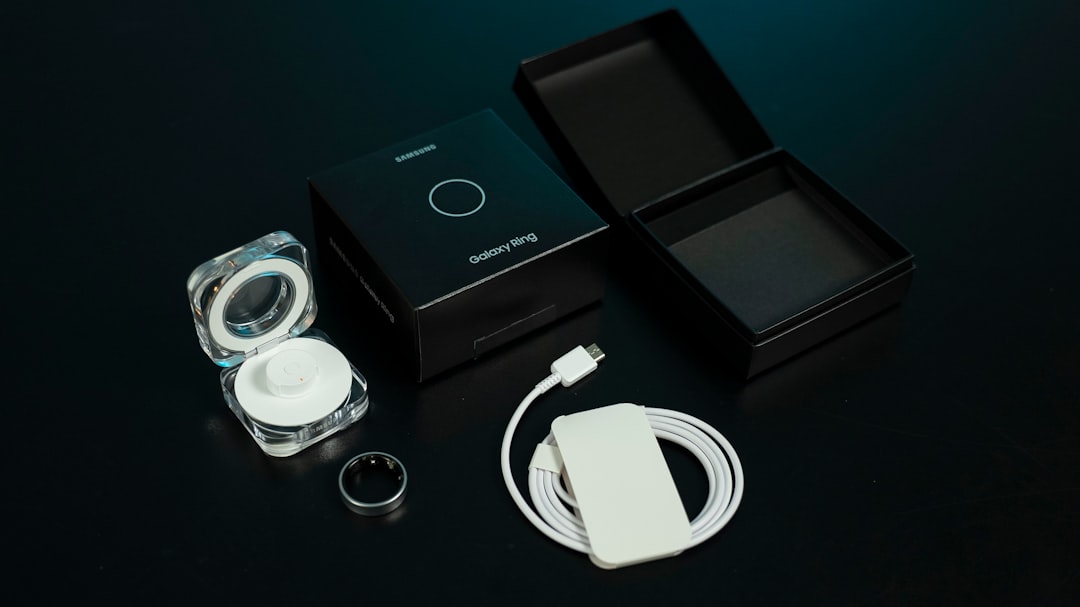
Rune 1, which we're building at Pulsyn for a planned Q3 2026 release, has to handle this same physics. It is a $200 one-time purchase with no subscription, and a $20 reservation, but no ring optics can read blood that is not there.
Why PPG needs blood volume to work
Photo by Alex Padurariu on Unsplash
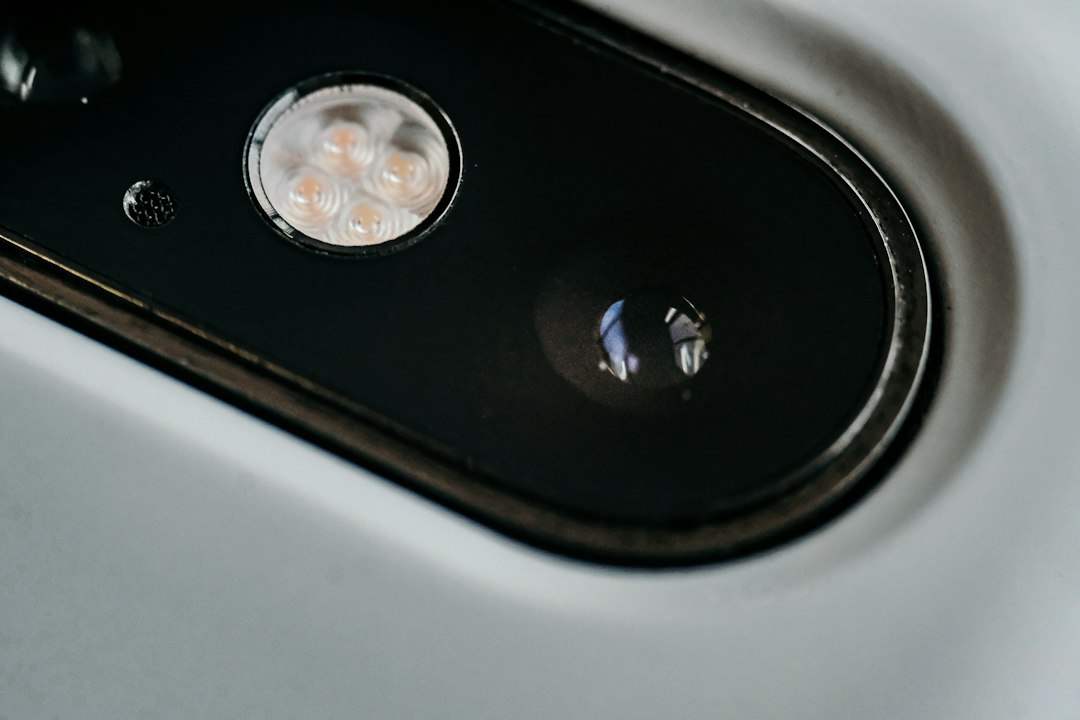
Most rings use photoplethysmography, or PPG. A green LED shines into the skin and a photodiode measures reflected light. Blood absorbs more green light than surrounding tissue, so each pulse creates a small dip in the reflected signal. The algorithm counts those dips as beats.
Signal quality depends on perfusion index, roughly the ratio of pulsatile to non-pulsatile light absorption. At rest in a warm room, that pulsatile part might be 1 to 3 percent of the total signal. In the cold it can drop below 0.5 percent. At that point motion noise, ambient light leak, or a slight fit shift can bury the pulse completely.
Green light is good for heart rate because hemoglobin absorbs it strongly, but it only penetrates 1 to 2 millimeters. That shallow path is exactly where vasoconstriction hits hardest. Infrared penetrates deeper and is often used for SpO2 and respiration, but it is also more sensitive to motion. So switching wavelengths does not fix cold hands. It trades one weakness for another.
This explains a specific failure mode: step counts stay correct while heart rate drops out. The accelerometer still sees motion. The optical path just lost contrast. If you see steady cadence with no heart rate during a cold walk, that split points to perfusion, not a dead sensor.
What to do when winter data looks wrong
Don't delete winter data, and don't trust every dip in it. Treat cold-exposure periods as low-confidence for heart rate, HRV, and any score built on them, including Readiness, Strain, and Body Battery, which we plan to ship with Rune 1 in Q3 2026.
A practical check takes 30 seconds. Note finger temperature and context before you judge the number. Warm hands plus a gap means check fit, hair, tattoos, or sensor blockage. Cold hands plus a gap means warm up first, then remeasure. Indoor retest after five minutes with warm hands is a better reference than comparing a January walk to a September walk.
For training, use perceived effort or a chest strap for cold intervals if you need a precise zone. Chest straps use electrical ECG, which does not depend on finger perfusion, so they hold up in cold where optical rings fade. That is not a flaw in one product. It is a difference between electrical and optical measurement.
If you build wearables, the honest fix is flagging, not smoothing. Mark low-perfusion periods as uncertain instead of filling them with plausible-looking numbers. Users can handle a gap labeled "cold fingers, low signal." What breaks trust is a confident 58 bpm that was really dropout stitched into a trend.