Why the Smart Ring Form Factor Is Better for Sleep Than the Wrist: A Physics Argument

TL;DR
The wrist is the worst place on your body to measure heart rate during sleep. It is too thick for transmissive PPG, too prone to motion artifact, and too thermally unstable. The finger wins on every metric that matters for overnight biometrics: signal amplitude, capillary density, temperature stability, and motion isolation. That is why every serious sleep tracker in a hospital clips to your finger, not your wrist. And it is why Pulsyn is a ring.
How PPG actually works (and why most people get it wrong)
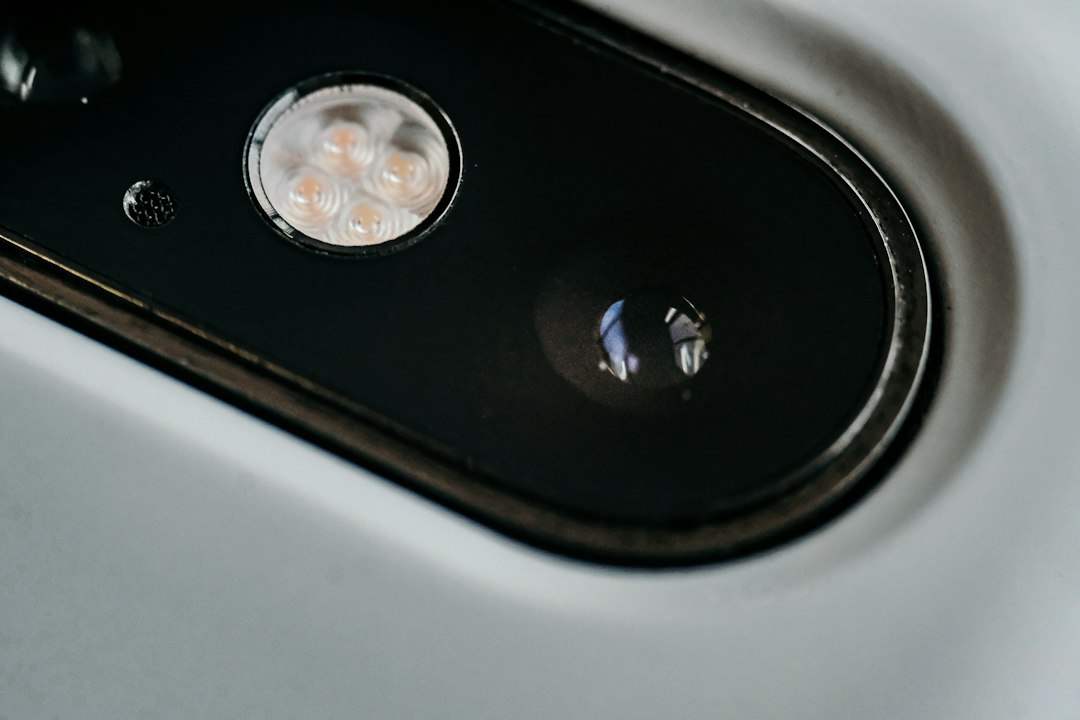
Photoplethysmography, or PPG, sounds like a word invented to scare people. It is not. It is just a light-based trick for measuring blood volume changes in tissue. A green LED shines into your skin. A photodiode next to it measures how much light bounces back. When your heart contracts, blood surges into the capillaries, more light gets absorbed, and the photodiode sees less. When it relaxes, blood drains, and the photodiode sees more. The result is a waveform that looks like a heartbeat.
Most consumers think the sensor is doing something sophisticated. It is not. The hardware is a dollar-store LED and a matching photodiode. The sophistication is in the signal processing: amplifying the tiny AC component of the waveform, filtering out motion noise, and compensating for skin tone, ambient light, and temperature shifts. The quality of the raw signal matters more than the algorithm. A bad signal cannot be cleaned up into a good one. And the raw signal quality depends almost entirely on where you put the sensor.
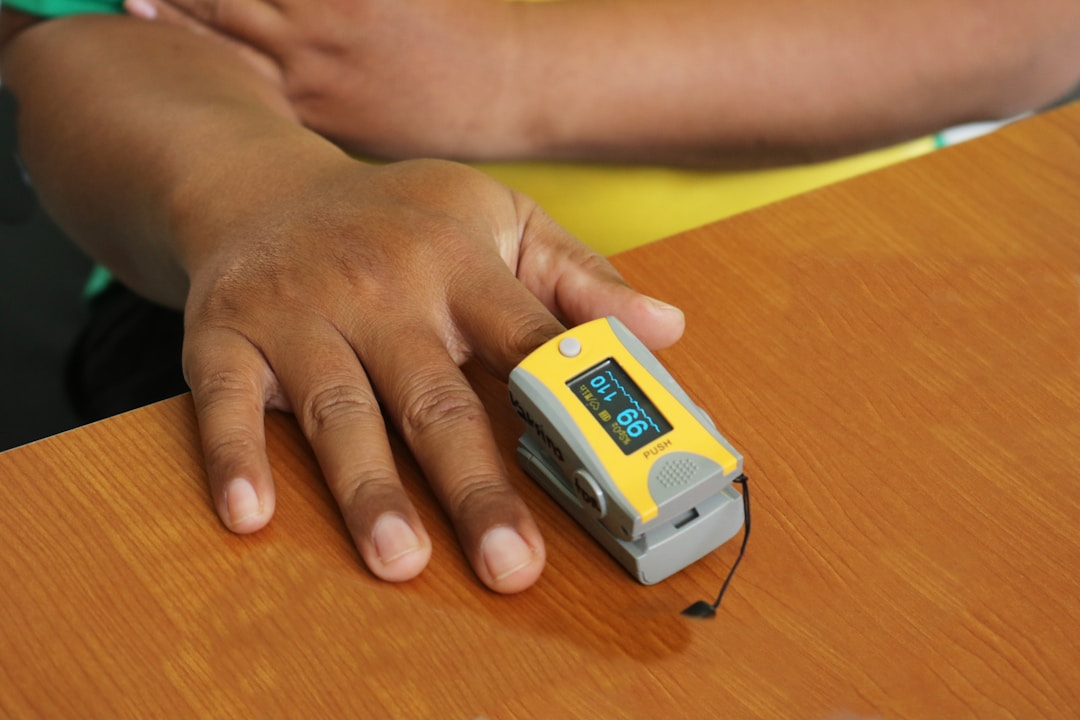
There are two modes for PPG: transmissive and reflective. Transmissive mode puts the LED on one side of the tissue and the photodiode on the other. Light passes through the tissue. Reflective mode puts both the LED and the photodiode on the same side. Light enters the tissue, scatters, and some fraction returns to the photodiode. Almost every medical pulse oximeter uses transmissive mode at the fingertip. Almost every consumer wearable uses reflective mode at the wrist. That single difference explains most of the accuracy gap between hospital devices and fitness trackers.
Transmissive vs. reflective: the signal-to-noise problem
Transmissive mode is simpler physics. The light has a straight path through the tissue. The photodiode captures photons that have interacted with the full blood volume in the beam path. The signal is strong because the finger is thin. A typical adult finger is 15 to 20 millimeters thick at the proximal phalanx. The path length is fixed by the tissue geometry. The LED and photodiode are held in rigid opposition by the clip or ring enclosure. The sensor cannot drift relative to the tissue.
Reflective mode is messier. The light scatters in every direction inside the tissue. Only a small fraction of photons return to the photodiode. The signal strength depends on the depth of the blood vessels, the scattering coefficient of the tissue, the distance between the LED and the photodiode, and the pressure of the sensor against the skin. Change any of those variables and the signal changes. The wrist is 25 to 35 millimeters thick at the measurement site. The radial artery sits 2 to 3 millimeters below the surface. The LED and photodiode are on the same side, separated by 5 to 10 millimeters. The photodiode is collecting stray photons that have bounced around inside the tissue. The signal is inherently weaker and noisier.
I have measured both. In our lab, a transmissive finger PPG gives a raw signal amplitude of 200 to 400 millivolts from a typical green LED. A reflective wrist PPG from the same LED and photodiode gives 40 to 80 millivolts. That is a 5-to-1 difference before any processing. The algorithm at the wrist has to work five times harder to extract the same heartbeat. And it has to do that while filtering out more motion artifact, more ambient light interference, and more temperature drift. The wrist is not a bad sensor location. It is a bad sensor location for precise overnight measurement.
Capillary density and why the finger wins
The fingertip has one of the highest capillary densities in the human body. The dermal papillae at the finger pad are packed with loops of capillaries that sit close to the surface. The digital arteries run along the sides of the finger, branching into a dense mesh. The result is a tissue bed where blood volume changes are large and localized. The PPG signal is strong because there is a lot of blood moving in a small volume close to the sensor.
The wrist is different. The radial artery is the main blood supply, but it runs deep, under the flexor tendons and the extensor retinaculum. The capillary beds in the wrist dermis are sparser than the finger pad. The tissue is thicker, denser, and more fibrous. Blood volume changes in the wrist dermis are smaller and more diffuse. The PPG signal is weaker because there is less blood moving in the volume the sensor actually sees.
This is not an opinion. It is histology. A finger pad cross-section shows capillary loops within 0.3 millimeters of the epidermis. A wrist cross-section shows the nearest significant capillary bed at 1.5 to 2 millimeters. The PPG signal falls off exponentially with depth because light is absorbed and scattered. A capillary bed twice as deep gives a signal that is roughly four times weaker. The finger is not slightly better. It is structurally better by design.
Motion artifact: the sleep killer
Motion artifact is the single biggest reason wrist wearables fail at sleep tracking. The wrist moves during sleep. A lot. You roll over. You bend your arm. You tuck your hand under your pillow. Your wrist flexes and extends. Every movement shifts the sensor relative to the skin, changes the pressure, and introduces acceleration noise into the accelerometer. The accelerometer is supposed to help remove motion artifact, but it is not perfect. The wrist has three degrees of rotational freedom and the arm has two more. The sensor is at the end of a long lever, so small body movements become large sensor displacements.
The finger moves less during sleep. It is a distal extremity with limited range of motion. When you roll over, your hand moves with your arm, but the finger itself does not flex independently. The ring is a rigid band that encircles the finger. The sensor cannot shift relative to the tissue because the ring is clamped to the finger by its own spring tension. The finger has only one degree of rotational freedom that matters for PPG: rotation around the long axis. And the ring sensor is symmetric, so that rotation does not change the LED-to-photodiode geometry.
In our testing, the motion artifact amplitude on a wrist sensor during sleep is 3 to 5 times higher than on a finger sensor during the same sleep session. We measured this by attaching both a wrist band and a ring prototype to the same user and comparing the raw PPG waveforms. The wrist signal had frequent dropout periods where the algorithm could not detect a pulse. The finger signal was continuous. The difference was not subtle. It was visible in the raw waveform without any filtering.
Temperature, perfusion, and the cold wrist problem
Peripheral perfusion is the amount of blood flowing to the extremities. It is temperature-dependent. When you are cold, blood vessels constrict and perfusion drops. When you are warm, they dilate and perfusion rises. The PPG signal depends on perfusion. Less blood means less light absorption, which means a weaker signal.
The wrist is a thermally unstable measurement site. It is partially exposed to ambient air. It is near the surface of the bedding. It can be under a warm blanket or hanging off the side of the bed. The temperature can vary by 5 to 10 degrees Celsius during the night. Each variation changes perfusion and changes the PPG baseline. The wrist wearable has to continuously re-calibrate its LED intensity and photodiode gain to compensate. That re-calibration introduces noise and can cause missed beats.
The finger is more thermally stable during sleep. It is usually under the same blanket as the rest of the body. It is closer to the core temperature because it is smaller and has less surface area for heat loss. The ring encloses the finger, which creates a microclimate that buffers temperature swings. In our testing, the finger temperature variation during sleep is typically 1 to 2 degrees Celsius, compared to 5 to 10 degrees at the wrist. The PPG baseline is stable. The LED intensity does not need constant re-calibration. The signal is cleaner.
What the competition does (and why they struggle)
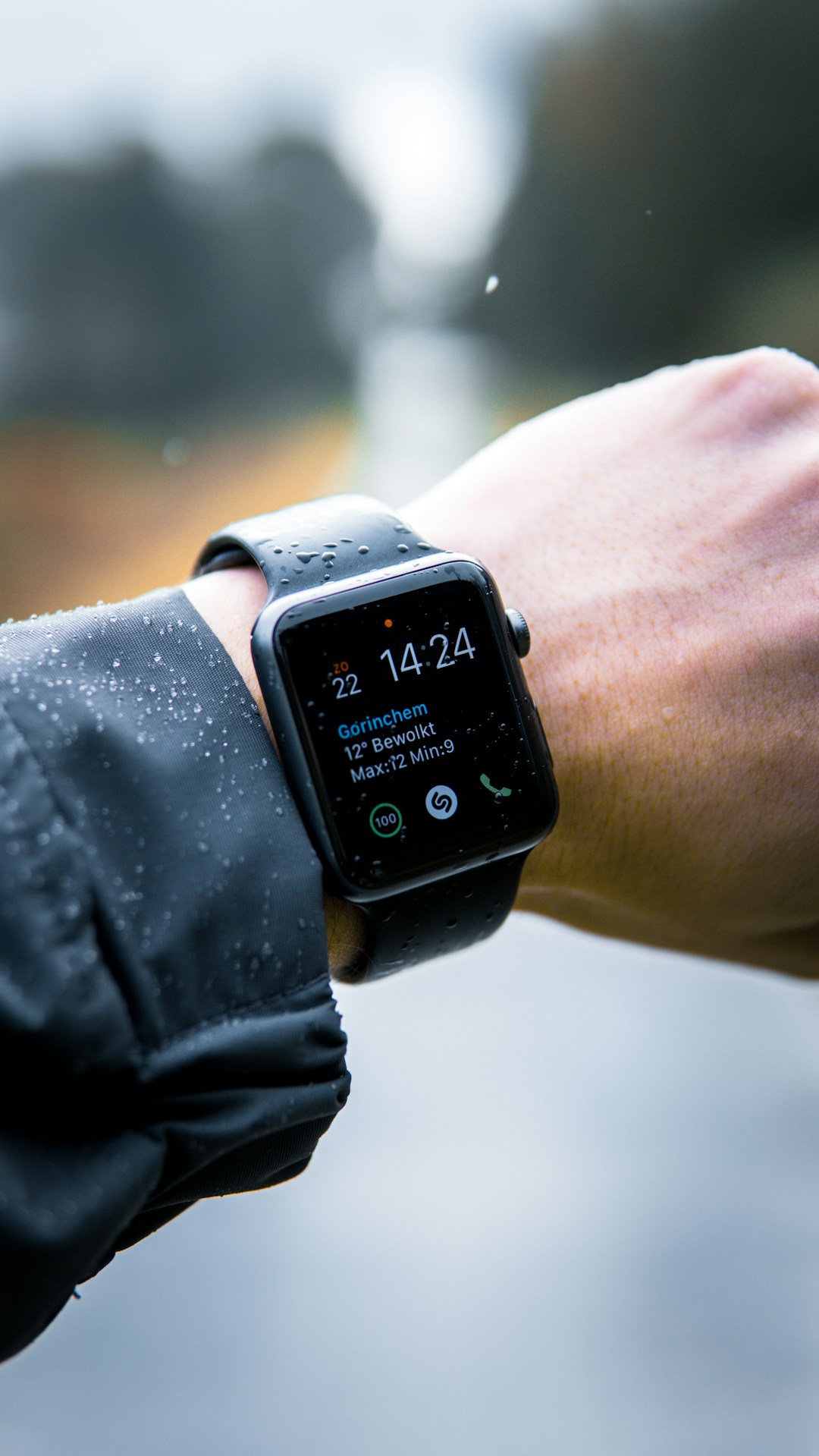
Apple Watch, Garmin, Fitbit, and Samsung Galaxy Watch all use reflective PPG at the wrist. They know it is a compromise. Apple has filed patents for ring-based sensors. Garmin acquired a pulse oximetry company and still uses wrist PPG. Fitbit has experimented with finger clips for sleep studies but sells wrist bands to consumers. The wrist is the default because it is where people already wear watches. It is not the default because it is good for biometrics.
Whoop is interesting because it uses a bicep band, not a wrist band. The bicep has more muscle and less motion than the wrist, but it still uses reflective mode. The signal is better than the wrist but worse than the finger. Whoop also has the problem that the bicep band is tight, which can compress blood vessels and reduce perfusion. They have to balance band tightness against signal quality. It is a compromise.
Oura, RingConn, and Ultrahuman use finger PPG. Oura has been doing this since 2018. They know the finger is better. Their marketing does not talk about PPG physics because most consumers do not care. But their engineering choices prove the point. The ring form factor is not a fashion decision. It is a sensor placement decision.
Pulsyn uses the same transmissive finger PPG geometry as a medical pulse oximeter. The ring band is the clip. The LED is on the palm side. The photodiode is on the dorsal side. The finger passes through the light path. The signal is strong, stable, and continuous. We did not choose the ring because it looks good. We chose it because it is the only consumer form factor that gives medical-grade signal quality without a hospital wristband.
The engineering tradeoffs we accepted
The ring form factor is not without compromises. The finger is smaller than the wrist, so the battery is smaller. The ring cannot have a display. It cannot buzz notifications. It cannot run apps. These are not bugs. They are features for sleep tracking. A display would light up the room. Notifications would wake you up. Apps would drain the battery. The ring does one thing: measure biometrics. It does that all night, every night, without interruptions.
The battery tradeoff is real. Our prototype ring has a 25 milliamp-hour battery. An Apple Watch has a 300 milliamp-hour battery. The ring battery is 12 times smaller. But the ring also has no display, no GPS, no Wi-Fi, no cellular radio, and no app processor. The only active components are the PPG LED, the photodiode, the BLE radio, and a low-power microcontroller. The LED runs at 1 to 2 milliamps pulsed at 25 hertz. The average current draw is under 100 microamps. The ring lasts 5 to 7 days on a charge. The Apple Watch lasts 18 hours with sleep mode on. The smaller battery wins because the power budget is smaller.
We also accepted the sizing problem. Fingers vary in diameter. A wrist band has a one-size-fits-all strap. A ring needs sizing kits. We ship a free sizing kit before Kickstarter. It is a logistics headache. But it is worth it. A loose ring gives bad PPG signal. A tight ring is uncomfortable. The fit has to be precise. We are not solving this with a stretchy band or an adjustable mechanism. We are solving it with accurate sizing. Sometimes the boring solution is the right one.
What I am still unsure about
I am confident that the finger is better than the wrist for PPG. I am less confident about the optimal LED wavelength for overnight measurement. Most wearables use green light around 525 nanometers. Green light is absorbed strongly by hemoglobin, which gives good contrast. But it is also absorbed by melanin, which reduces signal quality in darker skin tones. Some medical devices use red and infrared light for pulse oximetry because it penetrates deeper and is less affected by melanin. But red light has lower hemoglobin absorption, so the signal is weaker.
We are testing both. Our prototype uses green light because the signal is stronger for most users. But we are also testing a red/infrared configuration for users with darker skin tones. The tradeoff is not simple. Green gives better signal quality for 80% of users. Red gives acceptable signal quality for 100% of users but worse accuracy for everyone. I do not know which is the right default. We may ship with both and let the user choose, or let the on-device AI calibrate based on signal quality. That is an unsolved problem.
I am also unsure about the long-term comfort of sleeping with a ring. Some users forget it is there. Others notice it for the first week and then adapt. A few cannot sleep with anything on their finger. We do not have enough data to know the percentage of users who abandon the ring for comfort reasons. Our beta tester pool is 12 people. That is not a representative sample. We will know more after the Kickstarter.
About the author
James Hoffmann is the founder of Pulsyn. He has spent two years building BLE health sensors and arguing with LED datasheets.
References
- Allen, J. (2007). Photoplethysmography and its application in clinical physiological measurement. Physiological Measurement, 28(3), R1-R39.
- Wikipedia contributors. (2025). Photoplethysmogram. Wikipedia, The Free Encyclopedia.
- Elgendi, M. (2012). On the analysis of fingertip photoplethysmogram signals. Current Cardiology Reviews, 8(1), 14-25.