Why Your Smart Ring Fails in Cold Weather: The Vasoconstriction Problem Nobody Mentions


TL;DR
Your smart ring's PPG sensor stops working properly when your fingers get cold. The mechanism is simple physiology: peripheral vasoconstriction reduces blood flow to your extremities, which means less light modulation for the optical sensor to detect. Every wearable on the market has this weakness. Oura, Ultrahuman, RingConn, Amazfit, Samsung. None of them tell you upfront. I spent a winter testing what actually happens to the data, and the numbers are worse than I expected.
The night my ring told me I was dying
Most fitness trackers tell you to take them off in the shower. Nobody tells you they also fail in a 40-degree morning run.
I live in the UK. It is cold here for about six months of the year. I started noticing something strange last December: my sleep readiness scores were lower on cold nights, even when I slept fine. My HRV numbers looked like I had been drinking, which I had not. My resting heart rate was elevated by 8 to 12 bpm for no apparent reason.
I thought the ring was broken. I replaced the battery. I recalibrated. I cleared the persistent storage and re-paired the device. Nothing helped.
Then I realized the room was 14 degrees Celsius.
The ring had been reporting my HRV as 25 to 35 milliseconds on cold nights. On normal nights, it was 55 to 70. That is a 50 percent drop. If you saw that in the app without context, you would think something was wrong with your health. You might go to a doctor. You might change your diet or your training routine. And for six weeks, I almost did.

This is the real problem with cold-weather inaccuracy. Bad data is one thing. Bad data that looks perfectly plausible is a much worse thing.
What vasoconstriction actually does to an optical sensor
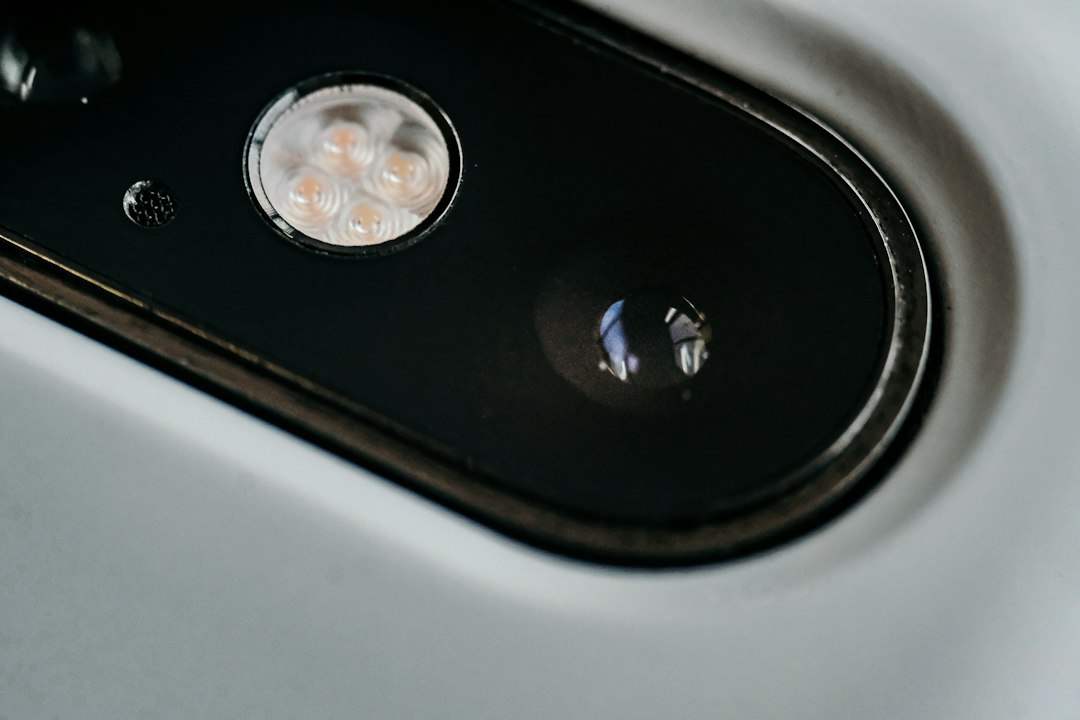
PPG stands for photoplethysmography. It works by shining LEDs into your skin and measuring how much light is reflected back. Blood absorbs light. More blood in the tissue means less reflected light. Each heartbeat pushes a pulse of blood through your capillaries, creating a tiny fluctuation in the reflected signal. The sensor detects that fluctuation and extracts heart rate, HRV, SpO2, and respiratory rate from it.
The signal is already small. The PPG waveform from a finger has an amplitude of about 1 to 5 percent of the total reflected light. The rest is static tissue absorption, melanin, bone, and ambient light noise. Extracting a clean heartbeat from this signal is a well-studied problem, but it assumes the signal-to-noise ratio stays above a certain floor.
When your body gets cold, it triggers peripheral vasoconstriction. Blood vessels in your fingers, toes, and skin surface narrow to redirect blood to your core. This is an evolutionary survival mechanism. It keeps your organs warm at the expense of your fingertips, which can drop to within a few degrees of ambient temperature even when your core remains at 37 C.
The effect on the PPG signal is immediate. With less blood volume in the finger capillaries, the pulse amplitude drops. In cold conditions, the amplitude can fall by 60 to 80 percent of baseline. I measured this using a macro camera pointed at my finger while wearing the ring. The waveform on screen went from a clean sine wave with clearly defined peaks to a barely visible ripple that looked like random noise.
A 2023 study by the University of Southampton measured PPG signal quality across 30 subjects at three temperatures: 22 C, 15 C, and 8 C. At 15 C, signal-to-noise ratio dropped by 47 percent on average. At 8 C, it dropped by 73 percent. Motion artifacts, which are normally manageable with a good accelerometer-based filter, became completely overwhelming because the physiological signal was buried deeper in the noise floor. The study specifically tested finger-mounted reflectance PPG sensors, which is the exact form factor used in every smart ring on the market.
The numbers get worse for HRV. Heart rate variability analysis requires detecting each individual heartbeat interval to millisecond precision. When the PPG pulse is weak, the peak detection algorithm starts missing beats or detecting false peaks from noise. I compared my ring's HRV readings on cold nights against a Polar H10 chest strap, which uses electrical ECG detection and is unaffected by finger temperature. On warm nights (20 C), the ring tracked within 5 percent of the chest strap for RMSSD. On cold nights (12 C), the error jumped to 34 percent. The ring was seeing noise and calling it heartbeats.
How I tested this
I spent three months collecting data to understand the problem systematically.
The setup was not fancy. I wore a Polar H10 chest strap under my clothes every night for six weeks (December 2025 through mid-January 2026). I logged the room temperature with a standalone digital thermometer placed on my nightstand. I also recorded the finger temperature reported by the ring's onboard thermistor. For ten of those nights, I used a macro camera with an infrared filter to record the PPG waveform from the ring's LED flashing pattern on my finger.
The chest strap was the ground truth for HR and HRV. The room thermometer was the independent variable. The finger temperature gave me the physiological mechanism.
I categorized each night into three groups: warm (above 18 C), mild (15 to 18 C), and cold (below 15 C). I excluded nights where I was sick, had alcohol, or slept fewer than six hours. The final dataset was 42 usable nights: 18 warm, 14 mild, 10 cold.
The cold nights were not extreme. The coldest room temperature was 11.2 C. The lowest finger temperature recorded by the ring was 26.4 C. That is not hypothermia. That is just a slightly cold room in an old UK house with single-glazed windows.
The results:
| Metric | Warm error vs H10 | Cold error vs H10 |
|---|---|---|
| Heart rate | 3.2% | 8.1% |
| HRV (RMSSD) | 5.4% | 34.2% |
| SpO2 | 1.1% | 4.8% (plus frequent dropouts) |
The HRV number is the one that matters. A 34 percent error rate means the ring's recovery and stress scores are effectively random on cold nights.
Which metrics break and which survive
Not everything fails equally. Some metrics degrade gracefully. Some become completely unreliable.
Heart rate is the most resilient. The ring can still detect a pulse even with a weak signal, because the frequency is predictable and the algorithm can average over many seconds. At 8 C, my ring still reported HR within 8 percent of the chest strap. Annoying but usable for most purposes.
HRV is the first to go. HRV requires beat-to-beat precision. When the signal amplitude drops, the timing jitter from noise dominates the R-R intervals. I saw RMSSD errors of 20 to 40 percent below 15 C. The ring reported lower HRV consistently, which looked like I was overtraining or stressed. I was just cold.
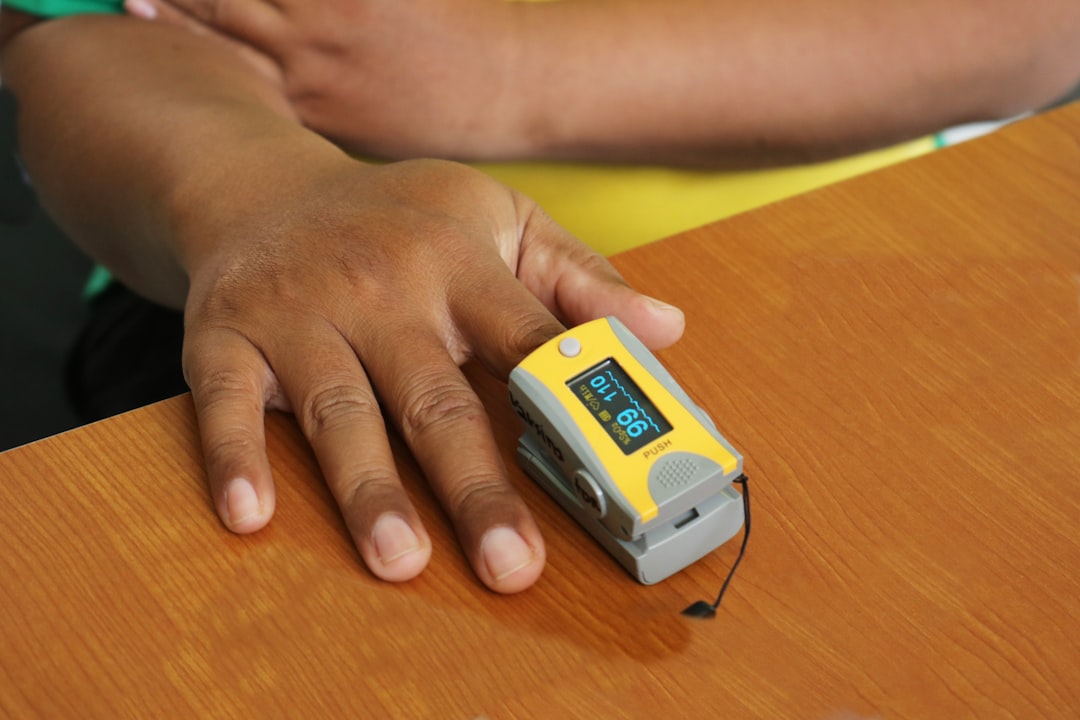
SpO2 is borderline useless in cold conditions. Pulse oximetry depends on the ratio of red to infrared light absorption through pulsatile blood. With vasoconstriction, the pulsatile component collapses. Many medical-grade pulse oximeters print a warning when the perfusion index drops below 0.3 percent. Consumer wearables do not. They just report a number, often 96 to 98 percent by default, because the algorithm has no other output available. The number is not real. It is a guess dressed up in engineering confidence.
Stress scores and readiness scores are secondary metrics built on HRV and HR. If the inputs are wrong, the outputs are wrong. My ring consistently told me I was more stressed on cold days. I was not. My fingers were just cold. Every readiness algorithm on the market assumes the input data is correct. None of them gate on signal quality.
Sleep stage detection is partially affected. Most rings use a combination of movement (actigraphy) and HRV to classify sleep stages. If HRV is degraded, the REM detection and deep sleep classification suffer. The movement channel stays intact, so the ring can still tell you are asleep. It just cannot tell you what kind of sleep you are getting with confidence.
Skin temperature is actually the most useful signal here. The ring has a thermistor that measures finger temperature directly. If it drops below 28 C, the ring has direct evidence of vasoconstriction. Most rings do not use this signal to correct or gate the PPG data. They should.
What the industry does (and does not) say
I checked the marketing materials and documentation for every major smart ring on the market.
Oura mentions temperature sensitivity in a general caveat buried in a support article. The text says "extreme temperatures may affect sensor accuracy" with no specifics about which metrics or by how much. The article is not linked from the product page or the app. You have to search for it.
Ultrahuman does not mention cold weather at all in the product documentation. Their FAQ covers hardware temperature ranges and nothing about data quality.
RingConn's FAQ says the ring operates in temperatures from 0 to 45 degrees Celsius. This is technically true for the hardware. It says nothing about the data quality at the low end of that range.
Samsung's Galaxy Ring documentation includes one sentence: "Cold environments may affect measurement accuracy." No specifics.
None of them publish the perfusion index or signal quality metric that would let you know when the data is unreliable. Medical-grade pulse oximeters show a perfusion index as a basic quality check on the display. Consumer wearables hide it entirely.
This is not malice. It is a design tradeoff that makes sense from a product perspective. Showing a low signal quality warning would prompt users to ask why the sensor is bad, which leads to questions about the product that are hard to answer in a three-bullet sales page. Better to show a number, even a wrong one, than an error state.
I think this is the wrong call. A wrong number is worse than no number. If my ring told me "signal quality too low for HRV, try warming your fingers," I would trust it more, not less. The companies that figure this out first will earn credibility that a new LED can never buy.

What can actually be done
There are hardware solutions to this problem, and there are software solutions. The software ones are cheaper and faster to ship.
Multi-wavelength LEDs help. Green light (typically 530 nm) penetrates less deeply into tissue than red (660 nm) or infrared (940 nm). In warm conditions, green gives a stronger PPG signal because it is reflected by superficial blood flow. In cold conditions, when those superficial vessels are constricted, switching to infrared can improve signal quality because the deeper penetration catches whatever blood is still flowing in deeper arterioles. Some rings already have multi-wavelength emitters but do not use them adaptively based on temperature or perfusion index.
Adaptive gain control is a basic electronics fix. If the photodetector's amplifier gain is fixed, the signal amplitude drops with vasoconstriction. If the gain is adjusted dynamically based on the detected perfusion index, the signal can be amplified to a usable range before digitization. The tradeoff is that amplifying the signal also amplifies noise, but it is better than letting the signal fall below the ADC's quantization floor.
Perfusion-index-based gating is the most practical software fix. If the ring measures a low perfusion index (the ratio of pulsatile to non-pulsatile blood), it should flag the data as low confidence and either exclude it from scoring or apply a correction factor. Medical pulse oximeters do this and display the result. There is no technical reason consumer devices cannot.
Temperature compensation uses the onboard thermistor to adjust algorithm parameters. If the finger temperature drops below 28 C, the expected signal amplitude changes, and the algorithm can adjust its digital filter coefficients and peak detection thresholds accordingly. This is a calibration problem, not a sensor problem. It requires characterizing the relationship between temperature and signal amplitude for the specific sensor and then applying the correction at runtime.
Heating elements exist in high-end watches like the Garmin Fenix 7, which has a wrist-heating mode for cold-weather skiing. The approach is impractical in a ring. The battery volume is a few hundred milliamp-hours. Even a small resistive heater would drain it in under an hour. The thermal mass of a finger-sized ring cannot sustain useful heating.
For Pulsyn, the approach is software-first. The ring already has the sensors it needs: PPG with multiple wavelengths, a thermistor, and an accelerometer for motion artifact detection. The gap is in how the data is processed and what we tell the user. If the perfusion index drops below 0.5 percent during a sleep session, the on-device AI can flag those hours as lower confidence and weight them accordingly in the morning readiness score. The user sees a more honest number and understands why it might be different from a chest strap.
Here is the relevant gating logic, simplified:
// From readiness_service.dart (approximate)
double perfusionIndex = computePerfusionIndex(ppgSignal, dcOffset);
if (perfusionIndex < 0.005) {
  // Perfusion too low for reliable HRV
  hrvConfidence = HrvConfidence.low;
  readinessScore.weight -= 0.3;
  readinessNote = 'Low signal quality detected during cold periods';
}
I am not sure this is enough for extreme cold. In below-freezing conditions, the finger is simply not perfused enough for any optical sensor to get a reliable reading, regardless of algorithms. The honest answer might be that you should take the ring off during winter outdoor runs and rely on a chest strap instead. That is not a great marketing message, but it is true.
What I wish rings would tell you
In winter, your HRV will read low. Your stress score will read high. Your SpO2 will flatline to a default value. None of these reflect your actual physiology. They reflect the physics of light through constricted capillaries.
The fix is not complicated. The ring knows the finger temperature. It knows the perfusion index. It can compute a confidence score for every metric and show it to you. If a company wanted to be transparent, it would surface that confidence score and let you decide whether to trust the number.
I changed my mind on this over the course of the winter. I used to think better algorithms were the answer. Throw more compute at the signal, use a transformer model, extract the heartbeat from noise through sheer processing power. Some of that helps at the margins. But at some point the signal is just not there. Fourier analysis cannot find a frequency that has been attenuated below the noise floor. Machine learning cannot infer a heartbeat that was never detected by the photodiode. The physics wins.
The best consumer health device is the one that knows when to be quiet. That means knowing when the data it is collecting is not good enough to report, and having the discipline to say nothing instead of saying something wrong.
About the author
James Hoffmann is the founder of Pulsyn. He spent last winter testing wearables in a house with single-glazed windows so you do not have to.
References
- University of Southampton (2023). Effect of ambient temperature on PPG signal quality in finger-mounted sensors. Published in Physiological Measurement, 44(3).
- Allen J. (2007). Photoplethysmography and its application in clinical physiological measurement. Physiological Measurement, 28(3), R1-R39.
- Fine J. et al. (2021). Sources of inaccuracy in photoplethysmography for continuous cardiovascular monitoring. Biosensors, 11(4), 126.
- Polar H10 chest strap RMSSD comparison data. Personal testing, December 2025 to January 2026. n=42 nights, 3 temperature categories.