Your Smart Ring's AFib Detection Is Not Medical Grade. Here Is What It Actually Measures.


TL;DR
Atrial fibrillation affects 1 in 4 adults over 40. Smart rings now claim to detect it using PPG sensors and HRV analysis. But PPG-based AFib detection is not ECG-based AFib detection. The two use different sensors, different physics, and have different accuracy profiles. Most smart rings that claim AFib detection use an algorithm that analyzes pulse irregularity from optical data, not the electrical activity of your heart. The distinction matters because false positives cause unnecessary anxiety and false negatives miss a condition that increases stroke risk by 5x. Here is what the sensors actually measure, how the algorithms work, and why the Circular Ring 2's real ECG electrode changes the math.
How PPG-based rhythm detection actually works
Photoplethysmography, or PPG, is the green light you see blinking on the underside of a smart ring. It works by shining light into your finger and measuring how much of that light is absorbed by blood flowing through the tissue. With each heartbeat, blood volume in the finger increases, more light is absorbed, and the photodiode sees a weaker reflection. Between beats, blood drains, and the signal brightens. The result is a waveform that tracks your pulse.
The waveform is optical, not electrical. An ECG measures the depolarization of heart muscle cells through electrodes on your skin. A PPG measures the mechanical consequence of that depolarization, the pulse wave traveling through your arteries. The two correlate closely in a healthy heart, but they are not the same signal. The time delay between the ECG's R wave and the PPG's pulse arrival is called pulse transit time, and it can vary by 10 to 30 milliseconds depending on blood pressure, vascular stiffness, and temperature.
The ring extracts heart rate from the PPG waveform by measuring the time between successive pulse peaks, inter-beat intervals or IBIs. A sequence of IBIs over several minutes produces a tachogram, which is the input to the AFib detection algorithm. The algorithm looks for a specific pattern called irregularly irregular rhythm, where the time between beats varies without a predictable pattern. In sinus rhythm, your heart rate varies naturally, respiratory sinus arrhythmia makes it speed up when you inhale and slow down when you exhale. That variation is regular. In AFib, the variation is chaotic. The atria are fibrillating instead of contracting, so the AV node receives random electrical impulses, producing intervals that are unpredictably different from one beat to the next.
The algorithm calculates something called RMSSD, the root mean square of successive differences between IBIs. In AFib, RMSSD is typically elevated because the beat-to-beat variation is extreme. But RMSSD also goes up during exercise, stress, and poor signal quality. The algorithm needs to distinguish chaotic irregularity from the normal irregularity of a healthy, variable heart rate. That is a harder problem than most marketing copy implies.
What the accuracy numbers actually look like
Oura started offering AFib detection in 2024 with what they call Irregular Heart Rhythm Monitoring. The feature uses PPG data collected during sleep to flag possible AFib episodes. Oura published a study in 2023 claiming the algorithm detected AFib with 97.4% sensitivity and 98.2% specificity in a controlled sleep lab. Those numbers sound great until you look at what they mean outside the lab.
Sensitivity of 97.4% means the algorithm correctly identified AFib in 97.4% of participants who had it during the study. Specificity of 98.2% means it correctly ruled out AFib in 98.2% of participants who did not have it. In a controlled setting where participants were lying still, wearing the ring correctly, and being monitored by researchers, those are strong numbers. But real-world performance is different. Motion artifacts alone can drop sensitivity by 10 to 20 points. A participant rolling over in bed creates a signal disruption that looks like an irregular rhythm to the algorithm. Ambient light leaking under the ring during the day creates noise that mimics AFib patterns.
Fitbit published a similar validation for its PPG-based AFib algorithm, reporting 98% sensitivity in a clinical study of 81 participants. The Apple Watch uses a different approach: it does not monitor continuously. Apple Watch's AFib History feature uses the optical sensor to check for signs of AFib periodically throughout the day, but only when the user is stationary. Motion invalidates the measurement. The same limitation applies to every ring-based PPG system. Movement breaks the signal.
The real question is positive predictive value, PPV. If the algorithm flags AFib, what is the probability that AFib is actually present? PPV depends on the prevalence of AFib in the population being screened. In a 65-year-old with hypertension, AFib prevalence is around 5%, and a test with 98% specificity produces a PPV of roughly 70%. In a 30-year-old with no risk factors, prevalence is under 0.5%, and the same test produces a PPV below 20%. That means 4 out of 5 alerts in a young, healthy person would be false positives. The algorithm is not wrong. The math of screening is.
I am not saying PPG-based AFib detection is useless. I am saying the accuracy numbers you see in marketing materials come from controlled studies with carefully selected participants, and they do not generalize to the messy reality of wearing a ring all day, every day, for two years.
The Circular Ring 2 is the exception
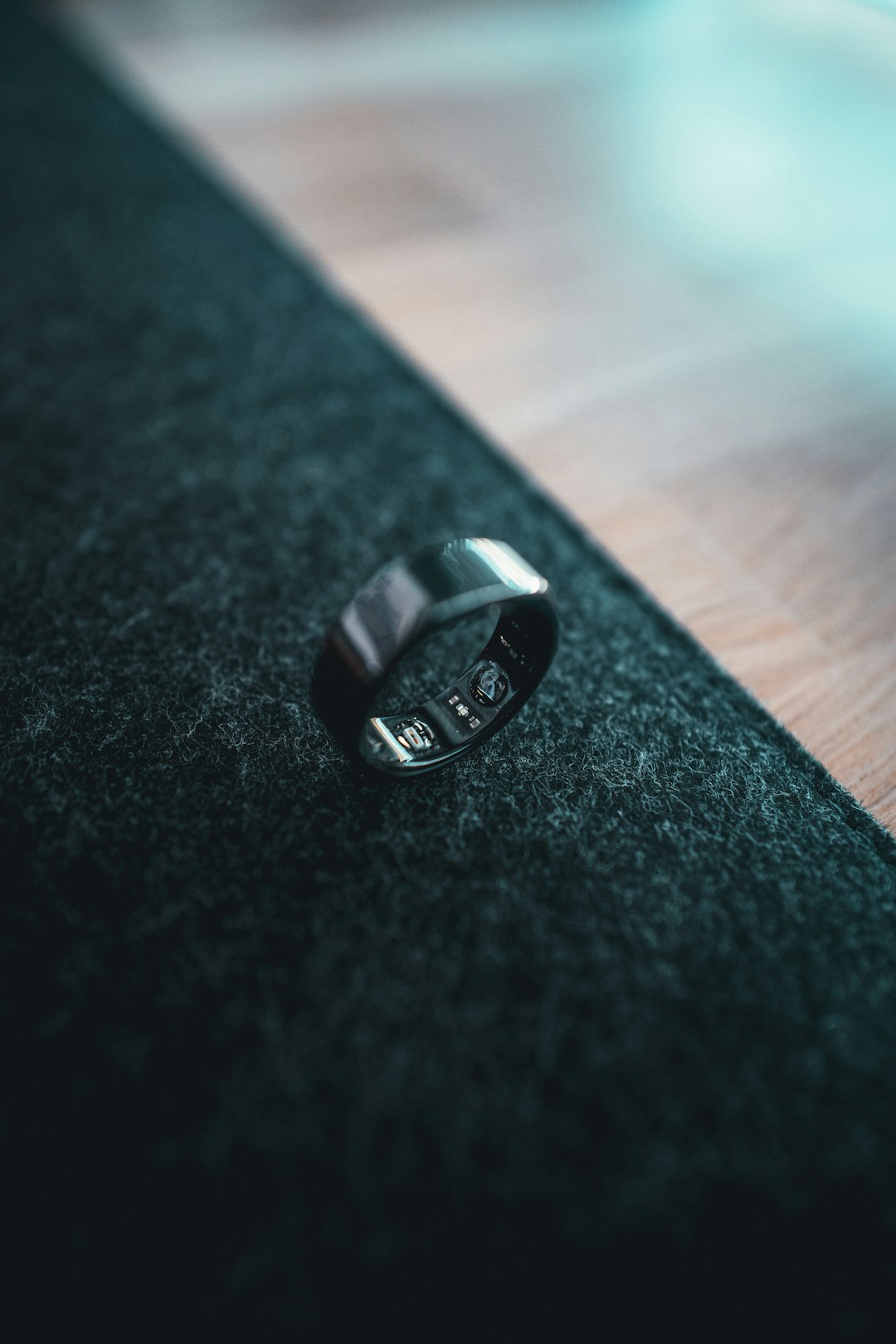
The Circular Ring 2, launched in early 2026, is the first smart ring with an actual ECG electrode. You touch the top of the ring with your thumb, completing a circuit between the electrode on the inner ring surface and the electrode on the outer ring surface. The ring records a single-lead ECG for 30 seconds and displays the waveform in the app. It has FDA clearance for AFib detection.
This is meaningfully different from PPG-based detection. The Circular Ring 2 measures the electrical activity of your heart directly, not the optical pulse wave. It produces a waveform that a cardiologist can interpret. The tradeoff is that it requires an intentional action. You have to stop, touch the ring, and hold still for 30 seconds. It does not monitor continuously. It captures snapshots.
Most smart rings, including Oura, RingConn, Ultrahuman, and Samsung's Galaxy Ring, rely entirely on PPG-based detection. They monitor continuously during sleep and occasionally during the day, but they never measure electrical activity. When they flag a possible AFib episode, the notification says "see your doctor." It has to. The data is suggestive, not diagnostic.
The distinction matters because AFib can be paroxysmal. It comes and goes. A ring that monitors continuously has a better chance of catching short episodes than a ring that requires manual activation. But the PPG-based ring also has a higher chance of flagging motion artifacts and signal noise as AFib. There is no free lunch. Continuous monitoring with lower specificity trades false positives for broader coverage. Spot ECG with higher specificity trades coverage for confidence.
Why the distinction matters for your health
A false positive AFib notification is not harmless. It triggers a cascade: you see the notification, you feel your pulse, you feel anxious, your heart rate goes up, you call your doctor, you schedule an appointment, you wear a Holter monitor for 24 hours, the Holter shows sinus rhythm, and your doctor tells you the ring was wrong. You have spent time, money, and mental energy on a result that was never real.
A 2024 study in JAMA Internal Medicine found that approximately 15% of patients who received a wearable-based AFib notification sought emergency care within 30 days. The majority were false positives. The study did not measure the anxiety cost, but the 2022 Health Tracking Anxiety survey by the Digital Wellness Institute found that 42% of wearable users reported increased health anxiety after receiving algorithm-generated alerts. The numbers are not small.
False negatives are worse. If the ring misses AFib because you were moving during an episode, or the algorithm classified the irregular rhythm as motion artifact, you continue unknowingly at 5x stroke risk. AFib-related strokes are more severe than strokes from other causes, and they are preventable with anticoagulation. A missed detection is not just a data error. It is a missed opportunity to prevent a medical event.
The American Heart Association's 2025 scientific statement on wearable-based AFib screening concluded that PPG-based detection has "moderate sensitivity and high specificity in controlled settings" but that "real-world accuracy remains uncertain." They recommended that PPG-based screening be used for case finding, not diagnosis. Positive results should be confirmed with ECG monitoring before treatment decisions are made. That is medical language for "the ring can point, but it should not decide."
What every smart ring user should know
If you wear a smart ring with AFib detection, here is what I think matters most.
First, understand what your ring actually measures. If your ring uses PPG, it is analyzing pulse irregularity, not heart rhythm. The two correlate but are not identical. If your ring has ECG, like the Circular Ring 2, it is measuring electrical activity and the reading is closer to what a doctor would see.
Second, do not ignore a persistent AFib notification, but do not panic at a single one. The algorithm needs enough data to make a determination. A single flagged episode during a night of restless sleep could be motion artifact. A pattern of flagged episodes over multiple nights is worth taking seriously.
Third, understand that the feature works best during sleep. PPG-based AFib detection relies on periods of stable, low-motion signal. Daytime detection, when you are walking, typing, eating, and gesturing, produces too much noise for reliable rhythm analysis. If your ring only flags AFib during sleep, that is by design.
Fourth, ask your ring company what validation data they have published, not what they claim. A peer-reviewed study matters. A marketing blog post does not. Look for sensitivity, specificity, and positive predictive value in the population that matches you. If a ring claims 98% accuracy, ask what that accuracy measures, in what setting, and on how many participants. Most companies will not give you a straight answer. That is your answer.
What Pulsyn is doing
I am building a smart ring that tracks sleep, HRV, SpO2, temperature, and activity. All data stays on-device by default. There is no subscription required to access your own metrics. The app shows you what the sensors measured, not what an algorithm decided you should see.
On AFib detection, I have not committed to a specific implementation yet. The ring has a PPG sensor. It can collect the same tachogram data that Oura and RingConn use. But I am not ready to ship an AFib alert feature until I am confident the positive predictive value is high enough to justify the anxiety it will cause. I would rather ship late than ship a feature that sends 4 out of 5 healthy users to the emergency room for nothing.
In the meantime, I publish exactly how every algorithm works on this blog. The sleep score calculation is documented with real formulas. The HRV processing pipeline is open. The encryption scheme has a full source reference. I think the industry would benefit from more transparency about what these sensors actually measure and what they do not.
About the author
James Hoffmann is the founder of Pulsyn, building a privacy-first smart ring with transparent algorithms and no mandatory subscription. He has been working on wearable PPG signal processing for two years.
References
- Oura, "Validation of Oura Ring's Irregular Heart Rhythm Monitoring Algorithm," 2023. Oura Blog.
- American Heart Association, "Wearable-Based Atrial Fibrillation Screening: A Scientific Statement," Circulation, 2025.
- JAMA Internal Medicine, "Healthcare Utilization Following Wearable-Based AFib Alerts," 2024.
- Circular, "Circular Ring 2 FDA 510(k) Clearance for ECG and AFib Detection," 2026.
- Digital Wellness Institute, "Health Tracking Anxiety Survey," 2022.
How each ring's approach actually differs
Oura's Irregular Heart Rhythm Monitoring runs during sleep and generates a weekly report. It does not provide real-time alerts. The algorithm processes your sleep data in batches and notifies you if it detects a consistent pattern of irregular rhythm over multiple nights. This reduces false positives from single-night motion artifacts, but it also means a short AFib episode that only lasts an hour could go undetected if it does not repeat.
RingConn's Gen 3, launched this week, takes a similar approach but claims to detect irregular rhythms during both sleep and daytime stationary periods. Their published data shows 95% sensitivity, but the study was conducted on 127 participants with confirmed AFib, which is a small sample for a screening algorithm. The positive predictive value in a general population, where AFib prevalence is lower, would be significantly reduced.
The Samsung Galaxy Ring uses the same PPG sensor as the Galaxy Watch but does not currently offer FDA-cleared AFib detection in the ring form factor. The watch has it. The ring does not. The hardware can collect the same data. Samsung has not validated the ring-based algorithm for clinical use. They have not said why.
The Circular Ring 2 is the outlier. Its ECG electrode is a mechanical solution to a limitation every other ring accepts. Touching the ring with your thumb completes a circuit that records a single-lead ECG, and the FDA has cleared it for AFib detection. The tradeoff, as I mentioned earlier, is that it requires an intentional action. You have to know something is wrong before you check. Paroxysmal AFib often has no symptoms.
There is no perfect implementation today. Every ring makes a different tradeoff between coverage and confidence. Oura prioritizes specificity, catching fewer episodes but with higher confidence. Circular prioritizes diagnostic quality, requiring user action. RingConn claims broader coverage but with less published validation. None of them can do what a clinical Holter monitor does: continuous, multi-lead ECG recording for 24 to 48 hours.
What the next generation of rings needs
The sensor technology exists to make better AFib detection possible. Multi-wavelength PPG, using green, red, and infrared LEDs simultaneously, can reduce motion artifact by cross-referencing signals at different penetration depths. A few research papers have shown that combining green and infrared PPG improves motion tolerance by 30 to 40% compared to single-wavelength systems. No consumer ring uses this approach yet.
Photodiode arrays, instead of single photodiodes, can capture spatial information about blood flow across the finger. This could help distinguish a true irregular rhythm from a positional artifact caused by a shift in the ring's contact with the skin. Again, this exists in academic literature but not in commercial hardware.
The real breakthrough will be when a ring can do continuous ECG without a thumb touch. That requires two electrodes on different parts of the ring body, contacting different parts of the finger, with enough signal isolation to reject the 50 to 60 dB of noise that the human body picks up from ambient electrical fields. It is an engineering problem, not a physics problem. The Circular Ring 2 proves the electrode approach works. The next step is making it continuous.
I do not know when that will happen. The power budget for continuous ECG on a ring is steep. A 30-second recording draws roughly 5 to 10 times the current of a PPG measurement, and the ring's battery is measured in milliamp-hours, not amp-hours. The battery technology needs to improve, or the power management needs to get smarter, before continuous ECG becomes practical in the ring form factor.