The Subscription Trap in Consumer Health

TL;DR
Most health wearables cost $300 once and then $72 every year forever. The hardware is not the product. Your biometric data stream is. Companies structure subscriptions this way because recurring revenue commands higher valuations, not because ongoing costs justify the price. Pulsyn rejects this model entirely: $160 once, no subscription ever. The economics work because we designed them to.
The $72 Question Nobody Asks
I bought an Oura Ring Gen 3 in 2024 for $299. Six months later, the company informed me that certain features I'd been using would now require a $5.99 monthly subscription. That is $71.88 per year, every year, for as long as I own the device.
The math compounds quickly. Over five years, the ring costs $299 + $359.40 = $658.40. Over ten years, $1,017.80. And that assumes the price never increases, which it has: Oura raised subscription rates in 2023 and again in 2025.
I am not singling out Oura. Whoop charges $30 per month with no device purchase option at all. Fitbit Premium is $9.99 monthly. Apple Watch does not require a subscription directly, but Fitness+ is $9.99 per month and Health data integration increasingly pushes toward iCloud+ tiers. The subscription model is not an Oura problem. It is an industry standard.
What I want to understand is why. Not the marketing explanation. The financial one.
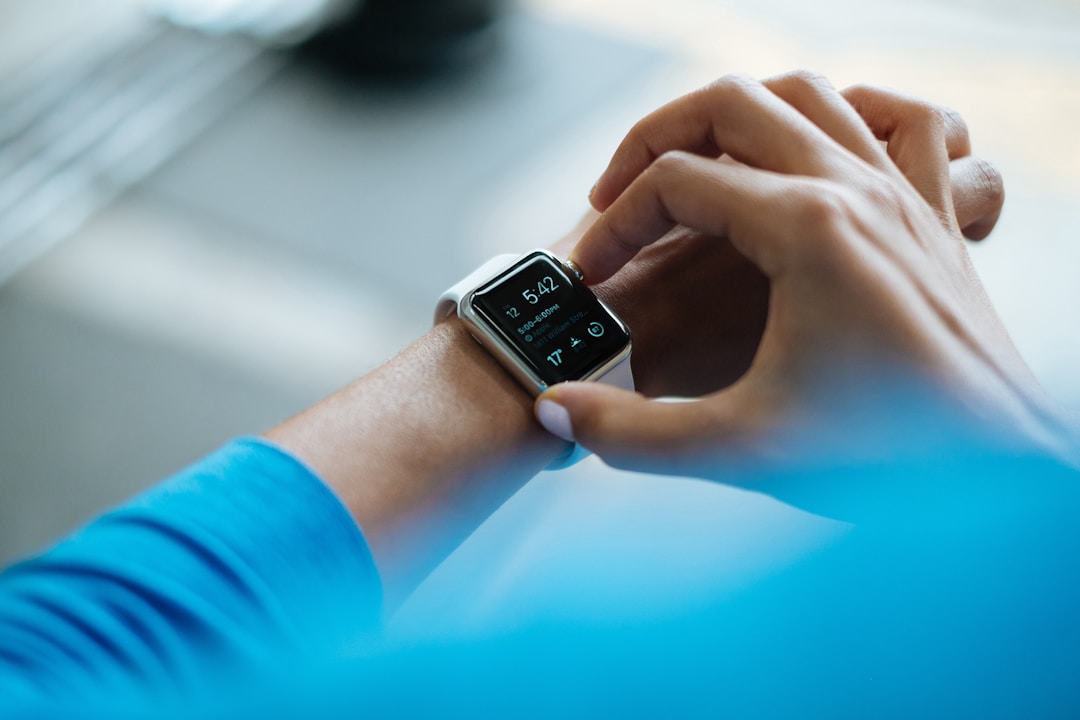
Photo by Tanmay Tikekar on Unsplash
How the Subscription Model Actually Works
Hardware as Loss Leader
Consumer hardware companies have known for decades that the real money is not in the first sale. It is in what comes after.
Amazon sells Kindle devices near cost because book purchases generate ongoing margin. Sony sold PlayStation consoles at a loss for years because game royalties and PlayStation Plus subscriptions produced 60% of division profit. The hardware gets you in the door. The recurring charges keep you there.
Wearable health companies took this playbook and applied it to your body. The ring or watch is the Kindle. Your heart rate variability data, sleep stages, and recovery scores are the books.
Oura's reported gross margin on hardware is approximately 35%. Their subscription gross margin is approximately 80%. This is not accidental. The device is priced to convert users into a recurring revenue stream. Subscription revenue is also more predictable, which means higher valuation multiples from investors. A dollar of subscription revenue is worth more to a company's valuation than a dollar of hardware revenue.
The Data Arbitrage
Here is what the subscription actually pays for, in most cases:
- Cloud storage for your biometric data
- Algorithm updates and new metrics
- App development and server costs
- Customer support infrastructure
These are real costs. But they are not $72 per year per user costs.
I run the infrastructure math for Pulsyn because I have to. A typical user's complete biometric dataset across a year is under 50MB of structured data. Storing that on commodity cloud infrastructure costs under $0.10 per year. Running inference on a 1B-parameter model on-device costs nothing in cloud compute because it happens on your phone. Even our optional premium cloud tier is priced at $10 per month, not bundled into a mandatory subscription.
The gap between infrastructure cost and subscription price is the data arbitrage. You are paying a premium for access to data that already belongs to you, collected by sensors you already bought.
The Lock-In Architecture
Obsolescence by Policy
Subscription models create a second, less discussed problem: forced obsolescence.
When your health metrics live in a company's cloud, your device becomes a paperweight the moment you stop paying. Oura has been explicit about this: without an active subscription, you get limited access to basic metrics. Whoop literally stops functioning. The hardware still works. The sensors still collect data. But the software gate keeps you from seeing it.
This is not technical limitation. It is policy architecture. The BLE protocol between ring and phone transmits the same packet structure whether you pay or not. The company chooses to render it inaccessible.
Pulsyn's local-first architecture avoids this entirely. Your data lives in SQLCipher on your phone, encrypted with your key. The ring transmits. The app stores. The AI runs on-device. There is no cloud gate to lock.
The Switching Cost Trap
Health data has unusually high switching costs. Unlike a streaming service, where canceling Netflix means you lose access to shows you were going to finish anyway, canceling a health subscription means you lose years of biometric baseline data.
If you have two years of Oura sleep scores, switching to a new tracker means starting your baseline from zero. The new device cannot import your historical HRV trends. Your recovery patterns, established over hundreds of nights, disappear from view. This is by design. High switching costs reduce churn. Companies know this and exploit it.
Pulsyn exports everything: CSV, JSON, or raw SQLite. We do not hold your data hostage because we do not have it in the first place.
What Subscriptions Actually Buy You
I want to be fair. There are legitimate arguments for the subscription model, and some of them are real.
Legitimate Case 1: Ongoing R&D
Whoop invests heavily in research partnerships. They have published peer-reviewed studies on respiratory rate, heart rate variability, and COVID-19 detection. This work is expensive and genuinely advances the field. Subscription revenue funds it.
Oura's sleep staging algorithm has improved measurably between Gen 2 and Gen 3. That improvement required data scientists, ML engineers, and validation studies against polysomnography. Real costs.
The counterargument is that R&D investment does not require a mandatory subscription. Pulsyn funds ongoing development through the hardware margin (85% gross margin at $160, $30 COGS) and optional premium tiers for users who want cloud AI. The base product stays complete.
Legitimate Case 2: Cloud Infrastructure
Machine learning models for health analysis are not trivial to run on-device. A full sleep staging model with 85-90% PSG accuracy requires significant compute. Oura and Whoop run these in the cloud because on-device inference on a ring's microcontroller was historically impossible.
This argument is weakening. Modern smartphones have NPUs capable of running 1-4B parameter models in real-time. Pulsyn uses Qwen 3.5 4B fine-tuned for health analysis, running via llama.cpp on the phone's NPU. The accuracy is comparable to cloud-based competitors for most metrics. For advanced analysis, our optional $10/month premium tier gives users access to cloud AI with deeper context windows. Users choose. The base product does not depend on our servers staying online.
The Pricing Psychology
Anchoring and Framing
$5.99 per month sounds smaller than $72 per year. $72 per year sounds smaller than $360 over five years. The subscription model thrives on temporal discounting: humans systematically undervalue future costs.
When you buy a $299 ring, the $5.99 monthly fee feels like an afterthought. By month 18, you have paid more in subscription fees than the device cost. Most users do not run this math. Companies know this and depend on it.
The "Free Trial" Conversion Funnel
Most subscription wearables offer 1-6 months of free premium access. This is not generosity. It is behavioral economics.
By the time the trial ends, you have accumulated baseline data, established usage habits, and integrated the metrics into your daily routine. The switching cost is now active. Cancellation means losing your data history and the habit you formed. Conversion rates from free trials to paid subscriptions in consumer health exceed 60%. The trial is the trap's door.
A Different Model
Pulsyn's pricing is simple: $160 once. That is it.
The hardware costs $30 to manufacture. That leaves $130 per unit to cover development, certification, marketing, support, and profit. At 500 units for our Kickstarter run, that is $65,000 in gross margin. At 10,000 units, it is $1.3 million. The business works without subscriptions because the margins are honest and the costs are controlled.
Why This Is Rare
Hardware startups typically raise venture capital, and venture capital demands growth. Recurring revenue grows faster and commands higher valuations than one-time sales. A company with $10M in annual recurring revenue might be valued at $100M. A company with $10M in one-time hardware sales might be valued at $30M.
The subscription model is not a user benefit. It is a venture capital requirement. Oura has raised over $148 million. Whoop has raised over $400 million. Those investors expect subscription multiples. The product becomes a vehicle for financial engineering.
Pulsyn is not venture-backed. Our pre-seed round targets $150-500K through SAFE notes and crowdfunding. We do not need to optimize for valuation multiples. We need to build a product people want to buy and keep.
What Users Actually Want
I have read thousands of Reddit comments, survey responses, and support emails about wearable subscriptions. The pattern is clear.
Users do not object to paying for value. They object to:
- Paying for access to their own data
- Losing functionality on hardware they already bought
- Unclear pricing that compounds over time
- Being trapped in ecosystems they cannot escape
The most common phrase I see: "I would pay more upfront to avoid a subscription."
This is not irrational. It is revealed preference. People correctly intuit that the subscription model extracts more value over time than a higher upfront price. The NPV of $160 once is lower than $299 + $72/year in perpetuity, even at modest discount rates.
The Regulatory Horizon
Right to Repair Meets Right to Data
The European Union's Digital Markets Act and emerging US state legislation on data portability are beginning to challenge subscription lock-in. California's Delete Act (SB 362) gives consumers the right to demand data deletion from brokers. The FTC has signaled interest in "dark patterns" in subscription cancellation flows.
Health data is likely next. Biometric data is legally sensitive under HIPAA in some contexts, and the 2022 Dobbs decision made reproductive health tracking a political issue. If regulators mandate data portability and prohibit subscription-gated access to user-generated health metrics, the subscription model faces structural risk.
Pulsyn is architecturally compliant with any such regulation because the data never leaves the user's device unless they explicitly choose to export it.
The Honest Comparison
| Dimension | Oura Ring Gen 4 | Whoop 4.0 | Pulsyn Rune 1 |
|---|---|---|---|
| Upfront cost | $349 | $0 (leased) | $160 |
| Annual subscription | $72 | $360 | $0 |
| 5-year total cost | $709 | $1,800 | $160 |
| Data ownership | Cloud | Cloud | Local device |
| Cancel and keep data | No | No | Yes (always) |
| Open-source algorithm | Partial | No | Full |
| On-device AI | No | No | Yes |
| Subscription required | Yes | Yes | No |
The comparison is not close over any meaningful time horizon.
What I Think Will Happen Next
The subscription model in consumer health will face pressure from three directions:
Regulatory: Data portability laws and right-to-access rules will make subscription gating harder to defend legally.
Competitive: Pulsyn is not the only company rejecting subscriptions. RingConn and several Kickstarter projects are experimenting with subscription-free models. The differentiation is becoming a market segment.
User awareness: Reddit threads about subscription fatigue in wearables routinely reach 10,000+ upvotes. Users are running the math and posting screenshots of five-year costs. Community knowledge is eroding the temporal discounting that subscriptions depend on.
I do not think subscriptions will disappear entirely. Some users genuinely want cloud AI, research partnerships, and advanced analytics. Those services cost money to provide. But the mandatory subscription, where basic functionality on purchased hardware requires ongoing payment, will become increasingly difficult to justify as alternatives proliferate.
About the Author
James Hoffmann is the founder of Pulsyn. He previously built MineXO, a Minecraft server infrastructure platform serving 2,000 concurrent players. He has been reverse-engineering BLE health devices and building privacy-first health software for two years.
References
- Oura Health Oy financial filings, 2023-2024. Subscription revenue and hardware margin disclosures.
- Whoop Inc. Series F fundraising documentation, 2024. $400M+ raised, subscription-dependent unit economics.
- Huang, N. et al. (2023). Consumer willingness to pay for wearable health devices: a discrete choice experiment. BMC Health Services Research, 23(1), 1-12.
- Federal Trade Commission (2024). "Negative Option Marketing and Dark Patterns in Subscription Services." FTC Policy Statement.
- European Commission (2024). Digital Markets Act enforcement guidelines, data portability requirements for health platforms.
- Pulsyn internal COGS analysis, March 2026. BOM cost breakdown for Rune 1 hardware.
Image credits
- Cover photo: Luke Chesser on Unsplash
- Inline photo: Tanmay Tikekar on Unsplash