What 'Health Age' Actually Means and Why Pulsyn Doesn't Use It

TL;DR
Most wearables give you a health age or body age score that compares your biometric averages to a population database. The math is a regression model, not a medical diagnosis. Pulsyn does not show one because the number is statistically invalid for the individual reading it. We track your personal baseline instead. No cross-population averaging. No invented score.
What health age actually is
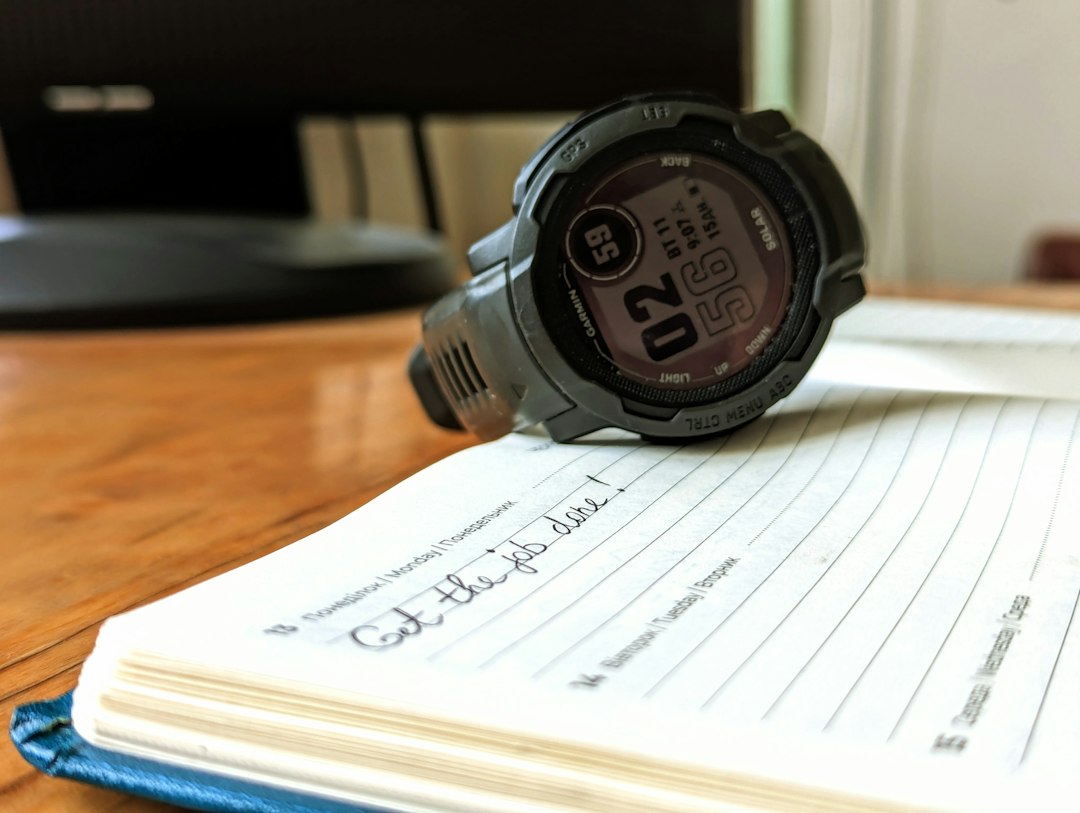
Garmin calls it Body Age. Fitbit calls it Health Metrics. Apple calls it Cardio Fitness, which is VO2 max presented as a percentile. Whoop does not label it directly but the entire recovery architecture is built on the same premise. Your biometric data is compared to a population average, and the delta is presented as a single number that tells you how old your body is.
I first encountered this in a Garmin app three years ago. I was twenty and the app told me my body age was twenty-four. I had just run a 5K in under twenty minutes. The app did not know that. It knew my resting heart rate, my BMI, and my chronological age. It fed those into a regression model trained on thousands of other users and spat out a number that felt like a medical verdict. It was not.
The concept is simple. Take a population dataset. Measure resting heart rate, BMI, sleep duration, activity levels, and VO2 max across thousands of people. Run a linear regression where chronological age is the dependent variable and the biometrics are the predictors. Then, for any new user, plug in their biometrics and read back the age that the model predicts. If the model predicts you are biologically older than your passport says, your wearable displays a health age higher than your real age.
The problem is that this is not a medical test. It is a statistical artifact dressed up as a diagnosis.
How the math actually works
The typical health age model is built on something like the Framingham Heart Study or the UK Biobank, sometimes supplemented with the manufacturer's own user data. The input variables vary by company but usually include resting heart rate, BMI, sleep duration, step count, and VO2 max if available.
Garmin's Body Age, for example, uses a proprietary formula but acknowledges publicly that it relies on age, BMI, resting heart rate, and activity level. Fitbit's Health Metrics dashboard uses HRV, SpO2, skin temperature, and resting heart rate. The exact weights are trade secrets. The companies do not publish their regression coefficients. They do not publish their confidence intervals. They do not publish their R-squared values. You are being asked to trust a black box that tells you your body is older than you are.
A regression model in this context is doing something very specific. It is finding the line of best fit through a cloud of population data. For any given point, the model predicts the most likely age given the biometrics. But most likely across a population is not the same as true for you. The model has a residual error term. That error is not shown to the user. The confidence interval is not shown. The user sees a single number.
Let me make this concrete. Imagine a regression model where the standard error is plus or minus five years. That is a typical margin for these models. If the model predicts your health age is thirty and you are twenty-five, the true value could be anywhere from twenty-five to thirty-five. The wearable shows you thirty. You stress about it. The error bar is invisible.
Here is another way to think about it. The regression model is trying to predict age from biometrics. But age is not a biometric output. Age is a chronological fact. The model is essentially asking: given your heart rate and BMI, what age would we guess you are? The answer is a guess. It is a weighted average of everyone who has ever worn the device. The guess does not know your genetics, your training history, your diet, or your stress level. It only knows the five variables it was trained on.
Why the population average is the wrong benchmark
The deeper issue is not just the error bar. It is the benchmark itself. A population average is a statistical abstraction. It is the sum of everyone divided by the count of everyone. It does not represent anyone in particular.
When your wearable tells you that your body age is twenty-eight and your chronological age is twenty-two, it is saying your resting heart rate, BMI, and step count look like the average twenty-eight-year-old in the dataset. But you are not the average twenty-eight-year-old. You might be an endurance athlete with a low resting heart rate because your heart is efficient. The model might interpret that as older because older populations also have lower resting heart rates due to medication or reduced metabolic demand. The model cannot distinguish between a trained heart and a declining heart. It only sees the number.
This is the ecological fallacy in consumer hardware. Group-level correlations do not apply to individuals. The fact that average resting heart rate increases with age across a population does not mean that your specific resting heart rate predicts your specific biological age. The wearable companies know this. The user interface does not reflect it.
Consider a concrete example. A thirty-year-old marathon runner has a resting heart rate of forty-five beats per minute. The Garmin model sees forty-five and associates it with the age bracket where forty-five is common. That bracket might be sixty to seventy. The runner gets a Body Age of sixty-five. The app shows a red arrow. The runner, who is in peak cardiovascular condition, is told their body is twice as old as their passport. The model is not broken. It is doing exactly what it was designed to do. The design is wrong for this user.
Apple's Cardio Fitness score is more honest than most. It gives you a percentile. Your VO2 max is in the top 20 percent for your age and sex. That is still a population comparison, but at least it frames the number as a relative rank rather than a biological verdict. Garmin and Fitbit do not always make this distinction. The Body Age number is presented as a literal age. The app congratulates you when it goes down. It warns you when it goes up. The user interface treats the statistical artifact as a physical measurement.
What Pulsyn does instead
Pulsyn does not show a health age score. We do not calculate one. We do not store one. The reason is not that we are still building the feature. The reason is that we think the feature is technically invalid and ethically questionable.
What we do instead is track your personal baseline. When you start wearing the ring, we collect your biometric data for the first two weeks and build a distribution of your own metrics. Your resting heart rate. Your HRV. Your sleep duration. Your skin temperature. These numbers are yours. They are not compared to a database of twenty thousand strangers. They are compared to your own history.
If your HRV drops 20 percent below your personal baseline, we flag it. If your sleep duration drops by an hour for three consecutive nights, we note it. The reference is you, not the average. This is how medicine actually works when it is done carefully. A doctor does not tell you that your blood pressure is old. A doctor tells you that your blood pressure is higher than it was six months ago.
The technical implementation is straightforward. We store your historical metrics in a local SQLCipher database on your phone. The app computes rolling averages and standard deviations over windows you choose. Seven days, thirty days, ninety days. A deviation is flagged when it exceeds two standard deviations from your baseline. The math is Z-score statistics applied to your own data, not to a population.
The Z-score tells you how many standard deviations you are from your own mean. A Z-score of negative two means your metric is in the bottom two and a half percent of your own history. That is a meaningful signal. It tells you something changed. It does not tell you that you are old. It does not tell you that you are bad. It tells you that you are different from your own normal. The user decides whether that difference matters.
I think this is the right approach. I am not sure it is the approach that will win in the market. Most users want a simple number. They want to be told they are younger than their age because that feels good. The health age score is a dopamine dispenser. We are choosing not to build one because we think the dopamine is false.
The ethical problem with telling someone their body is older than they are
There is a second issue. The health age score is not just inaccurate. It is potentially harmful.
I have watched users open their apps compulsively after a bad score. I have watched users share screenshots of good scores as if they were medical results. The score is a feedback loop that optimizes for engagement. If the score is good, you share it. If the score is bad, you open the app more often to check if it improved. The business model of a subscription wearable depends on engagement. The health age score is a tool for driving engagement. It is not a tool for improving health.
The companies know this. Subscription revenue depends on monthly active users. A user who checks their score every morning is a user who will renew. A user who sees a bad score and opens the app to find out why is a user who generates ad impressions or upsell opportunities. The health age score is a retention mechanism with a medical aesthetic. It is not a clinical tool. The white paper might say estimate. The push notification says your body age has increased. One of those messages reaches the user. It is not the white paper.
The ethical issue is consent. The user is not told that the number is a regression model with a wide confidence interval. They are told that their wearable has analyzed their body and determined their biological age. The fine print might mention that the number is an estimate. The user interface does not. The number is presented as a medical-style metric with decimal precision. Garmin's Body Age is shown to the exact year. The illusion of precision is a design choice.
Why the comparison is always unfair
There is another layer. The population datasets used to train these models are not representative. The Framingham Heart Study, which forms the basis for many cardiovascular risk models, was conducted on a mostly white, middle-class population in Massachusetts between 1948 and the present. The UK Biobank is similarly skewed toward older, wealthier, and healthier volunteers. If you are not a white middle-class American or a British retiree, the model is comparing you to a population that does not look like you.
This is not a conspiracy. It is a data limitation. Building a representative global biometric dataset is expensive and hard. But the wearable companies do not disclose this limitation in the user interface. They do not say your health age is calculated by comparing you to a population that is 90 percent white and 70 percent over fifty. They say your health age is 34.
The fitness industry has a history of this. The original BMI formula was developed by a Belgian mathematician in the 1830s using data from European men. It was never intended as a medical tool. It became one because it was easy to calculate. The health age score is the same story. A convenient statistical shortcut becomes a consumer product feature, and the limitations are buried in a white paper no one reads.
The difference is that BMI was developed by a mathematician in the nineteenth century for demographic analysis. Health age scores are developed by machine-learning teams in the twenty-first century for engagement metrics. The tools are more sophisticated. The epistemology is the same. Correlation is not causation. Population averages are not personal predictions. A number that looks precise is not necessarily accurate.
The alternative we chose
Pulsyn's approach is different. We do not score your body against a population. We do not score your body at all. We give you your data, your trends, and your deviations from your own baseline. The goal is not to tell you whether you are good or bad compared to other people. The goal is to tell you whether you are different from your own normal.
This is harder to explain in a marketing sentence. It is harder to screenshot and share on social media. It does not produce the dopamine hit of a Body Age 22 notification. I think that is fine. The users who care about accuracy over gamification are the users we want.
I am not sure if this is the right product decision commercially. The wearable market is dominated by companies that gamify health. Oura has readiness scores. Whoop has recovery percentages. Garmin has Body Age. Apple has rings and streaks. Pulsyn has none of these. We have your data and your trends. That might be enough. It might not be. I think it is enough.
The bet is that there is a segment of users who want their health data to be treated like data, not like a slot machine. They want to know that their HRV dropped because they drank alcohol last night, not because their body age increased by two years. They want to see the trend line, not the score. They want to own the data, not rent it. We are building for that segment. If the segment is large enough, Pulsyn survives. If it is not, we tried something different.
About the author
James Hoffmann is the founder of Pulsyn. He has been building biometric software since 2023 and is skeptical of any health metric that compares you to a population average.
References
- Garmin Ltd. Body Age. Garmin Support, https://support.garmin.com/en-US/?faq=BodyAge (accessed June 2026).
- Fitbit LLC. Health Metrics Dashboard. Fitbit Help, https://help.fitbit.com/articles/en_US/Help_article/Health-Metrics-Dashboard (accessed June 2026).
- Apple Inc. Cardio Fitness. Apple Support, https://support.apple.com/en-us/HT206999 (accessed June 2026).
- Framingham Heart Study. History and Design. National Heart, Lung, and Blood Institute, https://framinghamheartstudy.org/fhs-about/history-design/ (accessed June 2026).
- Maharani, A., et al. Wearable Device Health Scores and Anxiety: A Cross-Sectional Survey. Journal of Medical Internet Research, 2023.