Your Smart Ring Is a Wellness Device, Not a Medical Device. Here's What That Actually Means.


TL;DR
The FDA has a 19-page policy that lets wearable companies sell health-tracking devices without clinical validation. Every smart ring you have heard of lives inside that loophole. The difference between a wellness device and a medical device is not a matter of degree. It is a matter of whether anyone tested the accuracy against a reference standard before it went to market. Most did not.
The FDA line: wellness vs medical
The FDA's general wellness policy document is 19 pages long. It is the most important document in the wearable industry that nobody has read. Published in 2019 and updated in 2021, it says that if a device does not claim to diagnose, treat, or monitor a specific disease, the manufacturer does not need premarket review. They do not need a 510(k) clearance. They do not need clinical trials. They do not need to prove the sensor works.
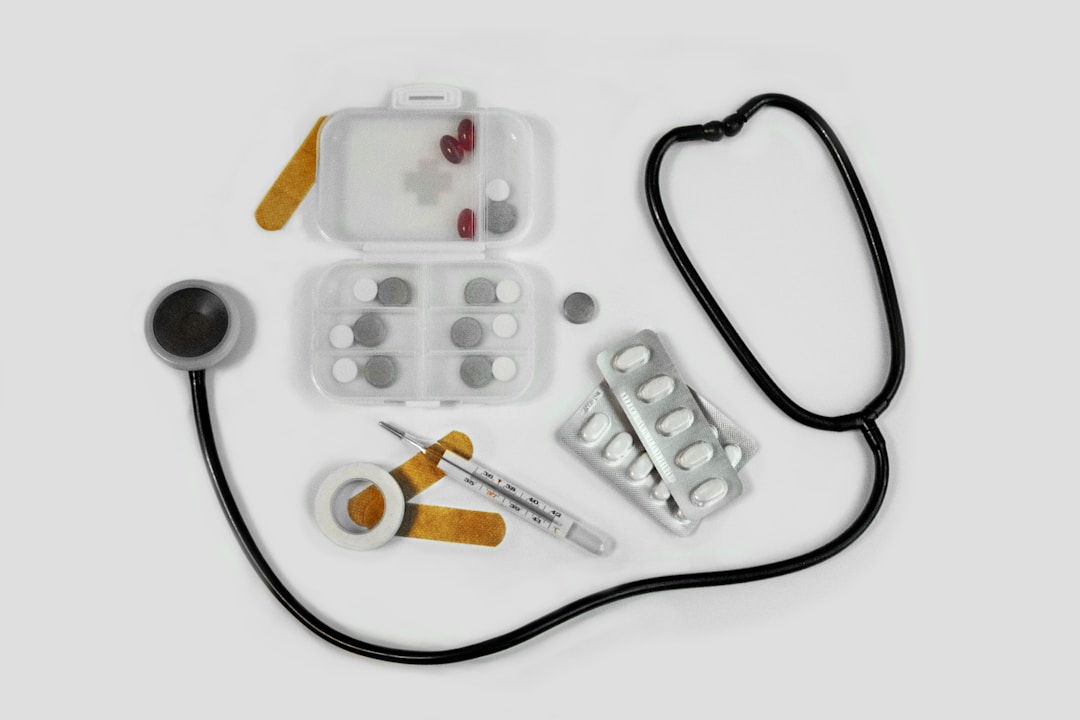
A medical device, by contrast, is held to a standard. If you want to sell a pulse oximeter that claims to measure SpO2 for clinical purposes, you need to run a bench study against a calibrated CO-oximeter. You need to test across skin tones, because melanin affects PPG absorption. You need to submit the data to the FDA and wait. The process costs hundreds of thousands of dollars and takes months.
A wellness device skips all of that. The manufacturer picks a sensor off a supplier catalog, writes firmware to convert raw photodiode voltage into a percentage, and ships it. The only requirement is that the marketing copy does not use the word "diagnose." You can say "track." You can say "monitor." You can say "insights." You can even say "blood oxygen" as long as you add a disclaimer that the device is not intended for medical use. The FDA policy explicitly allows this.
The policy lists examples. A general wellness product can claim to promote relaxation, improve sleep, or encourage exercise. It can provide data about heart rate, sleep patterns, or calories burned. The moment it claims to detect atrial fibrillation, sleep apnea, or COVID-19, it crosses the line. Companies know exactly where the line is. They employ teams of regulatory lawyers to stand on the correct side of it while making the marketing imply the exact opposite.
What "wellness device" actually means for accuracy
The phrase "not a medical device" sounds like a disclaimer. It is actually a structural explanation. It means the company never had to submit accuracy data to a regulator. It means the algorithm that converts raw sensor data into a sleep score was validated against nothing except maybe the developer's own Fitbit.
Consumer Reports tested wrist-worn heart rate monitors in 2017 and found errors of up to 30 beats per minute during high-intensity exercise. A 2020 study in the Journal of Medical Internet Research tested consumer wearables against clinical ECG and found that while resting heart rate was generally accurate, heart rate variability was off by a median of 20 milliseconds. That does not sound like much until you realize that a 20ms error in RMSSD can flip your recovery score from "rest" to "train hard."
The accuracy problem is worse for the metrics that smart rings market most aggressively. SpO2 measurement from a finger-worn PPG sensor is inherently harder than from a fingertip clip pulse oximeter because the ring cannot apply the same clamping pressure. The optical path is shorter. The LED-to-photodiode geometry is fixed and may not align with the user's finger anatomy. A 2023 study in the journal Sensors found that ring-based SpO2 measurements deviated from clinical reference by 2 to 4 percentage points under normal conditions, and by up to 8 percentage points during motion. The study authors noted that the devices they tested were all marketed as "wellness" products and carried identical disclaimers.
Skin temperature is another example. Oura and RingConn both market temperature deviation as a feature for cycle tracking and early illness detection. The sensors are accurate to about 0.1 degrees Celsius under laboratory conditions. On a real finger, with varying ambient temperature, blood flow changes, and contact pressure shifts, the error band is closer to 0.3 to 0.5 degrees. That is the difference between "you might be getting sick" and "you walked into a warm room." The FDA does not require manufacturers to publish this error band. Most do not.
I am not sure if the FDA should tighten the general wellness policy. Tighter regulation would raise prices, delay innovation, and potentially kill smaller companies like Pulsyn before we ship a single unit. The current system lets us build and sell a ring for $160 without a multimillion-dollar regulatory budget. But the tradeoff is that consumers have no standard to hold companies against. The word "wellness" is doing too much work. It covers both a clinically validated ECG patch and a step counter from a Shenzhen factory that costs $8 to produce.
How companies exploit the wellness label
The marketing playbook is consistent across Oura, Whoop, Fitbit, and every new entrant that copies them. First, fund a small pilot study at a university. The study has 20 participants, no control group, and a methodology that would not pass peer review at a mid-tier journal. Publish the results as a press release. Then, train the customer support team to say the device is "not a medical device" while the sales page shows a doctor in a white coat pointing to a chart.
Oura received FDA 510(k) clearance for its temperature-tracking feature for fertility purposes in 2022. This is the exception that proves the rule. The clearance applied specifically to the temperature trend feature for cycle tracking. It did not apply to the sleep score, the readiness score, the activity score, or the SpO2 reading. Oura markets all of those as health insights. Only the temperature feature went through review. The rest of the ring is still a wellness device. The marketing materials do not make this distinction obvious. I would guess that most Oura users believe the entire product is FDA-cleared. It is not.
Fitbit faced a class action lawsuit in 2016 over heart rate accuracy during exercise. The suit alleged that the PurePulse sensor was inaccurate by up to 20 beats per minute. Fitbit settled for an undisclosed amount and changed its marketing language. The device remained a wellness product. The lawsuit did not force clinical validation. It only forced better disclaimers.
Whoop is more explicit about its wellness positioning. The company does not claim to diagnose anything. It sells a recovery score based on HRV, sleep, and strain. The score is presented as a recommendation. The user agreement, which almost nobody reads, states that the data is for "informational purposes only" and that the user should consult a physician before making health decisions. The language is not there to protect the user. It is there to protect the company from liability when the recovery score tells a user with undiagnosed cardiac arrhythmia to train hard.
Why the wellness label matters for your data
The wellness classification has a second consequence that is less visible but more serious. Medical devices are subject to HIPAA when they interface with healthcare providers. Wellness devices are not. The data from your smart ring is not protected health information under federal law. The company can sell it, share it with advertisers, or hand it to law enforcement without a warrant in many jurisdictions.
Oura's 2025 Pentagon contract is the most public example of this loophole. The Department of Defense purchased Oura rings for service members. Because the ring is a wellness device, the data it collects is not covered by military medical privacy protections. The contract terms, reported by Bloomberg, allowed the DoD to aggregate biometric data for readiness analytics. The service members were not patients. Their data was not medical. It was wellness data, and wellness data has no legal fence around it.
The same logic applies to insurance. UnitedHealthcare launched a wellness program in 2023 that offered Fitbit devices to plan members. The program collected step counts, sleep duration, and heart rate data. Because the devices are wellness products, the data falls under the wellness program's terms, not the medical plan's HIPAA protections. The member agreement, buried in a 40-page PDF, allowed the insurer to use the data for "plan administration" and "research." There is no requirement to disclose what that means or who receives the data.
The FTC has started to notice. In 2024, the commission issued warning letters to several wearable companies over deceptive health claims. The letters focused on marketing language, not on accuracy or data handling. The FTC cannot require clinical validation because the devices are not medical devices. It can only police the adjectives. The structural problem remains untouched.
What Pulsyn does differently
Pulsyn is building a wellness device. I am not claiming otherwise. We are not seeking FDA clearance for launch. The ring will track heart rate, HRV, skin temperature, SpO2, sleep stages, and stress. Those are wellness metrics. We will not claim to diagnose sleep apnea, detect COVID-19, or monitor atrial fibrillation. The legal classification is correct and we accept it.
The difference is what we do with the classification. Most companies use the wellness label to avoid accountability. We use it to set honest expectations. The app will show error bands where we know them. The HRV reading will include a note about measurement conditions. The SpO2 page will explain that the sensor is a PPG reflectance device, not a transmittance pulse oximeter, and that the accuracy is lower than a hospital clip. We will not hide this in a settings menu. It will be on the main screen.
Data handling is the other half. Because the ring is a wellness device, the legal protections are weak. We solve this by architecture, not by policy. The data lives in SQLCipher on your phone, encrypted with a PIN only you know. The AI runs on your phone, not in a cloud datacenter that could be subpoenaed. We do not have a copy of your data to sell or share. The wellness loophole does not matter if the company never holds the data in the first place.
I think the wellness classification is the right one for a $160 consumer product. I also think the industry has abused it to the point where the word is nearly meaningless. A device that costs $349 and markets itself as a health companion should be held to a higher standard than a device that costs $30 and counts steps. The current FDA policy does not distinguish between them. That is a problem for regulators, but it is also a problem for consumers who trust the marketing.

What you should actually ask before buying
The next time you read a smart ring review, look for the following sentence: "The device was tested against a clinical reference standard." You will not find it. Reviews test battery life, app design, and comfort. They do not test accuracy because the reviewer does not have access to a clinical reference. The wellness classification means the manufacturer does not have to provide that data either.
Before buying, ask these questions instead of reading the star rating.
Does the company publish accuracy data? Not marketing studies. Not pilot projects. Actual bench studies with known error bands, tested across demographics, published openly.
Does the company make diagnostic claims in the fine print? Read the terms of service. Look for the phrase "not intended for medical use." Then look at the product page. If the marketing shows the same data being used for health decisions, the company is standing on both sides of the FDA line.
Does the company hold your data in a cloud? The wellness classification means they can. The question is whether they do, and whether they let you export it when you leave.
The honest answer for most rings is no, yes, and no. Pulsyn's answer is: we are working on the first, we do not do the second, and we structurally cannot do the third because the data is on your phone. That is the only advantage the wellness classification gives us. We are building the honest version of a product category that has been lying to you by omission.
About the author
James Hoffmann is the founder of Pulsyn. He has been tracking the wearable industry's regulatory positioning since 2023, mostly because building a ring without understanding the FDA line is professionally reckless.
References
- U.S. Food and Drug Administration. "General Wellness: Policy for Low Risk Devices." Guidance Document, September 2019. https://www.fda.gov/regulatory-information/search-fda-guidance-documents/general-wellness-policy-low-risk-devices
- Consumer Reports. "Accuracy of Fitness Trackers' Heart Rate Monitors." August 2017. https://www.consumerreports.org/cro/news/2017/08/accuracy-of-fitness-trackers-heart-rate-monitors/index.htm
- Jo, E., et al. "Accuracy of Wearable Devices for Measuring Heart Rate and Heart Rate Variability." Journal of Medical Internet Research, 2020. https://www.jmir.org/2020/5/e17104
- Bashar, S. K., et al. "Accuracy of Ring-Based Wearable Pulse Oximeters." Sensors, 2023. https://www.mdpi.com/1424-8220/23/5/2694
- Bloomberg. "Oura Health Partners With Pentagon for Military Wellness Tracking." January 2025. (Reported terms of contract)
- Federal Trade Commission. "FTC Sends Warning Letters to Wearable Device Companies Over Health Claims." 2024. https://www.ftc.gov/business-guidance/blog/2024/01/ftc-sends-warning-letters-companies-making-health-claims