Oura Just Filed for IPO. Here Is Why It Will Flop.

TL;DR
Oura filed confidentially for its IPO on May 21, 2026, at an $11 billion valuation with Goldman Sachs and Morgan Stanley steering. The pitch is a health-tech success story: five million paid members, revenue quadrupling in two years, and a path to $2 billion in 2026 sales. The reality is a company selling $349 hardware that does not work without a $5.99 monthly subscription, sitting on a canceled $96 million Pentagon contract, and facing a class-action lawsuit over the exact paywall that props up its recurring revenue. Public markets have a way of exposing business models that private investors were willing to tolerate. Oura's is one of them.
The filing and the numbers that sound good
Oura announced its confidential Form S-1 submission to the SEC on Thursday, May 21, 2026. The company did not name a price range or timeline, which is standard for confidential filings under the JOBS Act. Goldman Sachs, Morgan Stanley, and JPMorgan Chase are handling the transition. Oura was last valued at $11 billion in October 2025 after a $900 million Series E. Total fundraising since its 2015 launch exceeds $1.5 billion.
The growth metrics are genuinely impressive on paper. Oura says it will pass five million paid members this quarter, a fourfold increase over two years. Revenue has quadrupled across the same period. CEO Tom Hale told CNBC in November 2025 that Oura was on track for roughly $1 billion in 2025 sales and could approach $2 billion in 2026. The company has sold over 5.5 million rings, up from 2.5 million as of June 2024.
Those numbers put Oura in the top tier of consumer hardware startups attempting to go public. The problem is that hardware is not what Oura is actually selling. The hardware is the funnel. The product is the subscription.
The subscription is the business, and it is the liability
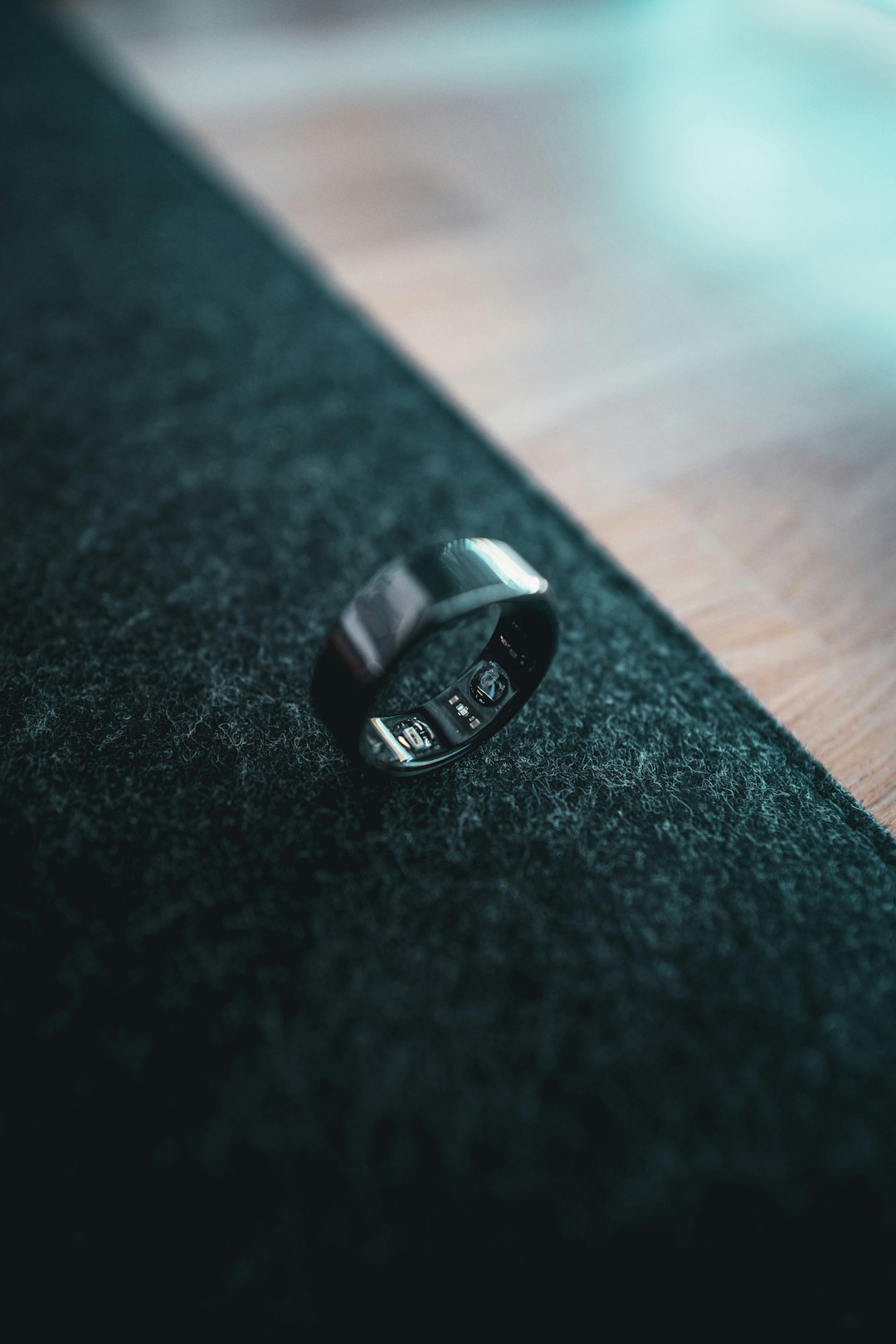
The Oura Ring 4 starts at $349. The Heritage Gold finish runs to $499. That is already premium pricing in a category where RingConn Gen 2 costs $299 and the Samsung Galaxy Ring costs $399. But the purchase price is only the entry fee.
To see most of the data the ring collects, users need an Oura Membership at $5.99 per month or $69 per year. Without it, the app shows basic sleep and activity scores. Detailed HRV trends, recovery metrics, blood oxygen analysis, and the newer AI-powered features are all locked. The device you just paid $349 for becomes a sleep timer with a titanium band.
This model has generated two specific risks for the IPO.
First, the class-action lawsuit. Law firms began filing complaints in early 2026 alleging that Oura sold premium hardware and then paywalled core functionality that buyers reasonably expected to access. The Gen 3 launch in 2021 introduced the subscription for the first time, and the backlash was immediate. It never fully subsided. A publicly traded company with an active class-action over its core revenue model is a litigation and reputation risk that underwriters will have to price in.
Second, the competitive landscape has shifted decisively against subscriptions. RingConn Gen 2 costs $299 and charges nothing ongoing. Samsung's Galaxy Ring costs $399 and has no subscription. Ultrahuman Ring Air has no subscription. Circular Ring 2 has no subscription. Even in the smartwatch space, Apple does not charge a monthly fee for Health app access, and Garmin does not gate fitness metrics behind recurring payments.
The subscription was defensible in 2021 when Oura was essentially the only serious smart ring. It is not defensible in 2026 when every major competitor offers the same hardware without the ongoing charge. Public market investors will ask a simple question: what happens to Oura's recurring revenue if RingConn or Samsung runs an ad campaign built around "buy once, track forever"? The answer is that churn would spike, and Oura's $2 billion revenue target starts to look optimistic.
The Pentagon contract that vanished
In October 2024, the Defense Health Agency awarded Oura a $96.1 million contract to supply up to 200,000 smart rings to military personnel for health monitoring and early disease detection. The deal was significant enough that Oura listed the Department of Defense as its largest enterprise customer in 2025 and began building a U.S. manufacturing footprint in Fort Worth, Texas around defense demand.
Less than six months later, in March 2025, the Pentagon canceled the contract. The Defense Health Agency stated that the acquisition was "no longer required." The cancellation followed public protests, competitor complaints, and widespread user backlash over privacy concerns. Many users feared, incorrectly in some cases, that Oura was sharing consumer biometric data with Palantir and the U.S. government.
Oura has repeatedly stated that consumer data is not sold to the government and that DoD programs operate on separate infrastructure with separate consent. CEO Tom Hale addressed the issue directly at Fortune Brainstorm Tech in September 2025, saying the company will never sell customer data. But the narrative had already taken hold. Reddit threads, TikTok videos, and mainstream coverage framed Oura as a company whose health data pipeline ran too close to defense contractors.
For a company about to market itself to public investors, this is a material risk that goes beyond a single canceled contract. Biometric data is the most sensitive personal data most people generate. Heart rate variability, sleep stages, body temperature trends, and blood oxygen levels paint a detailed picture of a person's health, stress, and even menstrual cycle. The market for that data, if it were ever sold or breached, is enormous. Investors in a public health-tech company will ask hard questions about data governance, and Oura's Pentagon association gives them a specific reason to ask.
Competition is no longer theoretical
When Oura launched the Gen 3 in 2021, it had the ring category almost to itself. The product was good enough that reviewers recommended it despite the new subscription. That environment allowed Oura to build a $11 billion valuation on the back of a hardware-plus-subscription model that would have killed most other consumer electronics companies.
That environment no longer exists.
RingConn Gen 2 launched in 2025 with a full-featured app, no subscription, and a $299 price point. Reviews from Wareable, WIRED, and PCMag now list it as a genuine alternative, not a compromise. Samsung entered the market in mid-2024 with the Galaxy Ring at $399, leveraging its existing health ecosystem and Samsung Health integration. Ultrahuman has built a niche around no-subscription tracking with aggressive battery life claims. Even Zepp Health has filed patent lawsuits against Oura in 2026, signaling that the incumbents are fighting back.
The result is that Oura is now the only major smart ring that charges both a high upfront price and a recurring fee. It is also the most expensive when total cost of ownership is calculated over two years. A $349 Oura Ring 4 plus $144 in subscription fees over twenty-four months costs $493. A $299 RingConn Gen 2 costs $299. Over three years, the gap widens to $565 versus $299.
Public market investors will not miss this arithmetic. They will also not miss that Oura's 4x revenue growth happened during a period when the company had limited competition. Future growth must come from either raising prices in a competitive market, converting free users to paid in an environment where competitors do not charge, or expanding internationally. None of those paths are easy.

What public markets do to subscription hardware
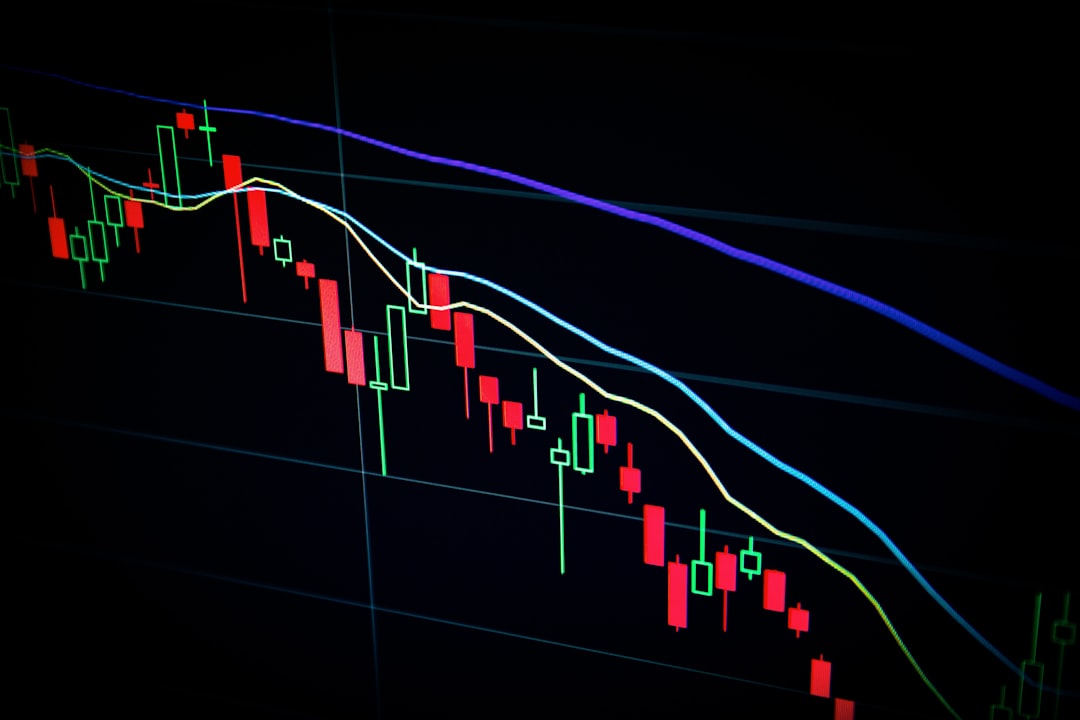
Private investors tolerate business models that public markets punish. This is a well-documented pattern. Peloton traded at $167 per share in 2020 on the back of hardware-plus-subscription growth. It fell below $5 by 2022 as the market realized the subscription retention did not justify the valuation. GoPro, Fitbit, and several other hardware companies experienced similar corrections when growth slowed and the recurring revenue narrative frayed.
The specific risk for Oura is that its subscription is not a genuine software service in the way Netflix or Spotify is. It is a paywall on data that the user's own device already collected. The marginal cost of delivering that data to the app is effectively zero. The subscription exists because Oura needs recurring revenue to justify its valuation, not because the service has ongoing costs that require it.
Public market analysts will model churn scenarios. They will ask what happens if 10% of subscribers cancel in year one because they bought a RingConn. They will ask what happens if Samsung bundles the Galaxy Ring with Galaxy S phones and gives six months of free health tracking that does not convert to paid. They will ask why Oura's gross margins on the ring itself are not higher if the company is charging a premium price for titanium and LEDs.
The honest answer to all of those questions is that Oura's $11 billion valuation depends on a subscription model that customers already resent, competitors already undercut, and regulators may eventually scrutinize. The European Commission has been aggressive about digital consumer rights, and a paywall on health data generated by a purchased medical-adjacent device is a plausible target for future regulation.
The AI pivot is real but not proven
Oura's public narrative has shifted toward artificial intelligence and preventative health. The company says it is investing in AI, analytics, and new capabilities that justify the membership beyond simple data visualization. Some of these features, like illness detection and cycle tracking, are genuinely useful. But they are also features that competitors can build. Samsung has the largest health dataset in consumer electronics. Apple has the tightest integration between hardware and software. Google has the most advanced on-device ML models.
Oura does not have a structural advantage in AI. It has a first-mover advantage in rings, which is eroding. If the IPO pitch relies on AI-driven differentiation, the company will need to show proprietary models, unique data moats, or regulatory clearances that competitors cannot replicate. None of those are visible today.
Why this matters for the ring category
Oura's IPO is not just an Oura story. It is a test of whether the smart ring category can support a public company at all. If Oura trades well, it validates the space for investors and opens the door for competitors to raise capital or file themselves. If Oura stumbles, it sends a signal that rings are a niche hardware play, not a platform, and the venture funding that has poured into RingConn, Ultrahuman, and others will tighten.
From where I am building Pulsyn, the outcome is less important than the clarity it brings. Oura's filing forces the market to decide what a smart ring company is actually worth when you strip away the private-market optimism. The answer, I think, is less than $11 billion.
A smart ring is a sensor. The value is in what you do with the data, who controls it, and whether the user owns the device or rents access to it. Oura built a beautiful sensor and then built a tollbooth in front of the data. That works at $11 billion in a bull market with no competition. It works less well on a public exchange where analysts model churn, competitors run ads about total cost of ownership, and users on Reddit call the subscription a scam.

What happens next
Oura will likely go public in late 2026 or early 2027, assuming market conditions hold. The company has the brand recognition, the retail distribution, and the cash to weather a rough debut. But the fundamentals are what they are. The subscription model is the revenue engine and the customer relations liability. The Pentagon contract is canceled and the privacy narrative is damaged. The competition is real, well-funded, and increasingly priced lower with no ongoing fees.
I would not short the stock on day one. IPO pops happen for reasons unrelated to fundamentals. But I would watch the first earnings call very carefully. If subscriber growth slows, if average revenue per user drops, or if guidance for 2027 comes in below the $2 billion target, the market will reprice this company fast. Hardware multiples are low. Software multiples are high. Oura is priced like a software company and built like a hardware company with a controversial paywall.
The ring category will survive whatever happens to Oura's share price. Better products at fairer prices are already here. The question is whether public investors will notice that before or after they buy in.
About the author
James Hoffmann is the founder of Pulsyn. He is building a privacy-first smart ring that processes health data on-device and does not charge a subscription to view your own metrics.
References
- CNBC, "Oura, smart ring maker, files confidentially for IPO," May 21, 2026.
- Bloomberg, "Oura Files Confidentially for IPO as Smart Ring Sales Surge," May 21, 2026.
- Business Wire, "ŌURA Announces Confidential Submission of Draft Registration Statement," May 21, 2026.
- Fortune, "Oura CEO insists they'll never sell your data," September 9, 2025.
- Gadgets & Wearables, "OpenAI backlash puts fresh focus on Oura's Pentagon ties," March 6, 2026.
- ID Tech Wire, "Pentagon Cancels $96M Biometric Ring Contract Amid Privacy Concerns," March 6, 2025.
- LawFold, "Oura Ring Lawsuit 2026: Payouts and Key Updates," 2026.
- Wikipedia, "Oura Health," accessed May 21, 2026.
- PCMag, "The Best Smart Rings We've Tested for 2026," 2026.
- WIRED, "3 Best Smart Ring Brands: Oura, RingConn, and Samsung (2026)," 2026.