Smart Ring Battery Life Is a Sampling Rate Tradeoff Nobody Lists on the Spec Sheet

Smart Ring Battery Life Is a Sampling Rate Tradeoff Nobody Lists on the Spec Sheet
Most smart rings list battery life in days and sensor count in LEDs. Neither tells you how often the ring actually measures you.
That missing number is sampling strategy. How long the green LEDs stay on, how many times per second they fire, and when the firmware decides to pause to save power. It is the main reason two rings with similar hardware can report very different resting heart rate and HRV.
Why LEDs Dominate the Power Budget
Photo by Daniel Tanase on Unsplash
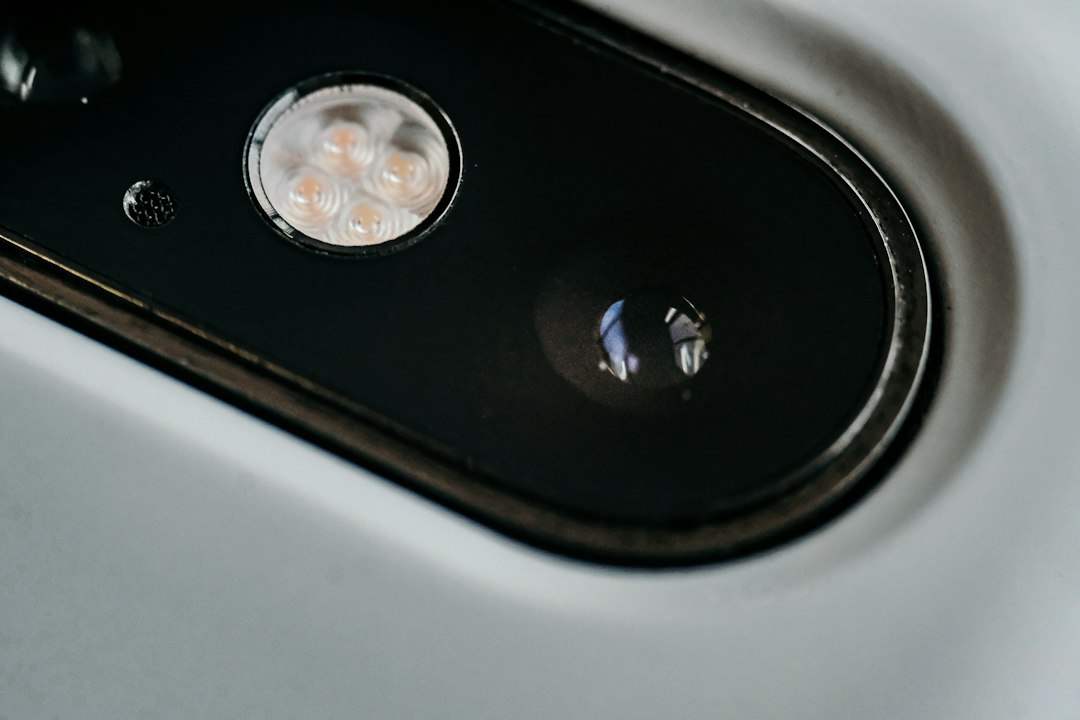
A photoplethysmography sensor is simple in concept and expensive in power. An LED shines into the finger, a photodiode reads back the reflected signal, and small blood volume changes show up as tiny variations in that return.
The LED is the costly part. In continuous mode at 50 to 100 samples per second, the optical front end can draw several milliwatts on average. That does not sound large until you place it next to a ring cell that holds roughly 15 to 25 mAh. At that burn rate, continuous high rate sampling alone can flatten a small cell in a day or less.
So vendors duty cycle. They pulse the LED for tens of microseconds, take a reading, then shut it down between samples. Drop from 100 Hz to 25 Hz and you cut LED on time by about 75 percent. Drop to one burst every few minutes during the day and the savings are larger still. Battery life goes up. Temporal resolution goes down.
This is normal engineering. The problem is that spec sheets show only the first half.
What Vendors Cut to Hit Multi Day Claims
Photo by Faz Islam on Unsplash
There are three common cuts.
First, daytime background sampling. Many rings sample heart rate every 5 to 10 minutes during still periods and pause entirely during motion. That is enough for a daily resting estimate but it will miss short spikes, brief arrhythmia bursts, and most workout detail unless you start a live session that forces continuous mode.
Second, nighttime averaging windows. Sleep is where rings look best because the hand is still. Even there, most devices do not run full rate all night. A typical pattern is short high rate bursts for HRV calculation interleaved with lower rate tracking for heart rate and temperature. If a burst is noisy, the firmware throws it out and widens the averaging window. You get a clean morning number with less underlying data than the graph implies.
Third, SpO2 duty cycle. Red and infrared LEDs use more power than green for the same signal quality. That is why many rings spot check SpO2 a few times per night instead of tracking it continuously. A single nightly average can hide 20 to 40 minute desaturation dips tied to position or congestion.
None of this makes multi day battery a lie. It makes it a choice. Days of life in exchange for gaps in data.
How to Read Between the Battery Claim
If you compare rings, ask for three numbers vendors rarely put on the product page.
One, continuous sampling rate during workouts and sleep. Is HRV derived from 50 Hz or higher bursts, or from 25 Hz data stitched together. Two, background interval during the day when you are not exercising. Three, SpO2 cadence at night, continuous or spot checks.
You can also test behavior without lab gear. Wear the ring for a normal day with two brief stair climbs separated by an hour. Check whether both show up in the daytime heart rate trace and at what time resolution. Then check a restless night. If your sleep graph is smooth despite frequent wakeups you remember, the device likely averaged through motion gaps.
For our own work on Pulsyn Rune 1, which is pre launch and planned to ship in Q3 2026, this tradeoff is central. The reservation is $20 toward a $200 one time price with no subscription, so we cannot hide missing data behind a paywalled detail view. The current plan is to document sampling modes in plain terms and keep Readiness, Strain, and Body Battery calculations tied to stated windows, not interpolated silence. Details are at pulsyn.tech.
Battery life is real engineering. Just read it as what it is, a sampling budget, not only a charger schedule.