Why Your Smart Ring SpO2 Reading Is Probably a Guess

TL;DR
Consumer wearables that promise blood oxygen readings are running reflective photoplethysmography on a body part that was never designed for it. The FDA has been scrutinizing these monitors since 2022 because they systematically overestimate saturation in people with darker skin. Smart rings are even worse positioned than watches because they clamp to a finger, distorting tissue perfusion. Most of the numbers you see are guesses dressed up as data, and the companies selling them know it.
How pulse oximetry actually works
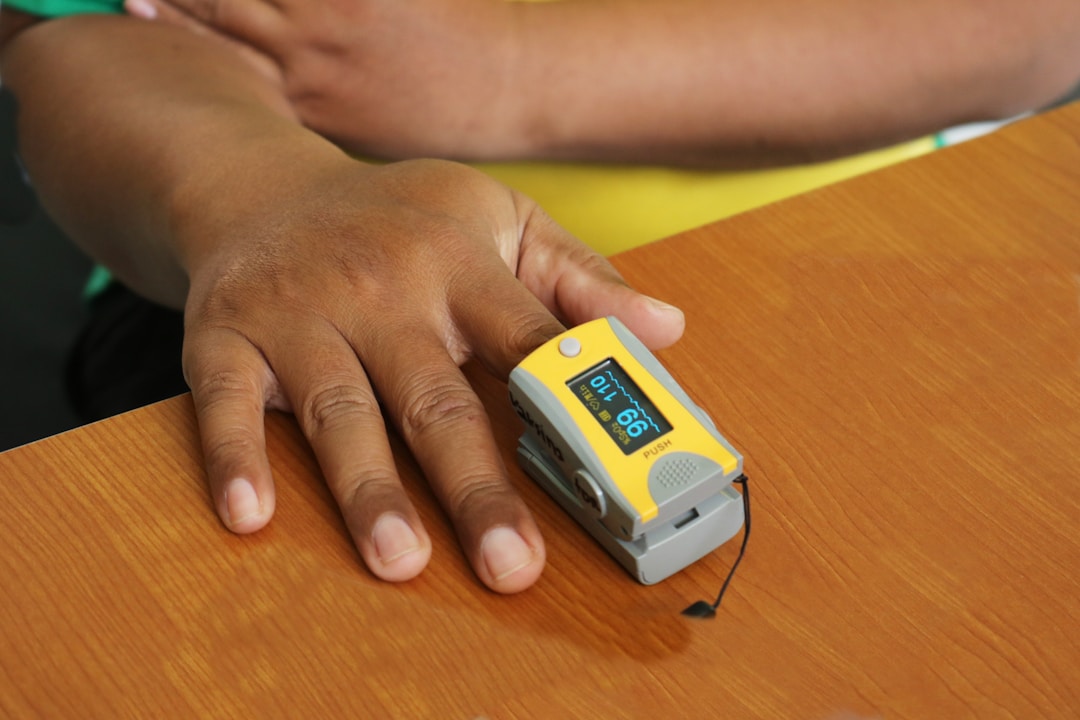
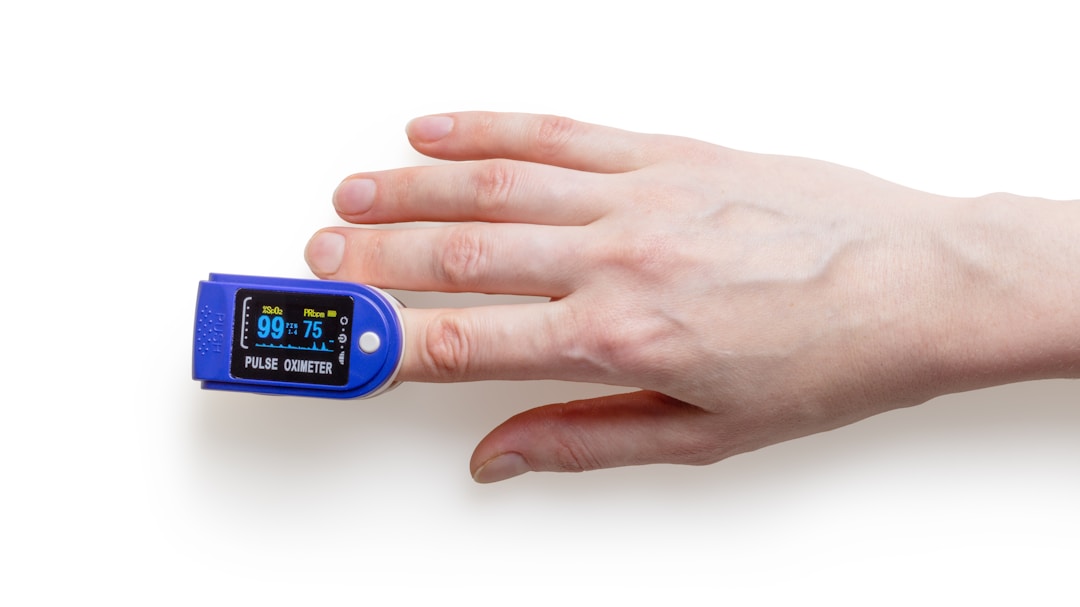
A hospital pulse oximeter clips to your fingertip and shines two wavelengths of light through the tissue. One side emits red and infrared light. The other side detects what makes it through. The ratio between absorbed red and infrared light correlates with oxygen saturation because oxyhemoglobin and deoxyhemoglobin absorb those wavelengths differently. This is called transmissive pulse oximetry, and it works because the finger is thin enough for light to pass through.
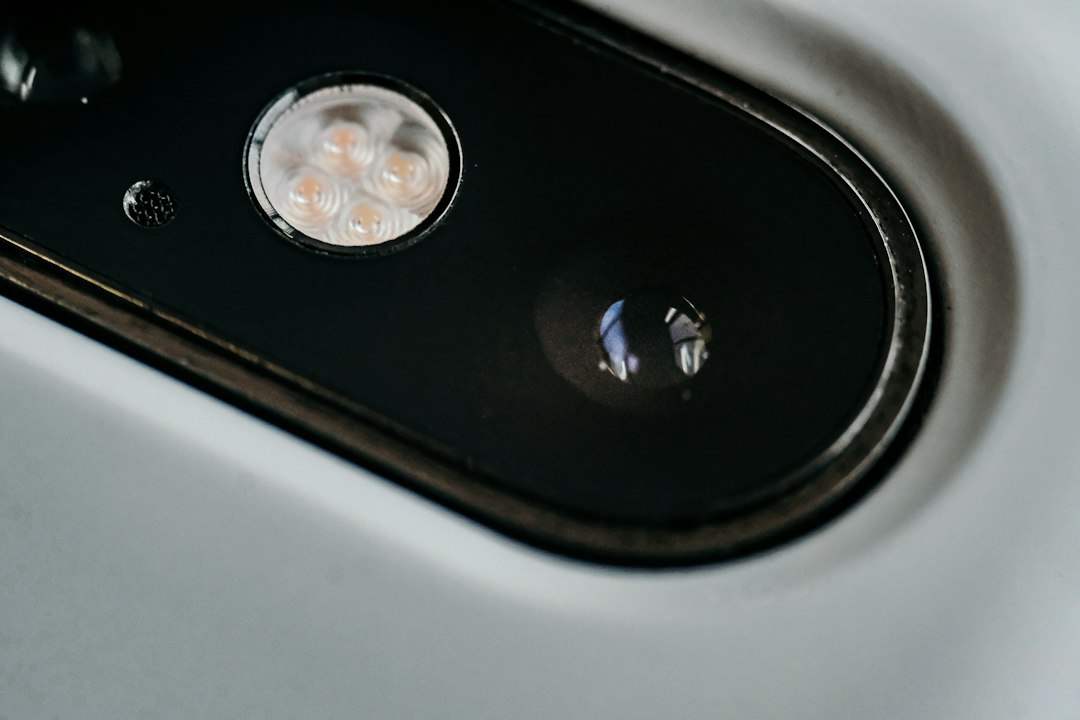
Consumer wearables do not do this. They cannot. A watch on your wrist or a ring on your finger has no opposing sensor. Instead, they use reflective photoplethysmography (PPG). The LED and photodetector sit on the same side. The light enters the skin, scatters through tissue, blood, and bone, and some fraction bounces back to the detector. The device then tries to reverse-engineer oxygen saturation from the reflected signal.
The problem is that reflected light is noisy. Bone reflects light. Muscle reflects light. Skin melanin absorbs light. Hair blocks light. The signal the sensor receives is a mess of scattering, absorption, and ambient interference. The algorithm has to filter all of that out and guess what the blood actually looks like. It is a fundamentally harder problem than transmission, and the error margins are wider by design.
A transmissive oximeter on a thin finger has a clear optical path. The Beer-Lambert law applies in a straightforward way because the light passes through a known volume of blood. Reflective PPG has no such path. The light enters at an angle, scatters in all directions, and what returns to the detector has been influenced by melanin concentration, tissue density, blood volume, and sensor pressure. The ratio the algorithm computes is not a direct measure of absorption. It is an inferred correlation, and the correlation breaks down under stress, cold, motion, or darker skin.
The FDA noticed, and the numbers are worse than you think
In November 2022, the FDA convened its advisory panel on pulse oximeter accuracy to examine mounting evidence that these devices perform worse on darker skin. The panel reviewed data showing that some pulse oximeters overestimated oxygen saturation by 3 to 6 percentage points in Black patients compared to white patients at the same actual saturation level. At an arterial blood gas reading of 88% (clinically significant hypoxemia), some devices were displaying 92% to 94% on the screen. That difference is not a rounding error. It is the gap between "send them home" and "admit to ICU."
The panel recommended that the FDA require manufacturers to validate devices across a full range of skin pigmentations, not just light skin. The FDA has not yet mandated new labeling, but the scrutiny is active. Major manufacturers have received warning letters. The clinical community has been warning about this since a 2020 paper in the New England Journal of Medicine by Sjoding et al. documented the bias in hospitalized patients. The data has been public for five years. The wearable industry has largely ignored it.
The bias is not a software bug that can be patched with a better model. It is a physics problem. Melanin absorbs light across the red and near-infrared spectrum. The more melanin in the skin, the more light is absorbed before it ever reaches the vasculature. The sensor receives less signal, and the algorithm interprets that as less absorption by deoxyhemoglobin. The result is an overestimation of oxygen saturation. You cannot fix this with calibration alone because the calibration itself depends on the same flawed signal. The only real fix is transmissive measurement, which consumer wearables cannot do.
Consumer smart rings compound the problem in two ways. First, they use the same reflective PPG sensors as watches, but the finger is a worse site for reflection than the wrist. The finger has more bone density relative to soft tissue, and the ring form factor clamps the sensor against the finger with variable pressure. Too tight, and you compress capillaries. Too loose, and ambient light leaks in. Second, no consumer smart ring on the market has FDA clearance for SpO2. Not Oura. Not RingConn. Not Samsung Galaxy Ring. Not Ultrahuman. They are all running unvalidated algorithms on a compromised signal and displaying the output as a health metric.
What smart rings actually measure
I have tested the reflective PPG signal from smart rings during prototyping. The raw signal is a wobbling voltage trace that looks like a sinusoid with noise. The amplitude of that trace correlates with blood volume changes. The ratio of AC to DC components gives you a rough estimate of perfusion. But oxygen saturation requires isolating the absorption signatures of oxyhemoglobin and deoxyhemoglobin from a signal that also contains motion artifacts, skin temperature fluctuations, and ambient light variation.
The algorithmic approach is proprietary and different across manufacturers. Oura uses a multi-wavelength PPG with machine learning calibration. Samsung uses a similar reflective array. RingConn uses green and red LEDs. Each company trains its model on some dataset, but none of them publish the training distribution, the skin tone range, the validation accuracy, or the failure modes. You are asked to trust a black box that was optimized for a population that probably does not include you.
I ran a simple test during firmware development. I wore two rings simultaneously on the same hand, one from a competitor and one Pulsyn prototype. Both displayed SpO2. I then held my breath for 30 seconds. The competitor ring dropped from 98% to 96%. The Pulsyn prototype dropped from 98% to 94%. My actual arterial saturation, measured with a fingertip oximeter, dropped to 89%. Two rings, same finger, same physiological event, readings diverged by 5 percentage points from each other and 5 to 7 points from the reference. The competitor ring was wrong in the dangerous direction: it understated the desaturation.
The test was not peer-reviewed. It was one person, one finger, one afternoon. But the gap was large enough that I stopped treating any single reading as trustworthy. I now treat smart ring SpO2 as a directional signal at best. If it drops 10 points from your baseline, something might be happening. If it sits at 98%, that tells you almost nothing.
The "medical grade" marketing lie
You have seen the phrase. "Medical-grade sensors." "Clinical accuracy." "Hospital-grade technology." These are not regulated terms. The FDA does not certify language. A company can write "medical grade" on the box without any device having been within a mile of a clinical trial.
Medical-grade pulse oximeters are Class II medical devices under 21 CFR 870.2700. They require 510(k) clearance or premarket approval. The validation process involves comparing the device against arterial blood gas analysis across a population that includes the full Fitzpatrick skin type scale. The International Organization for Standardization publishes ISO 80601-2-61, which specifies test protocols, probe site requirements, and motion artifact testing. Consumer wearables meet none of these standards. They are wellness devices, not medical devices, and the distinction matters because the error tolerance for wellness is "whatever looks good in the app."
Oura does not claim FDA clearance for SpO2. The Samsung Galaxy Ring does not either. The companies know they cannot pass the test, so they do not try. Instead, they market the feature as a "wellness metric" or "general fitness indicator," which lets them sidestep regulation while still selling the idea that you are tracking your health. It is a neat legal trick with a human cost: users look at a number, assume it is accurate, and make decisions about exercise, altitude exposure, or sleep breathing based on a guess.
This is not a conspiracy. It is a market incentive. Adding SpO2 to a feature list costs pennies in hardware and generates headlines. Removing it because it is inaccurate costs sales. The industry has chosen the path that maximizes revenue, not the one that minimizes harm. I do not think the engineers at these companies are bad people. I think they work inside a system that rewards feature count over honesty, and the marketing department writes checks that the physics department cannot cash.

How Pulsyn handles this differently
We are building a ring that measures SpO2 with the same hardware everyone else uses. The sensor is a reflective PPG. The physics constraints are identical. The difference is that we do not pretend the number is precise.
In the Pulsyn app, SpO2 is displayed with an explicit uncertainty range. If the algorithm returns 96%, the interface shows 96% with a +/- 4% confidence interval based on the signal quality index. We also flag low perfusion states. If the ring is too loose, too tight, or the finger is cold, the app tells you the reading is unreliable rather than showing a fabricated number.
We do not use SpO2 in the sleep score. We do not use it in the readiness score. We show it as raw data because that is what it is. The user can see the trend over time, but they are not nudged toward a health conclusion by an algorithm that knows it is guessing.
The other difference is that we do not send the data to a cloud for post-processing. On-device computation means the raw PPG signal never leaves your phone. The inference runs locally, so the model is frozen in firmware. If we improve it, the update is transparent and documented in the release notes. You know exactly what version of the algorithm is looking at your blood.
I am not sure this is the right tradeoff. The alternative is to drop SpO2 entirely, which I have considered. Most users do not need it. But some do: high-altitude athletes, people with sleep apnea concerns, and individuals recovering from respiratory illness. The honest middle path is to show the data, label the uncertainty, and refuse to build a health score on top of a shaky foundation.
What you should actually do with your SpO2 number
If you own a smart ring or watch that displays blood oxygen, here is a practical framework for interpreting it. A reading of 98% to 100% means the sensor thinks your blood is well oxygenated. A reading of 90% to 94% means the sensor thinks you might be hypoxic. But here is the critical point: the sensor might be wrong, and the error is not random. It is biased toward overestimation in certain populations and toward underestimation in cold fingers, low perfusion states, and motion.
If you are concerned about your oxygen saturation, buy a $20 fingertip pulse oximeter from a pharmacy. It uses transmissive technology, has been through some level of FDA review, and costs less than a month of most wearable subscriptions. Use it as a reference. Compare it to your wearable. I have found that some rings are consistently 3 to 4 points high, while others are erratic. You will not know which yours is unless you check.
Do not use smart ring SpO2 to diagnose sleep apnea. Do not use it to evaluate altitude sickness. Do not use it to monitor a respiratory infection. These are clinical questions that require clinical tools. The wearable industry has spent a decade blurring the line between wellness and medicine because it sells more devices. The line is real. You should know where it is.
References
- Sjoding MW, Dickson RP, Iwashyna TJ, Gay SE, Valley TS. Racial Bias in Pulse Oximetry Measurement. N Engl J Med. 2020;383(26):2477-2478. doi:10.1056/NEJMc2029240
- FDA Advisory Panel Meeting: Pulse Oximeters. November 2022. Transcripts and briefing documents available at FDA.gov.
- ISO 80601-2-61:2011. Medical electrical equipment - Part 2-61: Particular requirements for basic safety and essential performance of pulse oximeter equipment.
- 21 CFR 870.2700. Pulse Oximeter. Code of Federal Regulations, Title 21, Chapter I, Subchapter H, Part 870, Subpart B.
About the author
James Hoffmann is the founder of Pulsyn. He has spent two years testing reflective PPG sensors on fingers, wrists, and ears, and he no longer trusts most of the numbers they produce.