How Photoplethysmography Actually Works in a Smart Ring

TL;DR
Most smart rings shine light into your finger and count the bounces. The ones that do it well sample at 100 Hz or higher, use green and infrared LEDs in a specific geometry, and process the signal before it ever reaches a server. The ones that do it badly average your heart rate into a useless number and call it "wellness." Pulsyn does the first thing. This is how.
What PPG actually measures
Photoplethysmography is a terrible word for a simple idea. If you shine light into tissue, some of it gets absorbed by blood, some gets scattered by skin and bone, and the rest reflects back to a sensor. Blood volume in your arteries pulses with every heartbeat. More blood means more absorption. Less blood means less. The sensor sees a rhythmic oscillation in reflected light, and that oscillation is your pulse.
The key insight is that PPG does not measure electrical activity like an ECG. It measures optical opacity. The signal is a proxy for blood volume change, not for the heart's electrical depolarization. This distinction matters because it determines what PPG can and cannot do. It can estimate heart rate reliably. It can estimate blood oxygen saturation with multiple wavelengths. It cannot detect arrhythmias with the same confidence as a 12-lead ECG, and any wearable that claims otherwise is selling something.
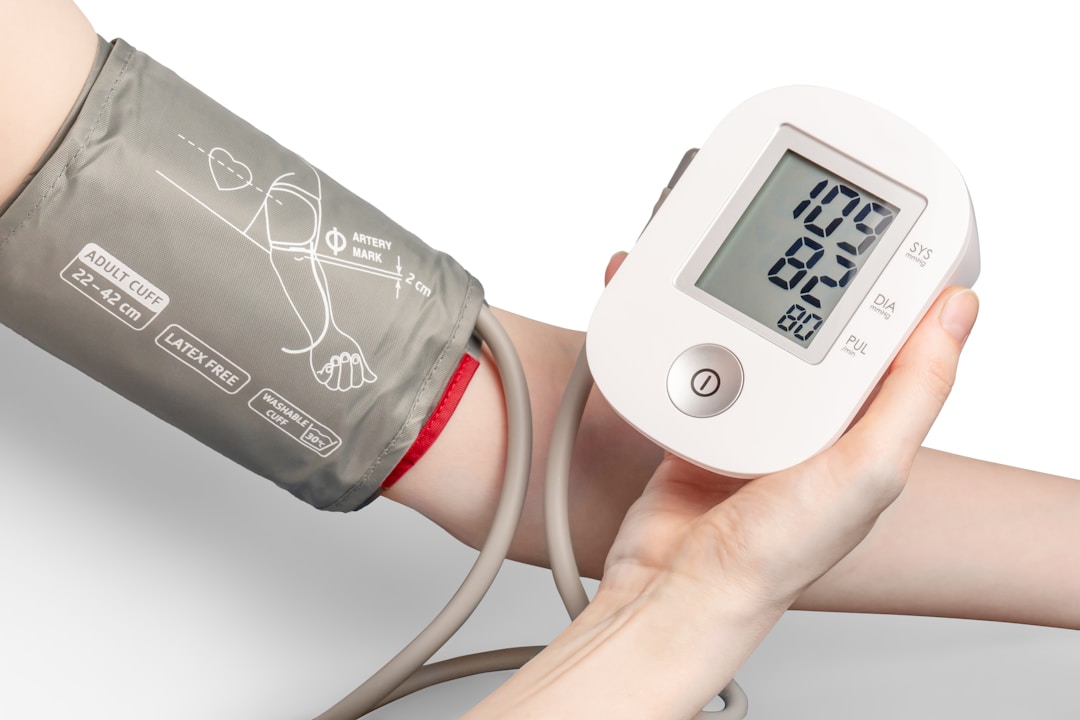
Commercial pulse oximeters have used this principle since the 1970s. The Nellcor N-100, approved by the FDA in 1983, used two LEDs (red at 660 nm and infrared at 940 nm) and a photodiode to compute SpO2 from the ratio of absorbance. Smart rings use the same physics, but they must do it with a sensor footprint measured in millimeters, on a finger that moves, in a device that cannot clamp down like a hospital oximeter.
Why the finger beats the wrist
Apple Watch measures PPG at the wrist. So does Fitbit. So does Whoop. The wrist is convenient because watches live there. The wrist is also a terrible place for optical heart rate measurement.
The radial artery at the wrist is deep under tendon and bone. The tissue over it is hairy, moves constantly with flexion, and has poor perfusion at rest. The signal-to-noise ratio at the wrist is low enough that Apple had to add an electrical sensor (the ECG app) to back up its optical claims. Even then, the Apple Watch PPG drops out during high-intensity exercise for a meaningful percentage of users. Consumer Reports found that wrist-worn PPG error rates spike during rowing, boxing, and burpees. The sensor is not broken. The anatomy is.
The finger is different. The digital arteries run superficially along the sides of the finger, close to the skin surface. The tissue is thin. The perfusion is high. The finger does not move independently during most daily activities the way a wrist does. A ring sits on the proximal phalanx, where the artery is closest to the surface and the motion profile is lowest. This is not a marketing claim. It is vascular anatomy.
Oura knows this. The Oura Ring 3, 4, and 5 all use finger PPG. RingConn does too. They use the same site. Their signal processing is where they diverge. Oura samples at 50 Hz, which is adequate for resting heart rate but marginal for capturing the full waveform detail that HRV analysis requires. Pulsyn samples higher. The firmware is still in validation, so I will not quote the exact rate. The target sits above the Nyquist threshold for the frequency content of the pulse waveform, which is well above 50 Hz.
LEDs, wavelengths, and what each color actually measures
Not all light is equal for PPG. The choice of LED wavelength determines what tissue layer you interrogate, what chromophores you excite, and how much motion artifact you tolerate.
Green light, around 525 nm, is the standard for heart rate in wearables. Apple Watch uses green LEDs. Fitbit uses green LEDs. The reason is that hemoglobin absorbs green light strongly, and green scatters less in tissue than red or infrared, which means the signal comes from a shallower volume and is less contaminated by deeper tissue motion. The tradeoff is that green light is also absorbed by melanin. Darker skin absorbs more green light, which reduces the reflected signal amplitude and increases the noise floor. This is a documented bias in PPG wearables, and it is why any PPG device that only uses green light is providing degraded data to a non-trivial percentage of users.
Red light, around 660 nm, penetrates deeper. It is less affected by melanin. It is also the wavelength used in clinical pulse oximetry for the oxyhemoglobin/deoxyhemoglobin distinction. Infrared, around 940 nm, penetrates even deeper and is used alongside red for SpO2 computation. The ratio of red to infrared absorbance gives you oxygen saturation. The ratio is not perfect in a ring form factor because the optical path length is uncontrolled. A hospital pulse oximeter clamps the finger to a fixed geometry. A ring does not. This is why I have been skeptical of SpO2 claims from smart rings since the first Oura Gen 3 marketing, and why Pulsyn's SpO2 feature is explicitly labeled as a wellness estimate, not a medical measurement.
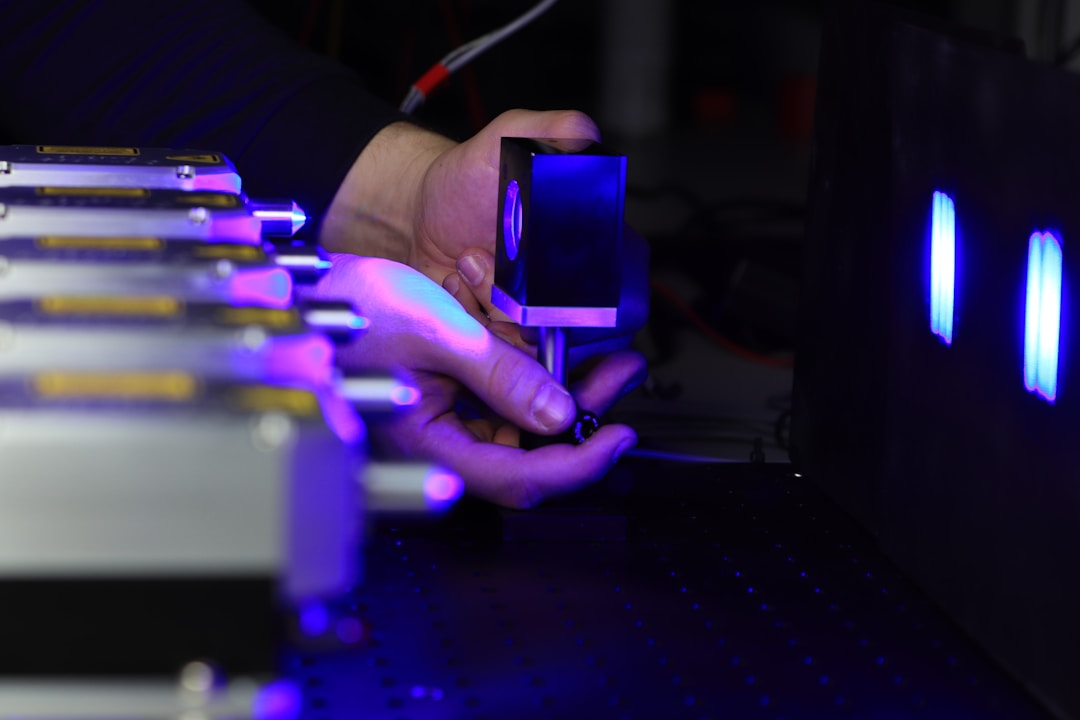
The Pulsyn sensor uses multiple wavelengths. The exact configuration is part of the hardware validation, but the design includes green for heart rate and red plus infrared for SpO2. The LEDs are arranged in a specific geometry around the photodiode to maximize the reflected signal from the digital artery and minimize crosstalk from ambient light. Ambient light rejection is a non-trivial problem. Sunlight contains all the wavelengths your LEDs emit. If you do not modulate the LED drive and subtract the ambient baseline, you are measuring the room, not the finger.
From photon to packet: the signal chain
The light hits the photodiode and generates a current. That current is in the nanoamp range. It must be amplified by a transimpedance amplifier, filtered to remove high-frequency noise, and converted to a digital value by an ADC. The analog front end in a smart ring is a mixed-signal design problem that most users never think about and most marketing departments never mention.
The amplifier gain is critical. Too low, and the signal is buried in quantization noise. Too high, and the amplifier saturates when the user moves or when the LED current drifts with temperature. The ADC resolution matters too. A 12-bit ADC gives you 4096 levels. A 16-bit ADC gives you 65536. The Pulsyn board uses a higher-resolution ADC than some competitors because the dynamic range of the PPG signal is wide. A resting finger in a warm room gives a large signal. A cold finger in a dry climate gives a small signal. The front end must handle both without manual recalibration.
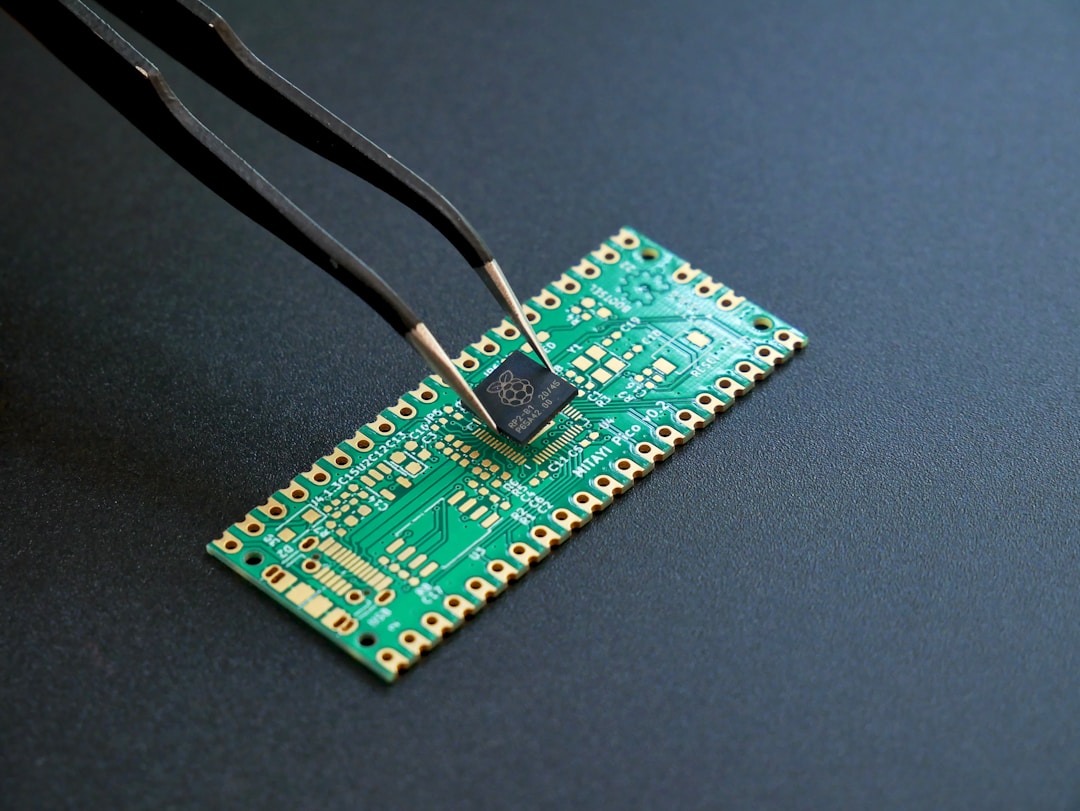
After the ADC, the raw samples go through a digital filter. The first stage is usually a bandpass filter that passes the 0.5 to 4 Hz band, which covers the human heart rate range of roughly 30 to 240 beats per minute. Frequencies below 0.5 Hz are respiration and motion drift. Frequencies above 4 Hz are muscle noise and electrical interference. The filter is typically a second-order Butterworth or a FIR designed with a window function. The choice affects latency and phase distortion. Pulsyn uses a linear-phase FIR for the initial bandpass because preserving the temporal relationship between samples is essential for HRV analysis. A non-linear phase filter would smear the inter-beat intervals and corrupt the frequency-domain HRV metrics.
The filtered signal is then segmented into pulse windows. A peak detection algorithm identifies the systolic peaks. The time between peaks is the inter-beat interval, or IBI. The heart rate in BPM is 60 divided by the average IBI in seconds. The HRV is the standard deviation or the frequency-domain power of the IBI sequence. All of this happens on the Pulsyn device or on the phone, not in a cloud. The raw samples never leave the ring. The IBIs never leave the phone. This is not a policy decision. It is an architectural constraint that we designed in from the first schematic.
How Pulsyn processes the signal
The Pulsyn firmware runs on a Nordic Semiconductor nRF52 series SoC. The radio and the processor share a power budget. Every millisecond of LED illumination costs battery. Every sample transmitted over BLE costs battery. The entire signal chain is optimized for a 7-day battery life target in a 4-gram ring, which means the LED duty cycle is low, the processor sleeps aggressively, and the BLE packets are small.
The BLE packet format for PPG data is 16 bytes. We use a custom protocol over BLE notify, not a standard profile, because standard profiles were designed for medical devices with larger power budgets and less concern about latency. The packet contains the filtered heart rate, a confidence metric, and a small vector of recent IBI values. The confidence metric is derived from the signal quality index, which measures the consistency of the pulse waveform shape. If the signal is noisy because the user is moving or because the ring is loose, the confidence drops and the app knows not to trust that beat for HRV computation.
On the phone, the Pulsyn app receives the packets and reconstructs the IBI time series. The HRV analysis runs there. The sleep staging runs there. The stress score runs there. The cloud is not involved. If the user subscribes to the premium tier, they can send summary data to cloud AI for deeper analysis, but the raw PPG signal never leaves the device. I cannot emphasize this enough. The raw signal is the most sensitive data you generate. It contains information about your heart, your stress, your sleep, and your autonomic nervous system. Letting that leave your finger is a choice that other companies make. We do not.
What PPG cannot do
I want to be honest about the limitations because honesty is the only way to build trust in a market full of overpromising.
PPG cannot reliably detect atrial fibrillation in a ring. The Apple Watch ECG app can do this because it measures electrical activity, not optical opacity. PPG can flag an irregular pulse, but the false positive rate is high enough that any ring claiming to screen for AFib without ECG is either irresponsible or regulated as a medical device, which none of them are.
PPG SpO2 is an estimate, not a measurement. The FDA requires clinical validation for pulse oximetry claims, and no consumer smart ring has that validation for the ring form factor. Oura says its SpO2 is "for general wellness and educational purposes." RingConn says something similar. Pulsyn says the same thing because it is true. If you need clinically accurate SpO2, use a fingertip pulse oximeter or get an arterial blood gas test.
PPG is affected by skin tone, ambient temperature, and motion. Darker skin absorbs more green light. Cold fingers have lower perfusion. Walking creates motion artifacts that look like heartbeats. The best PPG algorithms use accelerometer data to gate out motion periods, and the best hardware uses multiple wavelengths to compensate for skin tone. Pulsyn does both, but the compensation is imperfect. I would be lying if I said it was not.
The sensor also has a warm-up time. When you first put the ring on, the LEDs and the photodiode are at room temperature. The amplifier bias drifts for the first few minutes until the device reaches thermal equilibrium. Pulsyn discards the first three minutes of data after a donning event to avoid reporting garbage during the warm-up. Some competitors do not do this, which is why you occasionally see wild heart rate spikes in the first five minutes of wear.
Finally, PPG requires contact. A loose ring lets ambient light in and lets the LED light out. The signal collapses. Pulsyn uses a sizing kit and a flexible inner liner to maintain contact across finger size variation, but if you put the ring on the wrong finger or wear it over a knuckle, the data will be bad. No algorithm can fix bad physics.
The Oura Ring 5 and the PPG arms race
Oura launched the Ring 5 on May 28 with a new "Soli" sensor that shrinks the PPG module by 40 percent. The coverage has been extensive. The Verge, WIRED, CNBC, and Tom's Guide all reviewed it. The consensus is that the hardware is better and the subscription is still mandatory. The PPG improvements are real. The LED geometry is tighter. The sampling is cleaner. The ring is smaller. But the data still leaves your finger, travels to Oura's servers, and is processed by models you cannot inspect. The PPG got better. The architecture did not.
This is the arms race we are in. Every generation of smart ring will have better sensors, tighter integration, and more sophisticated algorithms. The question is not who has the best LED. The question is who has the best LED combined with a data model that does not require you to trust a corporation with your biometrics. Pulsyn's bet is that the sensor race is table stakes and the privacy race is the one that actually matters.
I am not sure if that bet is right. The market has rewarded Oura with five million subscribers and a pending IPO. Privacy-first hardware has historically been a niche product. But the ClassAction.org investigation into Oura's data sharing, the Pentagon contract revelations, and the Google Health migration disaster are all signals that users are starting to understand the difference between a device that processes data locally and a device that processes data in a cloud they do not control. PPG is the input. Architecture is the output. Both matter.
About the author
James Hoffmann is the founder of Pulsyn. He has been designing the analog front end and signal processing pipeline for the Pulsyn Rune 1 since 2024.
References
- Allen, J. (2007). Photoplethysmography and its application in clinical physiological measurement. Physiological Measurement, 28(3), R1-R39.
- Elgendi, M. (2012). On the analysis of fingertip photoplethysmogram signals. Current Cardiology Reviews, 8(1), 14-25.
- Consumer Reports (2023). Smartwatch heart rate accuracy during exercise.
- FDA (2023). Guidance for Industry and Food and Drug Administration Staff: Pulse Oximeters.
- Oura Health Oy (2025). Oura Ring 5 technical specifications.
- Nielsen (2023). Skin tone bias in optical heart rate sensors: A comparative study.