How Your Smart Ring Estimates Stress When It Can't Measure Cortisol

How Your Smart Ring Estimates Stress When It Can't Measure Cortisol
Your ring says you had a stressful day, but you felt fine. Or you felt wired and it says you were calm. Both happen because no consumer ring measures stress hormones directly. It guesses stress from other signals that tend to move with strain.
That guess can be useful if you know what goes into it. It is misleading if you treat it as a blood test.
Why cortisol is missing from the equation
Cortisol is the hormone most people mean by stress. In clinics it is measured from saliva, blood, or urine at specific times of day because it follows a steep morning peak and a slow fall.
A finger ring cannot do that today. There is no optical sensor on the market that reads cortisol continuously through skin, and sweat-based cortisol sensors are still lab prototypes with calibration and lag problems. So consumer wearables do not report cortisol. They report an estimate built from autonomic signals.
Think of it as a proxy. The ring watches how your nervous system behaves and labels certain patterns as strain, recovery, or stress.
What your ring actually measures
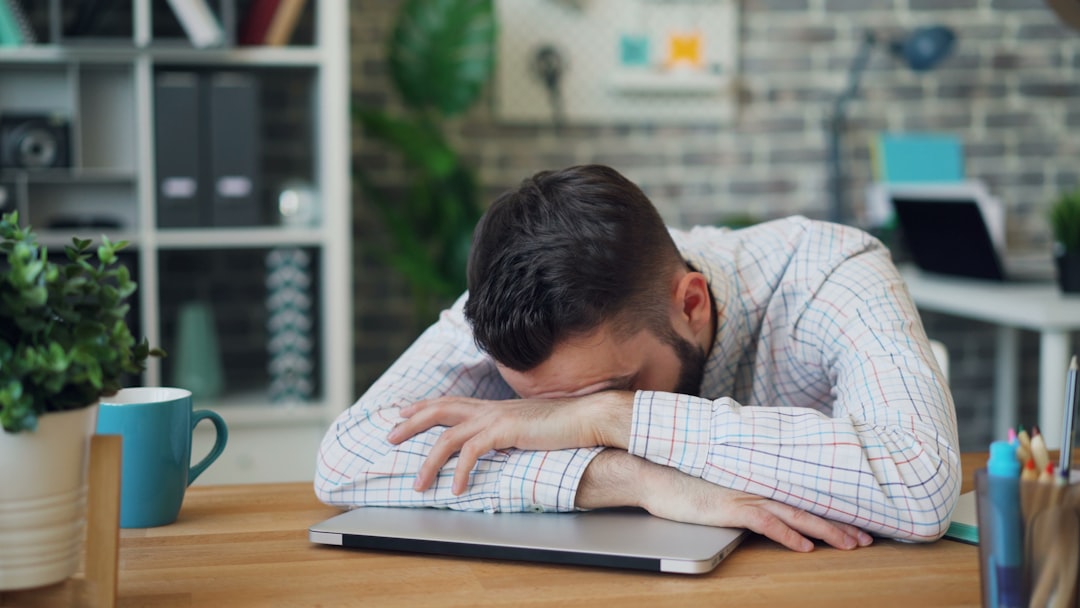
Photo by Vitaly Gariev on Unsplash
Most daytime stress features combine four inputs.
First is heart rate variability, usually RMSSD or a similar beat-to-beat variation metric. When you are at rest and your parasympathetic system is active, variation between beats is typically higher. When you are exerting yourself, anxious, ill, or sleep deprived, it is typically lower. Rings look for sustained drops below your personal baseline during still periods.
Second is resting heart rate. A daytime resting rate 5 to 10 beats per minute above your norm, while you are still, pushes many algorithms toward a higher strain label.
Third is motion from the accelerometer. This is how the ring separates real physiological strain from a workout, a walk, or typing at your desk. Good implementations only score stress during low-motion windows. Weaker ones confuse movement artifact with arousal.
Fourth is skin temperature deviation. A rise of around 0.5 to 1.0 C above your nightly baseline often accompanies illness, heavy alcohol use, or very poor sleep, all of which suppress HRV. Some stress models fold that in as context.
None of these is stress on its own. Exercise lowers HRV and raises heart rate. Coffee raises heart rate and can lower HRV for three to five hours. Dehydration, heat, a cold, and a hard lifting session do the same. The algorithm cannot tell why your autonomic system shifted. It only sees that it shifted.
How to read your daytime stress graph without overreacting
Photo by Caspar Rae on Unsplash
Do not read single spikes. Read patterns tied to context.
A useful check takes 30 seconds. When you see a high-stress block, ask three questions: was I moving, had I had caffeine or alcohol in the prior six hours, and how did I sleep last night. If the answer to any of those is yes, the block may reflect load, not mental pressure.
The more reliable signal is repeated elevation during still, sober, rested periods. If your HRV stays 15 to 25 percent below your seven-day average for two or three afternoons in a row while you are at a desk, that is worth paying attention to. It does not diagnose anxiety. It suggests incomplete recovery, illness onset, or sustained load.
It also helps to compare day and night. Nighttime HRV and resting heart rate are cleaner because motion and caffeine are out of the picture. If nights look normal and days look stressed, the cause is often daytime input like back-to-back meetings, too much coffee, or no breaks. If nights and days both drift in the same direction for several days, think sleep debt, training load, or getting sick.
Rings are best at tracking relative change for one person, not absolute stress between people. A daytime RMSSD of 35 ms might be normal for a 55-year-old and low for a 25-year-old athlete. Baselines matter more than the raw number.
If you want the number to mean more, keep inputs stable for a week. Wear the ring on the same finger, keep wake times within an hour, and note workouts and alcohol. You will quickly learn which of your habits moves the graph and which blocks you can ignore.