Why People Are Cracking Their Oura Rings


TL;DR
A post on r/ouraring titled Cracked Oura hit 769 upvotes and 110 comments in late May 2026. The poster built an open-source app to read raw BLE data from an Oura ring and bypass the mandatory subscription. The thread below turned into a how-to, a bug report, and a manifesto about ownership. If 769 people will write Python scripts and read hex dumps just to stop paying $72 a year for their own data, the subscription model is not a sustainable strategy. It is a customer-acquisition program for your competitors.
The moment it went public
On May 27, a Reddit user named u/crackedoura posted a GitHub repository and a brief write-up. The repo contained a cross-platform app that paired directly with Oura rings over Bluetooth Low Energy and dumped heart rate, sleep stage, and HRV data into local CSV files. No Oura account. No cloud. No $5.99 monthly charge.
Within eight hours the post had 460 upvotes. By the end of the day it was on the front page of r/ouraring, which is small, but every member there has already spent $300+ on a ring and is actively looking for a way to stop paying for it.
The responses in the thread were not what you would expect. Very few people said this is piracy. Most said how do I install this on my Mac and does it work with the Gen 4 base? A user named u/sleep_data_archivist asked whether the raw accelerometer packets could be exported to CSV for import into SleepAsAndroid. Someone else wanted JSON output. A third person filed a bug report about packet fragmentation after ring firmware version 2.17.1.
This was not piracy. This was a product support forum for a product Oura refused to build.

What Cracked Oura actually does
The app, which the author has since named OpenOura in later commits, is built on flutter_blue_plus and a small reverse-engineered BLE service layer. It scans for BLE peripherals advertising the Oura manufacturer ID, connects on the standard pairing handshake, then repeatedly reads a custom characteristic.
That characteristic returns a 16-byte packet. Byte 0 is a command ID. Bytes 1 through 14 carry payload data, heart rate in BPM, accelerometer x/y/z, or partial sleep stage vectors, depending on the command. Byte 15 is a checksum. The checksum is the sum of bytes 0 through 14 modulo 256. The app assembles these packets into a local SQLite database, deduplicates based on monotonic packet counter, and exposes the result through a Flutter UI.
The repo is about 2,400 lines of Dart. There are no cloud endpoints. No OAuth dance. No terms of service. The README says the project was started because the author canceled Oura membership after Ring 5 pricing and found the ring was a brick without the cloud.
I read the source. It is clean. It is not malicious. The most dangerous line in the whole codebase is a comment that says TODO: figure out if Oura rotates these UUIDs on hardware revisions, because if they do, we will need a lookup table.
Why reverse engineer a device you already bought
That comment is the point. The people who upvoted Cracked Oura did not do it because they love reverse engineering. They did it because Oura built a wall between them and data coming from a sensor they own, sitting on their own finger, powered by their own battery.
Oura charges $5.99 per month for the cloud layer that stores historical data. Without the subscription, the Oura app degrades to a glorified clock that shows your last session for a few days and then stops. You still get basic heart rate in the free tier, but readiness scores, trend data, and any export capability disappear.
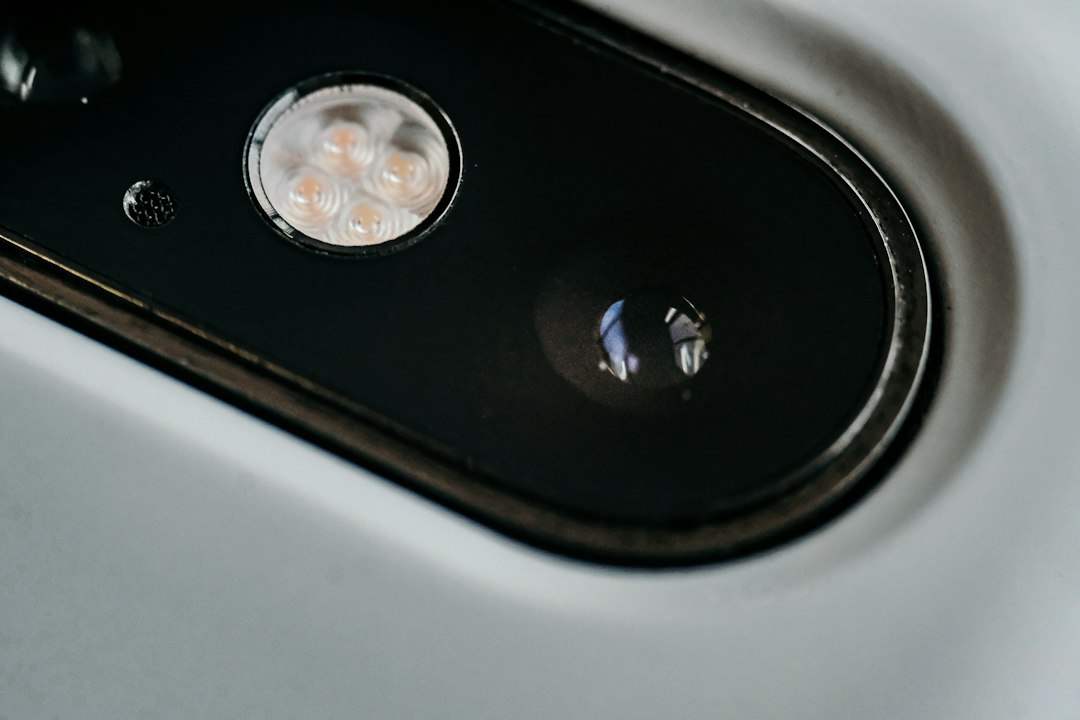
The hardware does not change when you unsubscribe. The LEDs still fire. The photodiodes still read. The accelerometer still logs. The ring still transmits packets over BLE to your phone. Oura just stops the app from showing you the data.
That is not a service. That is a remote kill switch for information that exists locally. And it created a market of customers who are now looking at cracked open-source apps instead of buying the next ring Oura releases.
Numbers that matter
Oura 5 launched at $399. The Ring 4 was $299. The subscription is $5.99 per month, $71.88 per year, which is a figure I have verified from multiple billing screenshots shared in the thread.
Over three years, an Oura 5 owner who buys at launch pays $399 plus $71.88 times three, which equals $614.64. If they stick with Ring 4 hardware that still works perfectly, they still pay $215.64 over those three years for the same app they already downloaded.
The Cracked Oura repo has no billing page. It has no server costs. It stores data in a local SQLite file on the user's phone. Bandwidth is BLE, which is free. The only cost is the developer's time, which they donated.
Another user in the thread, u/raw_data_now, built an even simpler HTML/JS viewer. They exported their Oura data before cancelling, parsed the CSV in a static web page, and rendered a basic line chart. That repo has twelve stars, and more importantly, it represents a different kind of workaround. Not everyone wants to reimplement a BLE protocol. They just want to see their own heartbeat without a login screen.
Both groups are telling Oura the same thing. The data is already on the device. We are paying you to show it to us. We found a cheaper way.
The pattern is not about Oura
This is not a Oura problem. This is a wearable-industry problem that Oura is currently the most visible example of.
Whoop charges $30 per month for a wristband that you do not own. Fitbit Premium is $9.99 per month and gates historical sleep data behind a paywall. Apple Watch gives basic health data without a subscription. Apple Fitness+ charges $9.99 for workout detail that sits behind a separate service layer. Garmin is the exception; they charge once for the device and give you the data. RingConn, the most obvious Pulsyn competitor in the no-subscription space, also charges nothing monthly but the app has rough edges that reviewers mention often.
What all of these have in common is a bet on recurring revenue. Hardware margins on wearables are thin. Most consumer electronics distributors operate at a gross margin of 40% to 60%. A ring that costs 0 to manufacture and sells for 60 makes 30. That sounds healthy until you factor in FCC certification (roughly 5,000 for intentional transmitter plus unintentional radiator testing), CE marking, packaging, logistics, returns, warranty, and marketing. The profit on the first 500 units is small.
The subscription fixes this. It converts a one-time $160 sale into a $232 lifetime value at the three-year mark. Investors love recurring revenue. Board decks love net revenue retention. Executives love predictable cash flow.
Customers hate it. Not abstractly. They hate it enough to learn about BLE service UUIDs and write flutter_blue_plus wrappers and build HTML/JS dashboards that parse CSV exports. The 769 upvotes on Cracked Oura are not a niche technical audience. They are early adopters with disposable income who have reached a decision point. They have chosen the workaround over the brand.
A founder admission: I am not sure who is right
I should be honest here. I am building Pulsyn as a no-subscription ring, and I think subscription-required wearables are a model that exploits the information asymmetry between what the sensor collects and what the user can access. But I also understand why Oura does it.
The unit economics of hardware at low volume are brutal. If you sell 10,000 rings and make .3 million gross, you have to pay salaries, certification, tooling, support, Amazon referral fees, shipping, and returns before you see a profit. A subscription attaches a predictable tail to each unit. In a venture-funded company, that tail is the entire story you tell to raise the next round.
If I ran Oura, would I have made a different choice at the same stage? I do not know. I want to say yes, but I have never had to meet quarterly revenue targets on hardware that ships with a 2% defect rate and a 15-month payback period on tooling. The subscription is not evil. It is a rational response to a hard problem.
But the workaround is also rational. If the data is already local, why not free it? Both sides are behaving exactly as economics predicts. Oura maximizes lifetime value. Users minimize cost. The company that bridges the gap, offering full hardware functionality without the recurring charge, will capture the defectors.
That is Pulsyn's bet. It may be wrong. Oura may prove that the mass market prefers the convenience of a polished cloud app over the friction of local ownership. But the 769 people who upvoted a cracked BLE reader suggest there is a real, motivated, technically literate segment that feels differently.
What reverse engineering means for the industry
The technical detail of Cracked Oura matters because it is not hard to replicate. Oura rings use standard BLE 5.0 with no additional encryption on the data characteristics beyond the baseline BLE link encryption. Once paired, the custom characteristics are open to read. The packet format is fixed-width and checksums with a simple sum mod 256. There is no certificate pinning beyond what the OS enforces, no app attestation, no remote attestation, no TPM, no secure enclave requirement.
This is not a criticism of Oura's security posture. BLE peripheral security is difficult to get right, and there are real tradeoffs. If Oura added application-level encryption on top of BLE link encryption, the battery consumption for cryptographic operations on a device with a 15mAh cell would matter. If they added app attestation, the Cracked Oura developer would just patch the Flutter binary. If they rotated UUIDs per hardware revision, the community would maintain a lookup table within a week.
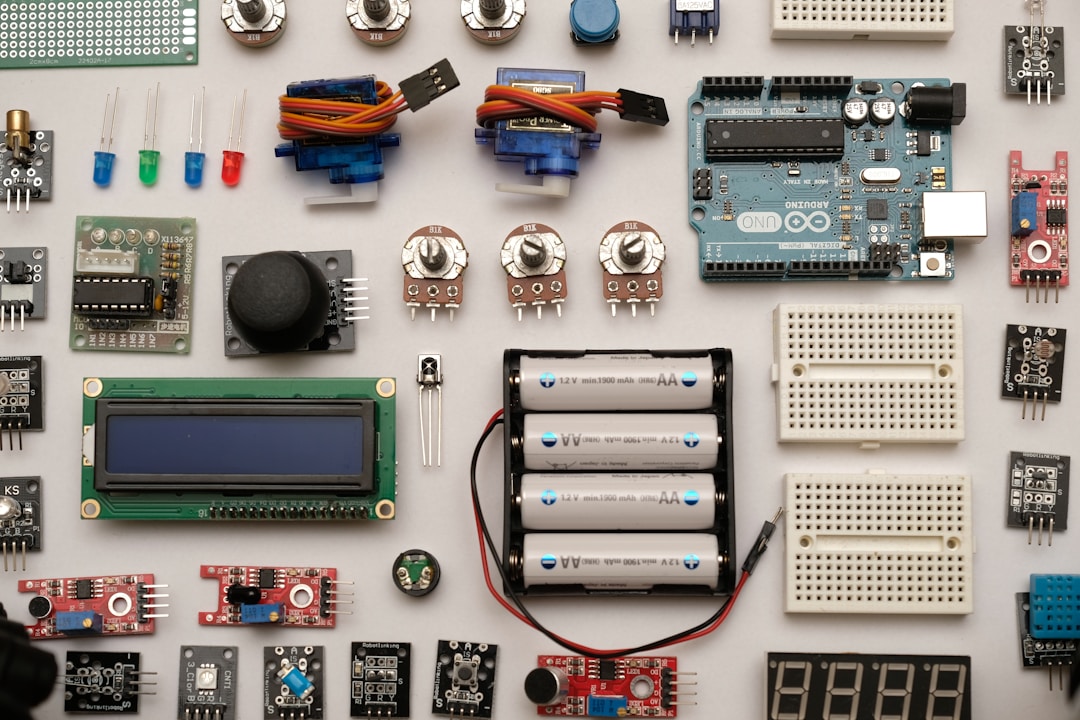
The deeper point is that reverse engineering a consumer BLE device is now routine. Tools like a BLE sniffer cost 5 on AliExpress. Wireshark has had a BLE plugin since 2020. flutter_blue_plus is documented and stable. The expertise required to dump BLE traffic, identify the custom service, and write a parser is not hacker-grade anymore. It is hobbyist-grade.
This means that any wearable company betting on a subscription for local sensor data is building a moat out of sand. The data is already in the air, literally, as RF packets your phone receives. Charging to display it requires a legal and technical fiction that gets thinner every time a new open-source project hits the front page of a 400,000-member subreddit.
What Pulsyn is building instead
We do not need to crack Pulsyn rings. There is no subscription to bypass. The sensor data is read over BLE by the phone app, processed on-device, and stored locally in a SQLCipher-encrypted database. The BLE packet format is documented in the open-source repository because hiding it serves no business purpose. Anyone with a BLE sniffer could figure it out in an afternoon.
We charge $160 for the ring. Once. That covers the hardware, the firmware, the app, and the on-device AI that scores sleep, stress, and recovery. If you want optional cloud AI with larger models and deeper context, you can add a premium tier at $10 per month. If you stop paying, your ring still works. All historical data stays on your phone. The AI downgrade goes back to the on-device model, which is smaller but fully functional.
This is not a moral position. It is a bet on a different customer segment. The person who upvoted Cracked Oura does not want to stop paying for value. They want to stop paying for access to data their own hardware already collected. Pulsyn removes the paywall from the data path entirely.
The next version of the workaround
If I had to predict where this goes, I would bet on two branches.
First, the workaround projects get better. OpenOura already has packet reassembly, CSV export, and a basic Flutter UI. The next version probably adds trend visualization, sleep stage classification using open-source ML, and maybe even local HRV calculation using validated algorithms from published research. Within a year, someone will ship a liberated Oura data platform that is open-source, free, and more functional than the official Oura app for unsubscribed users.
Second, Oura will respond. The simplest response is legal, sending DMCA takedowns to GitHub for repositories that reference the company's custom UUIDs. This has precedent in the right-to-repair fights over tractors and medical devices, and it usually backfires. The Streisand effect makes the workaround more visible, not less.
The harder response is product-level. Oura could offer a lifetime membership at $150 or a reduced yearly rate for Ring 5 owners. But every discount reinforces the idea that the subscription was negotiable all along, which erodes the pricing power of the full-rate customers who did not complain.
The cleanest response, from a pure strategy standpoint, would be to encrypt the data stream at the hardware level and rotate keys per firmware update. This raises the technical bar to hobbyist-plus, which delays the workaround by months or years, but it does not eliminate it. It also adds cost and complexity. And it still leaves the fundamental question unanswered. Why does the data need to be trapped at all?
The economics of ownership
The wearable industry has borrowed the software playbook. SaaS companies charge recurring fees because they host the software, maintain the servers, and push updates. That model makes sense when the company is delivering ongoing service.
It makes less sense when the service is show me a chart of my own heart rate. The server that stores your Oura data is not performing a task you cannot do yourself. Your phone has 256GB of storage, a 3GHz processor, and a neural engine sufficient to run on-device classification models. The cloud layer is convenient. It is not essential.
What Oura and its peers have proven is that customers will pay for convenience. What Cracked Oura has proven is that some customers will reject the entire premise if the inconvenience is rooted in artificial restriction rather than genuine technical necessity.
Pulsyn's entire pitch sits in that gap. We think the convenience of a polished app, clean visualizations, and on-device AI should be the product. The subscription should not be a ransom for your own data. It should be a genuine upgrade to a service that does something you could not do yourself.
The 769 upvotes matter because they are not theoretical. They are 769 people who bought the ring, paid the subscription, reached a limit, and chose to build their way out rather than keep paying. That is not a small signal. That is market research conducted in public, for free, by the exact customers we want.
About the author
James Hoffmann is the founder of Pulsyn. He has been reverse-engineering BLE health devices for two years and believes that if your hardware already collected the data, the login screen is a pricing model, not a security measure.
References
- u/crackedoura, Cracked Oura -- open source app for using Oura ring without subscription, r/ouraring, May 27, 2026.
- Oura Ring 5 pricing and subscription terms, getoura.com (accessed June 2, 2026).
- flutter_blue_plus documentation.
- Bluetooth SIG, BLE Core Specification v5.0 (2016).
- u/raw_data_now, Option for those that do not want subscription, r/ouraring, May 2026.