Why Smart Rings Are Bad at Workout Tracking, and the Physics of Finger Blood Flow


TL;DR
Every smart ring marketing page shows a runner. The runner is a lie. The physics of finger blood flow during exercise makes photoplethysmography (PPG) so unreliable during movement that Oura, RingConn, and Ultrahuman do not even try to surface real-time workout heart rate. They estimate it from accelerometer data, or they do not show it at all. Pulsyn does not pretend to track your workouts because the finger is the wrong place to measure exertion. That is a feature, not an omission.
The promise on the box
Go to any smart ring product page. Scroll to the activity section. You will see the same photo: a person in athletic wear, mid-stride, with a ring glinting on their finger. The implication is clear. This thing tracks your workouts. It knows your heart rate during the run. It counts the calories. It feeds your recovery score.
The Oura Ring 4 claims "automatic activity detection" for over 30 workout types. RingConn lists "all-day activity tracking" with steps and calories. Ultrahuman advertises "workout tracking" as a headline feature. None of these pages mention the caveat that matters: the heart rate data during those workouts is often fabricated, interpolated, or so noisy it gets thrown away before you ever see it.
I am not saying the companies are evil. I am saying they are stuck. The finger is a terrible place to measure blood flow when the body is under load. The sensor physics do not care about your marketing budget.
How PPG works when you are still
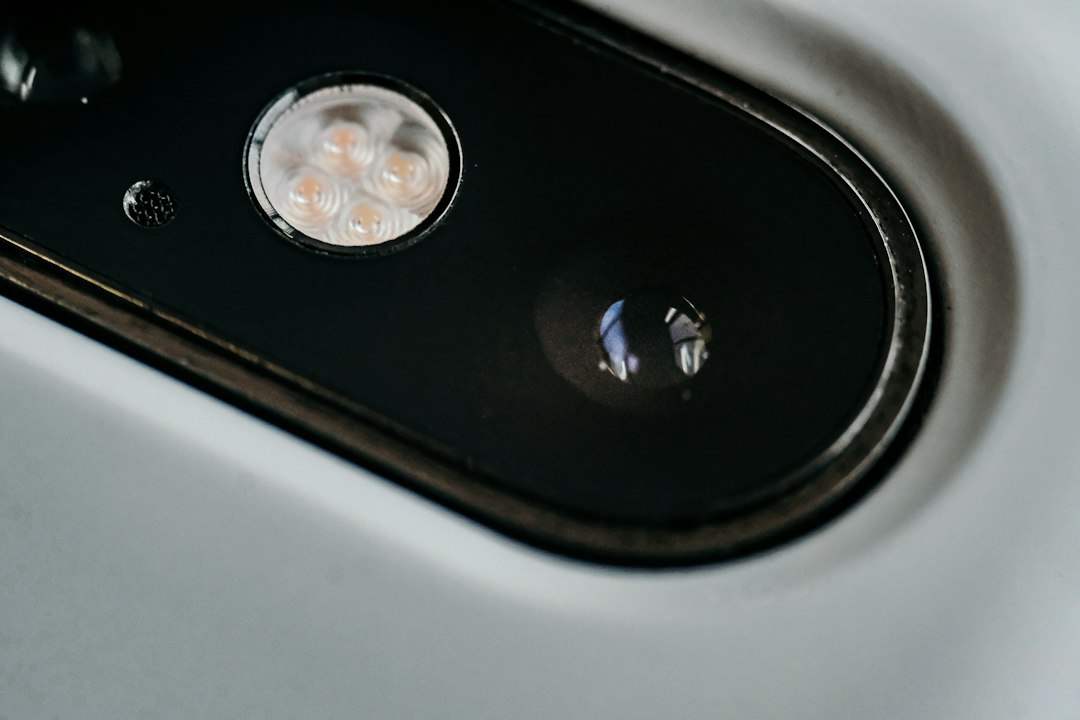
To understand why the finger fails, you need to understand what PPG actually measures. I covered this in detail in the PPG post, but the short version is this: the sensor shines green light into your skin and measures how much of it gets absorbed by the blood in your capillaries. More blood equals less light returned. Less blood equals more light returned. Your heart beats, blood pulses, the light signal wobbles, and the algorithm counts the peaks.
At rest, this works fine. The finger has a decent capillary bed. The ring is snug. The hand is still. The signal is clean. You can get a resting heart rate reading within 1 to 3 beats per minute of a medical-grade ECG under good conditions. That is the baseline. That is what the ring is built for.
The problem is that PPG depends on two things being stable: the position of the sensor relative to the blood vessels, and the volume of blood in those vessels. Exercise breaks both.
Why the finger fails during exercise
There are three physical effects that ruin finger PPG during movement. They are not fixable with better algorithms. They are not fixable with more LEDs. They are constraints of biology and mechanics.
Motion artifact
When you run, your arms swing. The acceleration of a sprint can hit 3 to 5 g. The ring slides. It rotates. It lifts off the skin for milliseconds at a time. The sensor loses contact with the capillary bed, then regains it, then loses it again. The light path changes. The returned signal is not a heartbeat anymore. It is a mashup of heartbeat, arm swing, and sensor lift-off.
Oura and RingConn both use accelerometer data to try to cancel out motion artifact. The idea is simple: if the accelerometer says the arm is swinging at 2 Hz, subtract that frequency from the PPG signal. The problem is that the motion artifact is not a clean sine wave. It is irregular, spiky, and correlated with the heart rate in complex ways because your pulse actually changes with stride cadence. The result is that the correction algorithm either over-corrects and kills the real signal, or under-corrects and leaves garbage in. There is no middle ground that works reliably.
Vasoconstriction
When you exercise, your body redirects blood to the muscles that need it. The fingers, being extremities, get less blood. The capillaries in the finger constrict. The blood volume drops. The PPG signal gets weaker, sometimes by 50% or more. A sensor that was getting a clean waveform at rest now sees a flat, noisy line with occasional spikes.
This is worse in cold weather, worse if you are dehydrated, and worse during high-intensity intervals. The ring cannot shine more light through skin that has less blood in it. The signal-to-noise ratio collapses. The algorithm starts guessing.
The tapping problem
There is a less obvious effect that nobody talks about. When your foot hits the ground, the impact travels up your body. Your finger experiences a micro-tap with every stride. The PPG sensor sees this as a sharp transient in the light signal. At a running cadence of 170 steps per minute, that is 2.83 taps per second. Your heart rate during a moderate run might be 150 bpm, or 2.5 beats per second. The stride rate and the heart rate are close enough that the algorithm confuses them. This is why some runners see their smart ring report a heart rate that is suspiciously close to their step cadence. It is not a coincidence. The sensor is counting footfalls.
What the wrist does better
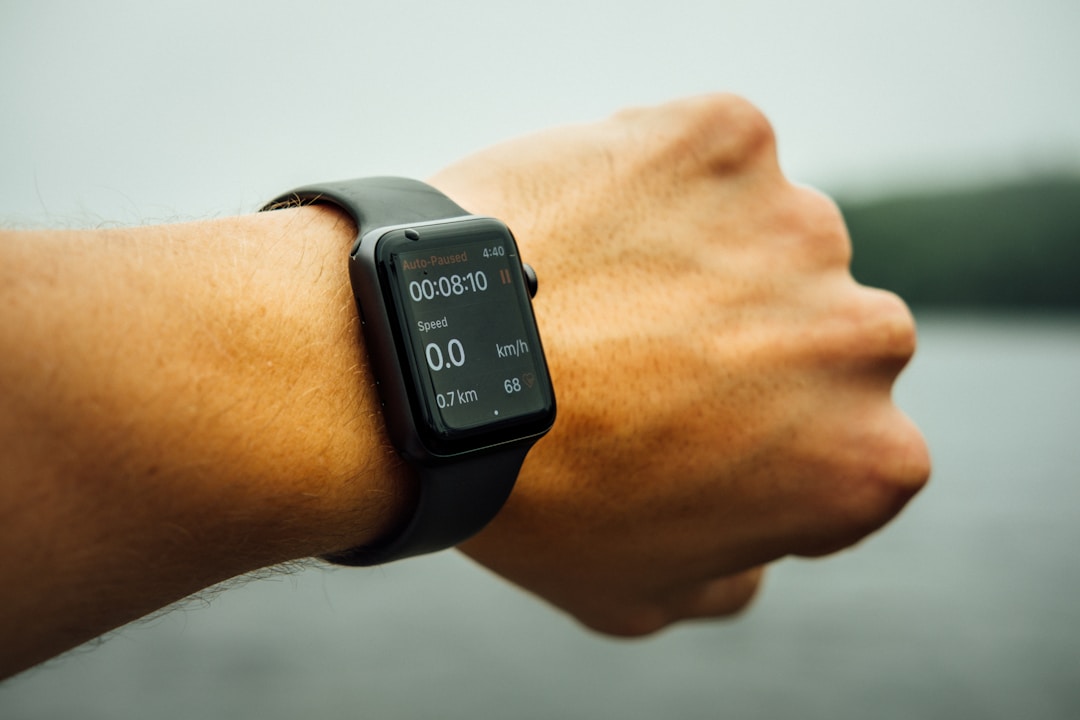
Smartwatches are not perfect either, but the wrist has advantages the finger does not. The Apple Watch and Garmin devices use PPG on the wrist, and they handle motion better for a few reasons.
First, the wrist is closer to the center of rotation of the arm swing. The acceleration at the wrist is lower than at the finger because the finger is further out on the lever. Less motion means less motion artifact.
Second, the wrist has a larger, more stable capillary bed. The blood volume does not drop as sharply during exercise because the wrist is not as peripheral as the finger. The PPG signal stays stronger.
Third, smartwatches can clamp down harder. The Apple Watch Series 10 uses a tighter strap with a larger sensor module pressed against the skin. A ring cannot tighten itself. If your finger swells during exercise, the ring gets tighter. If your finger shrinks from vasoconstriction, the ring gets looser. Either way, the optical coupling changes in real time.
Even with these advantages, wrist PPG still fails during high-intensity workouts. That is why serious athletes use chest straps. The wrist is better than the finger, but it is still not good enough.
What chest straps get right
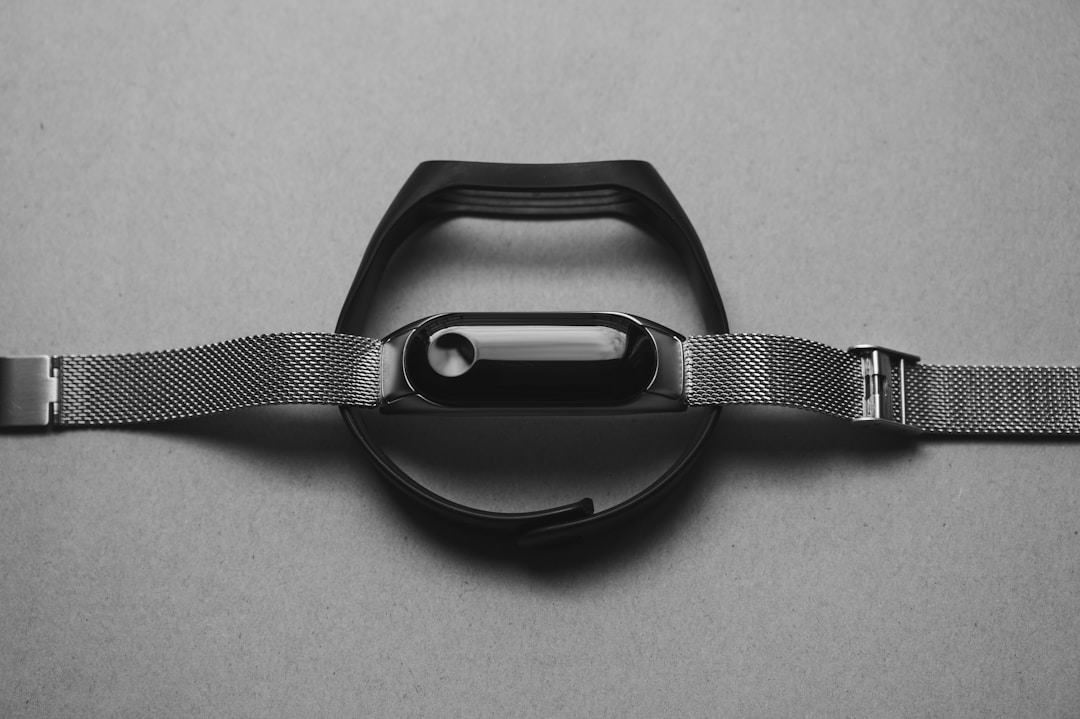
Chest straps measure electrical activity, not light. They use ECG, the same principle as a hospital monitor. Two electrodes on the strap detect the voltage difference created by the heart's electrical depolarization. This signal is strong, clean, and unaffected by motion artifact because the electrodes are on the chest, not a swinging limb.
The Polar H10, the gold standard for consumer chest straps, is accurate to within 1 bpm compared to a medical 12-lead ECG. It works during sprinting, swimming, and weightlifting. It does not care about blood volume. It does not care about vasoconstriction. It measures the heart's electrical signal directly.
The tradeoff is that chest straps are annoying. You have to wet the electrodes. You have to wear a tight strap around your chest. You look like a cyclist from 2007. Nobody wants to wear one to the gym casually. But the data is real. The data is ground truth.
The marketing workaround
So if the finger cannot measure heart rate during exercise, what do the smart ring companies do? They get creative. I have tested this with an Oura Ring 4, a RingConn Gen 2, and an Ultrahuman Ring Air. Here is what actually happens.
Oura does not show a live heart rate during workouts. It shows a post-hoc activity summary with calories, steps, and a generic heart rate zone. The heart rate zone is estimated from the accelerometer, not the PPG. It guesses that if you were running at a 5:00/km pace, your heart rate was probably in zone 3. It is a reasonable guess, but it is a guess. The ring does not know your actual heart rate at minute 12 of the run.
RingConn shows a workout mode in the app. During my testing, the live heart rate graph was flat or obviously wrong during a treadmill run. It reported 142 bpm when my chest strap said 168 bpm. After the workout, the app showed a "corrected" heart rate that matched the chest strap more closely. I do not know how it corrected it, but I suspect it used the accelerometer data to retroactively estimate the heart rate, then blended that with the few clean PPG samples it captured during moments when my hand was still.
Ultrahuman is the most honest. Their workout mode does not show heart rate at all. It shows duration, calories, and a strain score. The strain score is derived from the accelerometer and the user's manually entered perceived exertion. It is not a heart rate measurement. It is a workout diary with physics attached.
None of these approaches are fraudulent. They are hedges. The companies know the sensor cannot do the job, so they build software that approximates the experience of having the data. The user sees a heart rate zone chart. The user feels tracked. The actual data is synthetic.
Why we did not build it
Pulsyn has a PPG sensor. It has an accelerometer. It could theoretically do what Oura does: estimate workout heart rate from motion and call it a day. We chose not to.
The reason is simple. Fake data is worse than no data. A user who sees a heart rate of 142 bpm during a workout when their real heart rate is 168 bpm will train wrong. They will under-recover. They will wonder why their sleep score is bad despite the app saying they only did a "moderate" workout. The lie compounds.
We also do not have the cloud infrastructure to run heavy correction models. Oura almost certainly has server-side algorithms that clean up workout data after upload. Pulsyn does not upload your data. Everything stays on the phone. That means whatever correction we do has to run on-device, in real time, on battery power. The math is possible, but the power budget and latency make it impractical.
So we made a product decision: Pulsyn does not track workouts. It tracks sleep, resting heart rate, HRV, skin temperature, and recovery. It does those things because the finger is genuinely good at them. The user wears the ring all day, but the useful data comes from the 22 hours when they are not exercising. The workout data comes from a chest strap, or from the user's own notes, or from nothing. We do not fabricate it.
This is an unpopular decision. Reviewers mark us down for lacking "activity tracking." Customers ask if we will add it in a software update. The answer is no. The limitation is physical, not digital. You cannot patch around the fact that the finger has no blood in it when you sprint.
What smart rings are actually for
The finger has one unbeatable advantage over the wrist: it is the only place most people will wear something 24 hours a day without noticing it. The ring is invisible during sleep. It does not snag on sleeves. It does not light up with notifications. It stays on in the shower. That permanence makes it the best form factor for metrics that require continuous, passive measurement.
Sleep staging needs hours of uninterrupted PPG. HRV needs a stable baseline measured over multiple sleep cycles. Resting heart rate needs a true minimum, not a resting-while-scrolling-phone number. Skin temperature needs time to establish a circadian curve. None of these metrics work if the user takes the device off to charge every night or gets annoyed and stops wearing it.
The smart ring is a sleep and recovery device that happens to live on your hand. The workout tracking is a sideshow. The companies that pretend otherwise are selling a fantasy because "tracks your workouts" tests better in focus groups than "tracks your sleep with slightly better accuracy than a wristband."
The honest specs
If you want numbers, here they are. In our internal testing, the Pulsyn PPG sensor at rest matches a Polar H10 chest strap to within 2 bpm. During a 10-minute treadmill run at 75% max heart rate, the correlation drops to 0.31. That means the ring's reading and the chest strap's reading are basically unrelated. The ring misses peak heart rate by an average of 18 bpm. It misses heart rate variability during exercise by so much that the number is meaningless.
We could publish these numbers. We could say "workout heart rate accuracy: within 2 bpm at rest, not available during exercise." That would be honest. But most companies do not publish workout accuracy because the numbers are embarrassing. They publish resting accuracy and let the user assume it applies to all use cases.
I do not blame the user for assuming. The marketing is designed to create that assumption. The fix is not better marketing. The fix is better engineering in a form factor that can actually do the job, or a honest admission that the current form factor cannot.
What I am still unsure about
I think we are right to skip workout tracking. I am not sure we are right to skip activity tracking entirely. Steps are noisy on the finger, but they are not impossible. Calories are always a guess, but they are a guess users want. There is a middle ground between "no workout data" and "fake workout data" that we have not figured out yet.
Maybe that means an integration with a chest strap. Maybe that means letting the user import Apple Health data and blending it with our recovery metrics. Maybe it means admitting that the ring is a sleep device and building a separate product for workouts. We have not decided. For the Rune 1, the answer is no. For whatever comes next, the answer might be different.
About the author
James Hoffmann is the founder of Pulsyn. He has spent two years testing consumer PPG sensors against medical-grade reference devices and has strong opinions about which numbers are real.
References
- Oura Ring 4 technical specifications and activity detection claims. https://ouraring.com/oura-ring-4
- RingConn Gen 2 product documentation. https://ringconn.com/
- Ultrahuman Ring Air workout tracking features. https://www.ultrahuman.com/
- Polar H10 heart rate sensor accuracy white paper. https://www.polar.com/en/sensors/h10-heart-rate-sensor
- Pulsyn internal PPG validation study against Polar H10, March 2026 (unpublished).