Why Tattoo Ink Breaks Your Smart Ring's Green Light Sensor


Why Tattoo Ink Breaks Your Smart Ring's Green Light Sensor
If your heart rate looks fine on one finger and erratic on a tattooed finger, the sensor is probably not broken. It is getting less light back. Tattoo ink changes how green light moves through skin, and green light is what most rings rely on for pulse.
This is an optics problem first and a software problem second. No filter can recover a pulse signal that never reaches the photodiode.
How Green PPG Actually Measures Pulse
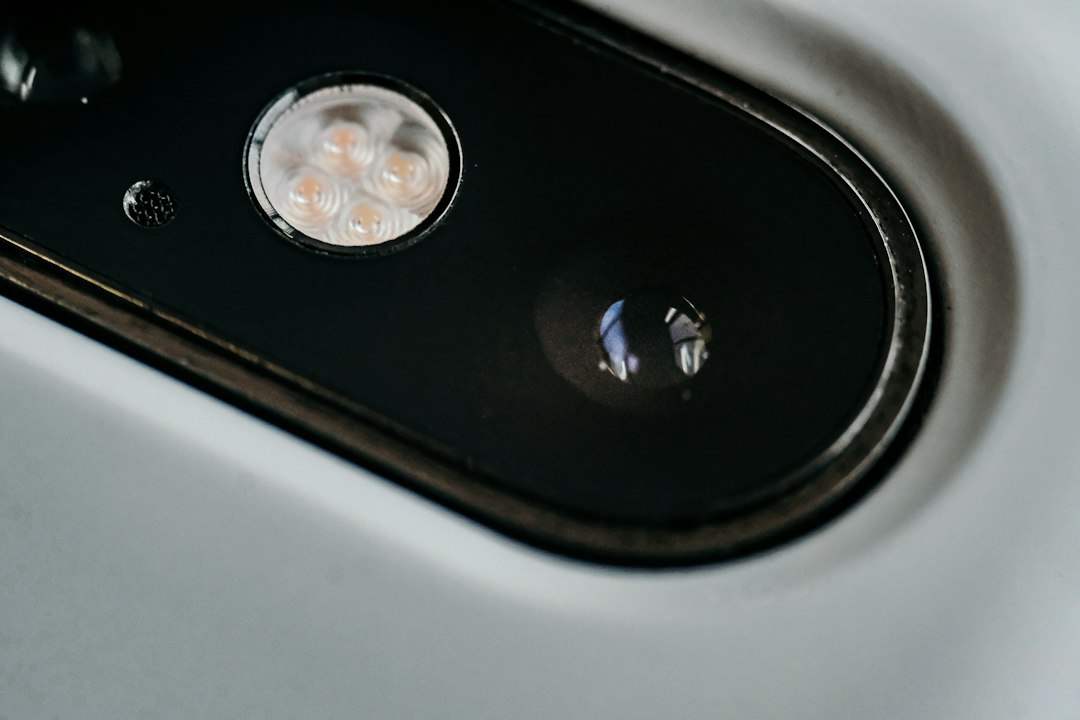
Most smart rings use photoplethysmography, or PPG. A green LED shines around 530 nanometers into the finger, blood absorbs part of that light with each pulse, and a photodiode measures the small reflected change.
Green is popular because hemoglobin absorbs it strongly and it reflects from shallow tissue. That gives a clean pulse waveform when the optical path is clear, the fit is snug, and the finger is still. It also means the measurement depends on a short round trip through the upper dermis.
Red around 660 nanometers and infrared around 880 to 940 nanometers penetrate deeper and are used for estimates like blood oxygen. They respond differently to melanin and ink, which is why a ring can report SpO2 while struggling with resting heart rate on the same tattooed finger.
Why Tattoo Ink Absorbs The Signal
Photo by Ivan Pergasi on Unsplash
Tattoo ink sits in the dermis, right where green PPG needs a clear path. Black ink is the hardest case because carbon-based pigment absorbs broadly across visible wavelengths, including green. Saturated red, blue, and dense cover-up work can also cut the returned signal.
The result is lower perfusion amplitude, not always a flat line. The ring sees a weak and noisy waveform, mistakes motion for beats, drops in and out during workouts, or reports gaps at night. Lighter linework with untattooed skin between lines often still reads, while solid black bands often do not.
Watch makers have acknowledged the same physics. Apple notes that permanent or temporary changes to skin, such as tattoos, can affect heart rate sensor performance because ink and pigment block light. The finger is less forgiving than the wrist because the ring has smaller LEDs, a smaller detector, and less room to shift position.
What To Do If Your Ring Finger Is Tattooed

Photo by Taylor Friehl on Unsplash
Use a plain finger if you have one. Ring PPG assumes consistent skin optics, so moving the ring to an untattooed finger usually tells you within a day whether ink was the cause. Keep size and hand the same if you can, and wear it snug at the base of the finger.
Compare workouts separately from rest. Tattoo interference often looks worst during activity because motion adds noise on top of an already weak signal. If daytime resting data is stable but exercise data drops out, that points to light loss rather than a circulation issue.
Do not chase accuracy by overtightening. A ring that cannot slide at all restricts return blood flow and can make the waveform worse. Clean the inner sensor window, give the sensor 30 to 60 seconds to settle after putting the ring on, and treat persistent gaps or implausible spikes as missing data rather than trying to interpret them.